
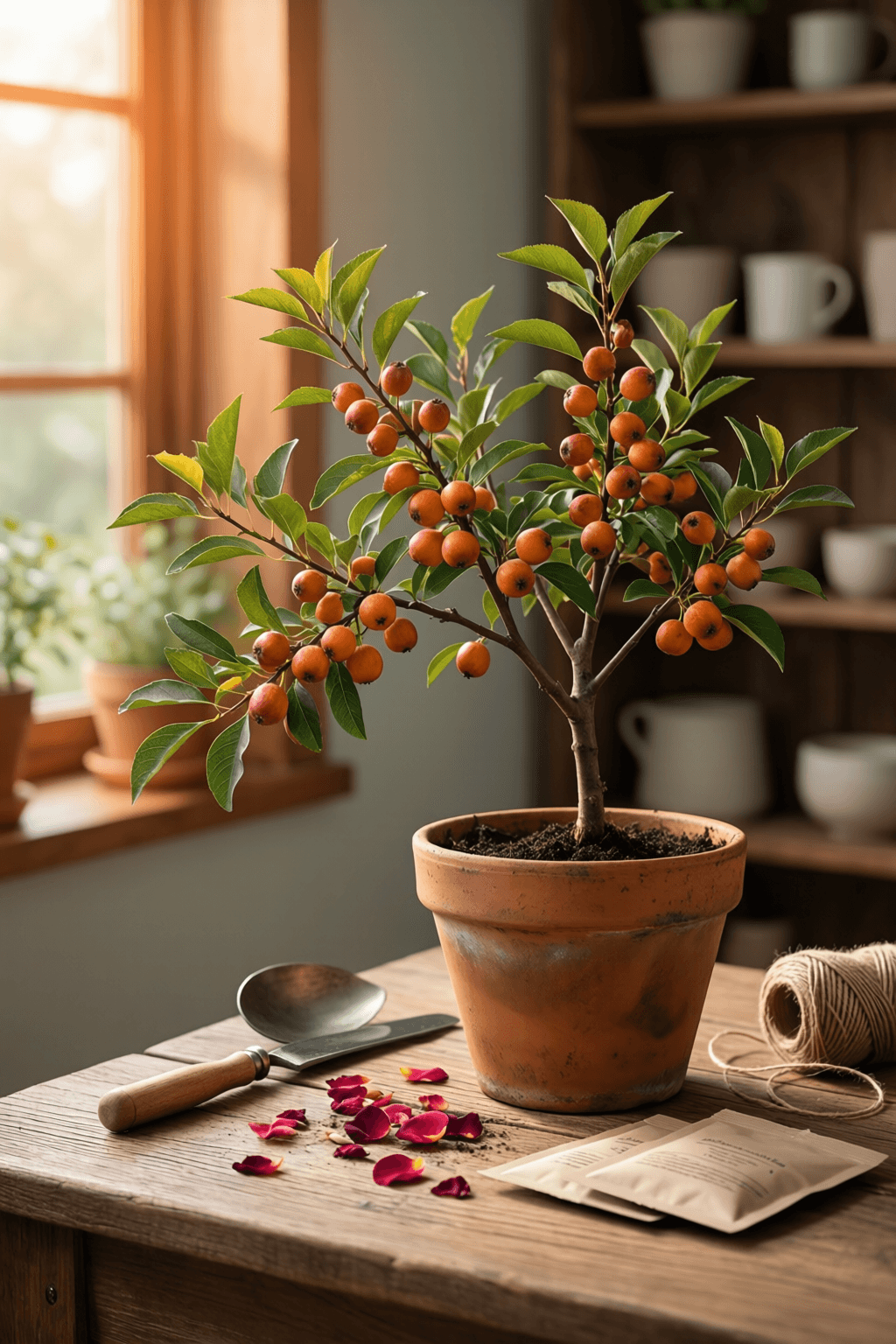
The most delicious fruit didn't come from a tree that was planted yesterday. Growth is there, even when you're frustrated by its slow speed. — Richelle E. Goodrich
—What lingers after this line?
The Wisdom of Slow Ripening
Richelle E. Goodrich compares meaningful growth to fruit that takes time to mature, and the image immediately reframes impatience. The sweetest harvest does not come from what is newest or fastest, but from what has endured seasons of unseen development. In that sense, frustration becomes a natural companion to progress rather than proof that progress is absent. From this starting point, the quote reminds us that time is not the enemy of success but one of its essential ingredients. What feels delayed may actually be deepening, strengthening, and preparing us for a more lasting result.
Progress Hidden Beneath the Surface
Just as roots expand long before fruit appears, personal and creative growth often happens invisibly. A student struggling through repeated failures, an artist revising the same work, or an entrepreneur building trust slowly may see little immediate reward, yet important structures are forming underneath. Goodrich’s point is that visible results are only the final stage of a much longer process. Therefore, slowness should not always be mistaken for stagnation. In many cases, what appears quiet is actually foundational, much like the agricultural wisdom found in ancient writings such as Ecclesiastes 3, which stresses that every purpose unfolds in its proper season.
Frustration as Part of the Journey
Importantly, the quote does not deny the emotional strain of waiting; it speaks directly to it. To feel frustrated by slow progress is profoundly human, especially in a culture that prizes speed and instant outcomes. Yet by acknowledging that growth is still present during these moments, Goodrich transforms frustration from a stopping point into a sign that we are still engaged in the process. This transition matters because discouragement often comes not from effort itself, but from the mistaken belief that slow effort means wasted effort. Her words gently correct that belief and invite endurance.
Nature as a Lesson in Timing
The metaphor of fruit also places human ambition within the larger rhythms of nature. Orchards do not yield their best produce on demand; they require weather, care, setbacks, and repeated cycles. In a similar way, enduring character and meaningful achievement are cultivated rather than rushed. Aristotle’s *Nicomachean Ethics* (4th century BC) likewise suggests that virtue is formed through repeated practice over time, not instant transformation. Seen this way, the quote offers more than encouragement—it offers alignment with reality. We flourish not by escaping gradual development, but by cooperating with it.
The Sweetness of Earned Results
As the image reaches its fullest meaning, the ‘most delicious fruit’ symbolizes rewards made richer by patience. Achievements reached too quickly can feel fragile or shallow, while those built through long perseverance often carry depth, gratitude, and resilience. The waiting itself changes the person who finally receives the reward. Consequently, the quote is not only about getting what we want eventually; it is about becoming the kind of person who can truly value and sustain it. The sweetness lies both in the fruit and in the one who has grown alongside it.
A Gentle Argument for Trust
Ultimately, Goodrich offers a quiet argument for trusting processes we cannot fully measure day by day. Whether in healing, learning, relationships, or work, growth rarely announces itself dramatically at every stage. More often, it accumulates through small, repeated acts that seem unimpressive until one day their outcome becomes undeniable. Thus the quote leaves us with a consoling perspective: impatience may accompany the journey, but it does not define the truth of it. Even in slow seasons, something worthwhile is still ripening.
Recommended Reading
As an Amazon Associate, we earn from qualifying purchases.
One-minute reflection
What's one small action this suggests?
Related Quotes
6 selectedPatience is not passive waiting; it is the courage to stand in the middle of a process and trust that the bloom is coming. — Mary Oliver
Mary Oliver
At first glance, patience is often mistaken for mere delay or resignation, yet Mary Oliver overturns that assumption immediately. In her view, patience is not passive waiting but an active inner stance: a decision to rem...
Read full interpretation →The most beautiful things are those that take time to grow, requiring a commitment to the process rather than a hunger for the end. — Alice Walker
Alice Walker
Alice Walker’s reflection shifts beauty away from instant results and toward slow formation. At its heart, the quote suggests that what becomes truly beautiful does so through time, care, and endurance rather than speed...
Read full interpretation →The trees that are slow to grow bear the best fruit. — Molière
Molière
Molière’s image begins with a simple reversal of modern impatience: what takes longer is often worth more. A tree that grows slowly must endure seasons of scarcity, storms, and repeated cycles of strain, and that enduran...
Read full interpretation →I am still learning. — Michelangelo
Michelangelo’s brief statement, “I am still learning,” carries unusual force because it comes from a master whose achievements might have justified certainty. Instead, he presents knowledge as unfinished and the self as...
Read full interpretation →To do anything to a high standard, you must be prepared to be bored for long periods of time. — James Clear
James Clear
James Clear’s observation cuts against the modern preference for constant stimulation. At first glance, high achievement looks exciting from the outside, yet the path toward it is usually repetitive, slow, and uneventful...
Read full interpretation →The artist must elect to fight for the beauty of the work, stitch by patient stitch, against the rush of the world. — Ursula K. Le Guin
Ursula K. Le Guin
Ursula K. Le Guin’s line begins with a deliberate verb: the artist must “elect.” In other words, beauty is not an accident or a luxury but a conscious choice made in resistance to haste.
Read full interpretation →More From Author
More from Richelle E. Goodrich →The most important form of respect is self-respect. Not only does it show others how to treat themselves, it teaches them how to treat you. — Richelle E. Goodrich
Richelle E. Goodrich begins with a clear hierarchy: before respect can be exchanged outwardly, it must first be established inwardly.
Read full interpretation →When you stand confident in your own worth, respect follows. — Richelle E. Goodrich
Richelle E. Goodrich’s statement begins with a simple but powerful premise: respect often starts from within.
Read full interpretation →The direction you choose to face determines whether you're standing at the end or the beginning of a road. — Richelle E. Goodrich
Richelle E. Goodrich’s line frames life as a single road that can look like an ending or a beginning depending on where you choose to face.
Read full interpretation →Every sunrise is an invitation for us to arise and brighten someone's day. — Richelle E. Goodrich
The quote implies that each sunrise represents a new beginning and offers us a fresh opportunity to have a positive impact on others.
Read full interpretation →