
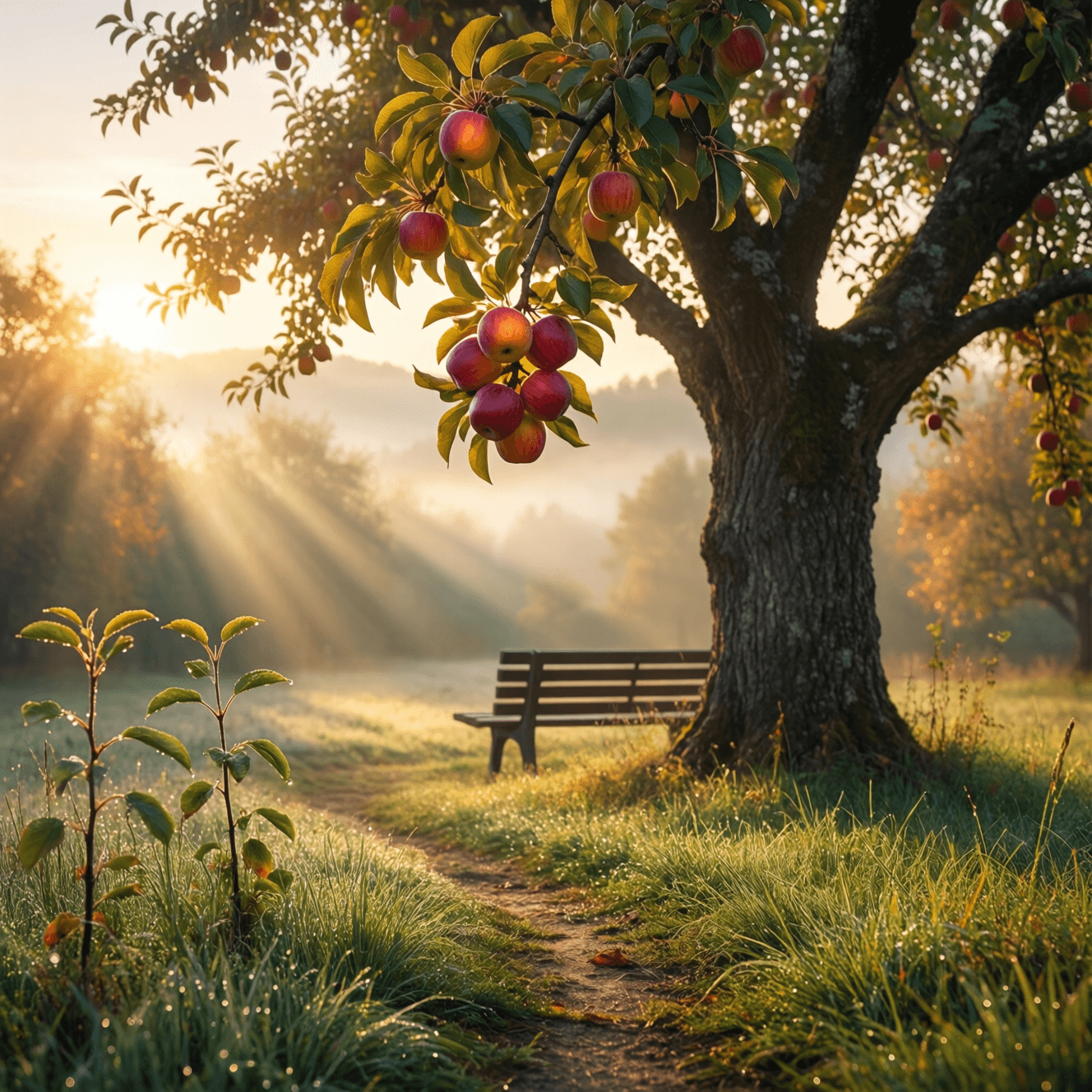
The trees that are slow to grow bear the best fruit. — Molière
—What lingers after this line?
Patience as a Measure of Value
Molière’s image begins with a simple reversal of modern impatience: what takes longer is often worth more. A tree that grows slowly must endure seasons of scarcity, storms, and repeated cycles of strain, and that endurance becomes part of its strength. In the same way, skills, relationships, and character traits that develop over time tend to be more resilient than those acquired quickly. From this starting point, the quote nudges us to rethink how we judge progress. Instead of treating speed as proof of excellence, it frames steady development as a sign that something real is taking root.
Why Slow Roots Make Strong Trees
Moving from metaphor to mechanism, slow growth often implies deep rooting. In horticultural terms, trees that expand gradually typically invest heavily in root systems and dense wood, making them better able to withstand drought and wind. The “best fruit” is not just tastier; it’s the result of stability and consistent nourishment. By extension, a person who takes time to learn the fundamentals—rather than chasing shortcuts—builds a foundation that supports higher performance later. What looks like delay can actually be structural investment, invisible at first but decisive in the long run.
Craft, Mastery, and Time
The quote also speaks naturally to craftsmanship: mastery tends to ripen rather than appear. Whether in writing, music, or leadership, early bursts of talent can impress, yet they can fade if not reinforced by practice and feedback. In contrast, slow, repeated refinement accumulates into a kind of quiet authority. This is why apprenticeships and long-form training exist across cultures; they treat excellence as something cultivated. As time passes, what began as ordinary effort often becomes exceptional output—Molière’s “best fruit” in a modern register.
Character Formed Through Long Seasons
Beyond skill, the saying points toward moral development. Traits like humility, courage, and self-control are rarely installed all at once; they emerge from repeated choices under pressure. Hard seasons—failure, responsibility, caring for others—can be the weather that strengthens the trunk. Seen this way, the fruit is not merely achievement but trustworthiness. People who have matured slowly often carry fewer illusions about themselves, and that realism can make them steadier friends, partners, and collaborators when life becomes complicated.
The Hidden Cost of Growing Too Fast
Next, the proverb warns against acceleration without support. Rapid growth can be fragile: quick success may outpace emotional readiness, financial discipline, or a sense of purpose. Many public “overnight” stories reveal, on closer look, a collapse triggered by pressure that the underlying structure was never built to hold. Molière’s line doesn’t romanticize slowness for its own sake; it suggests a trade-off. Speed can produce early results, but slower development often produces results that endure—and that endurance is part of what makes the fruit “best.”
Choosing Slow Growth Deliberately
Finally, the quote becomes practical guidance: if you want better fruit, choose habits that favor deep growth. That might mean prioritizing fundamentals, seeking mentors, accepting small improvements, and measuring progress over years rather than weeks. It can also mean resisting comparison with people whose timelines differ. In the end, Molière offers a calm standard for ambition: don’t confuse quickness with quality. Let the work take the time it requires, and what you produce—whether a career, a relationship, or a body of work—has a better chance of ripening into something genuinely excellent.
Recommended Reading
As an Amazon Associate, we earn from qualifying purchases.
One-minute reflection
What's one small action this suggests?
Related Quotes
6 selectedTrees that are slow to grow bear the best fruit. — Molière
Molière
Molière’s aphorism, likening slow-growing trees to those that yield the finest fruit, serves as a powerful metaphor for the value of patience in human endeavors. It suggests that the most worthwhile achievements often re...
Read full interpretation →The most delicious fruit didn't come from a tree that was planted yesterday. Growth is there, even when you're frustrated by its slow speed. — Richelle E. Goodrich
Richelle E. Goodrich
Richelle E. Goodrich compares meaningful growth to fruit that takes time to mature, and the image immediately reframes impatience.
Read full interpretation →One doesn't get to be a master of one's own life by rushing. You have to learn the patience of a gardener who knows the harvest cannot be hurried. — Paulo Coelho
Paulo Coelho
At its core, Paulo Coelho’s reflection challenges a modern obsession with speed. He argues that mastery over one’s life does not come from frantic action or constant acceleration, but from learning when to wait, observe,...
Read full interpretation →A garden is a grand teacher. It teaches patience and careful watchfulness; it teaches industry and thrift; above all it teaches entire trust. — Gertrude Jekyll
Gertrude Jekyll
Gertrude Jekyll presents the garden not merely as a decorative space but as a living instructor. From the opening phrase, she elevates cultivation into education, suggesting that soil, weather, and seasons quietly shape...
Read full interpretation →The craft of living is a slow art, requiring the courage to be ordinary and the patience to be consistent. — Parker Palmer
Parker Palmer
Parker Palmer’s line frames living not as a sudden achievement but as a craft, something formed through repetition, attention, and humility. By calling it a “slow art,” he shifts the focus away from dramatic breakthrough...
Read full interpretation →When you plant seeds in the garden, you don't dig them up every day to see if they have sprouted yet. You simply water them and clear away the weeds; you know that the seeds will grow in time. — Thubten Chodron
Thubten Chodron
Thubten Chodron’s image of planting seeds turns patience into something practical and visible. Once a seed is placed in the soil, constant interference does not help it grow; in fact, it can damage what is beginning invi...
Read full interpretation →More From Author
More from Molière →It is not what we do, but also what we do not do, for which we are accountable. — Molière
The quote highlights that people are not just responsible for their actions, but also for what they choose not to do.
Read full interpretation →Trees that are slow to grow bear the best fruit. — Molière
Molière’s aphorism, likening slow-growing trees to those that yield the finest fruit, serves as a powerful metaphor for the value of patience in human endeavors. It suggests that the most worthwhile achievements often re...
Read full interpretation →