
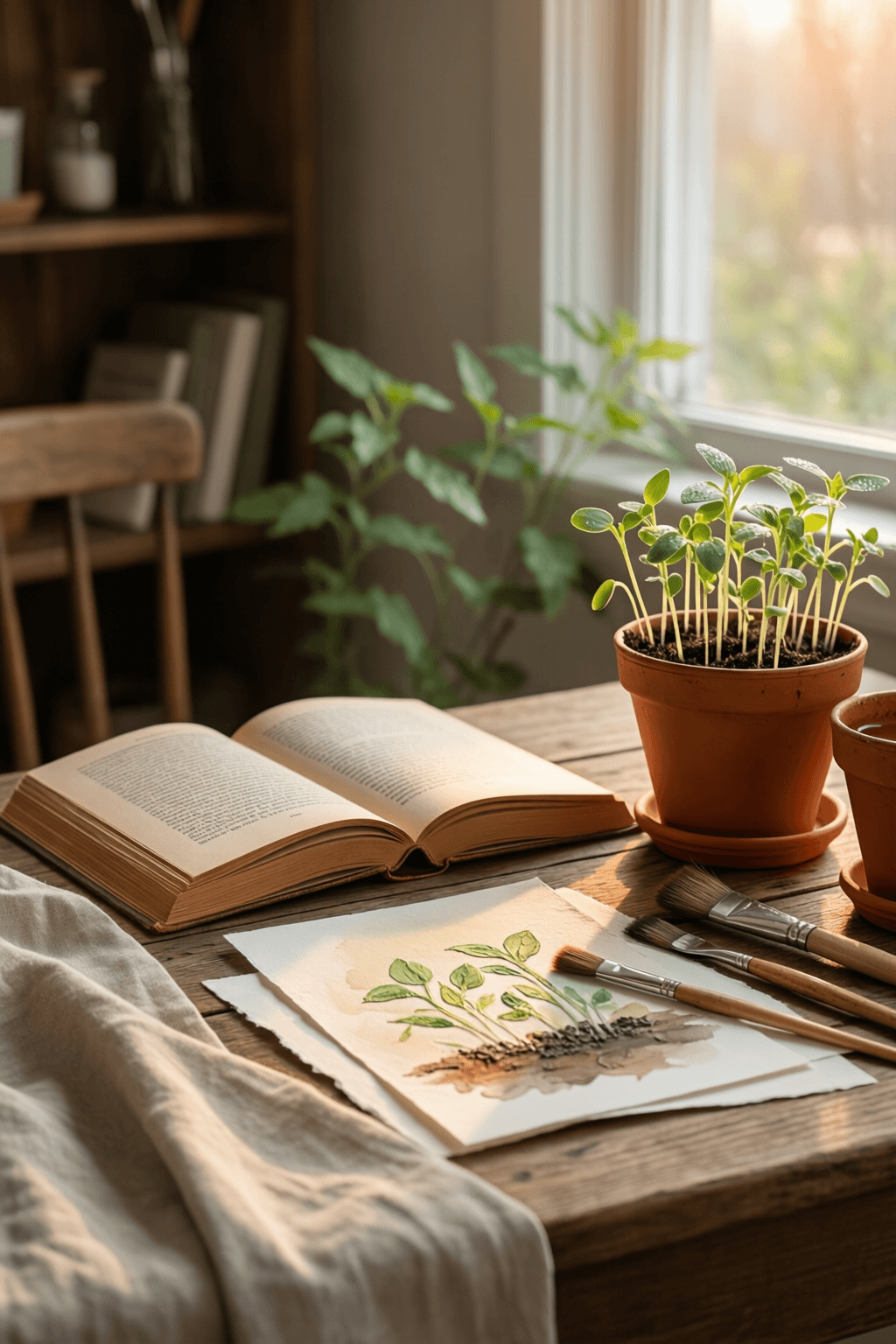
Beautiful things aren't rushed. A garden, a book, a work of art… they grow with time, care, and heart. — Angelika Regossi
—What lingers after this line?
The Quiet Pace of Creation
At its core, Angelika Regossi’s reflection challenges the modern obsession with speed. By saying that beautiful things are not rushed, she reminds us that what truly matters often emerges slowly, through patience rather than pressure. Beauty, in this sense, is not merely an outcome but a process shaped by attention and devotion. This idea immediately reframes delay as something meaningful rather than wasteful. Instead of seeing slowness as failure, Regossi invites us to recognize it as the natural rhythm of worthwhile creation. What takes time often carries depth, texture, and a human imprint that hurried work rarely achieves.
Why the Garden Comes First
The image of a garden offers the quote its most vivid metaphor. A garden cannot be forced into bloom overnight; it depends on seasons, weather, pruning, and steady care. In that way, it becomes a living lesson in trust: one plants, waters, waits, and believes that growth is happening even when nothing visible appears. From there, the metaphor expands naturally to human effort. Just as gardeners learn restraint, creators and dreamers must accept that development often occurs beneath the surface first. Gertrude Jekyll’s gardening writings, including Wood and Garden (1899), similarly show that beauty arises from patient cultivation rather than instant control.
Books as Slow-Built Worlds
Moving from soil to language, the quote’s mention of a book deepens its message. A meaningful book is rarely the product of a single burst of inspiration; instead, it is drafted, revised, cut back, and rebuilt. What readers finally hold is often the result of countless invisible decisions made over time. Therefore, the beauty of a book lies not only in its finished sentences but also in the endurance behind them. Writers from Gustave Flaubert to Toni Morrison were known for painstaking revision, proving that literary grace often comes from returning, refining, and listening carefully to the work as it grows.
Art and the Labor of Feeling
Likewise, a work of art gathers meaning through both technique and emotional investment. Whether it is a painting, a piece of music, or a sculpture, art becomes beautiful when skill is joined to heart. Regossi’s phrasing matters here: time and care alone are not enough unless they are animated by genuine feeling. This is why many enduring masterpieces seem to contain a long conversation between maker and material. Michelangelo’s letters and biographies, such as Giorgio Vasari’s Lives of the Artists (1550), present artistic creation as laborious and iterative. The result may appear effortless, yet its beauty is inseparable from the struggle that shaped it.
Patience as a Form of Love
Seen more deeply, the quote suggests that patience is not passive at all but a form of love. To give something time, care, and heart is to honor its becoming. Whether tending a garden, writing a book, or nurturing a relationship, we reveal our values through what we refuse to rush. As a result, Regossi’s words speak not only about art but about how to live. They encourage a slower, more faithful way of engaging with the world—one that trusts maturation over immediacy. In an age of acceleration, that may be the most beautiful lesson of all.
One-minute reflection
What feeling does this quote bring up for you?
Related Quotes
6 selectedRoses do not bloom hurriedly; for beauty, like any masterpiece, takes time to blossom. — Matshona Dhliwayo
Matshona Dhliwayo
At its heart, Matshona Dhliwayo’s quote reminds us that true beauty cannot be forced. A rose does not rush toward bloom, nor does it apologize for the time required to unfold.
Read full interpretation →To cultivate anything—a garden, a skill, a soul—requires the courage to wait for what you have planted. — Wendell Berry
Wendell Berry
At first glance, Wendell Berry’s quote seems to praise patience, yet it goes further by naming patience as courage. To plant anything—a seed, a habit, a belief in oneself—is to act without immediate proof of success.
Read full interpretation →A garden is not made in a year; it is never made in the sense of finality. It grows, and with the labor of love should go on growing. — Frederick Eden
Frederick Eden
Frederick Eden begins by rejecting the idea that a garden can ever be finished. At first, this sounds like a practical observation about plants, seasons, and weather; yet it quickly becomes something larger.
Read full interpretation →The most beautiful things are those that take time to grow, requiring a commitment to the process rather than a hunger for the end. — Alice Walker
Alice Walker
Alice Walker’s reflection shifts beauty away from instant results and toward slow formation. At its heart, the quote suggests that what becomes truly beautiful does so through time, care, and endurance rather than speed...
Read full interpretation →Sometimes you have to slow down to go fast. — Jeff Olson
Jeff Olson
Jeff Olson’s line begins with a practical paradox: speed is not always created by rushing. Sometimes the quickest path forward requires pausing long enough to see the road clearly, correct mistakes early, and choose acti...
Read full interpretation →Everything that is great in life is the product of slow growth; the newer, and greater, and higher, and nobler the work, the slower is its growth. — William George Jordan
William George Jordan
William George Jordan’s reflection begins with a quiet but demanding truth: the most meaningful achievements rarely arrive quickly. He suggests that greatness is not manufactured in sudden bursts but cultivated through t...
Read full interpretation →More From Author
More from Angelika Regossi →