
The secret of patience is to do something else in the meantime. — George Savile
—What lingers after this line?
Patience as Redirection
George Savile’s remark reframes patience not as passive endurance but as active redirection. Rather than staring at the clock or dwelling on delay, he suggests that we endure waiting best when attention is given a new object. In that sense, patience becomes less a test of stillness and more a skill of wisely occupying the mind. This shift matters because waiting often feels painful when it is empty. By contrast, when a person reads, works, walks, or tends to some small duty, time loosens its grip. Savile’s insight is therefore practical: we do not conquer impatience by force alone, but by giving ourselves another meaningful place to stand.
Why Idleness Intensifies Delay
From this perspective, impatience grows in the space left by idleness. A vacant mind circles back to what it wants, measuring every minute against its unmet desire. That is why a delayed letter, a slow recovery, or an uncertain decision can feel unbearable when one has nothing else to hold onto. Writers and moralists have long noticed this pattern. Blaise Pascal’s Pensées (1670) famously argued that much human misery comes from being unable to sit quietly without diversion; yet Savile adds a subtle correction: the right diversion can be medicinal. Instead of mere distraction for its own sake, he points toward a purposeful alternative that softens the friction of waiting.
The Discipline of Useful Occupation
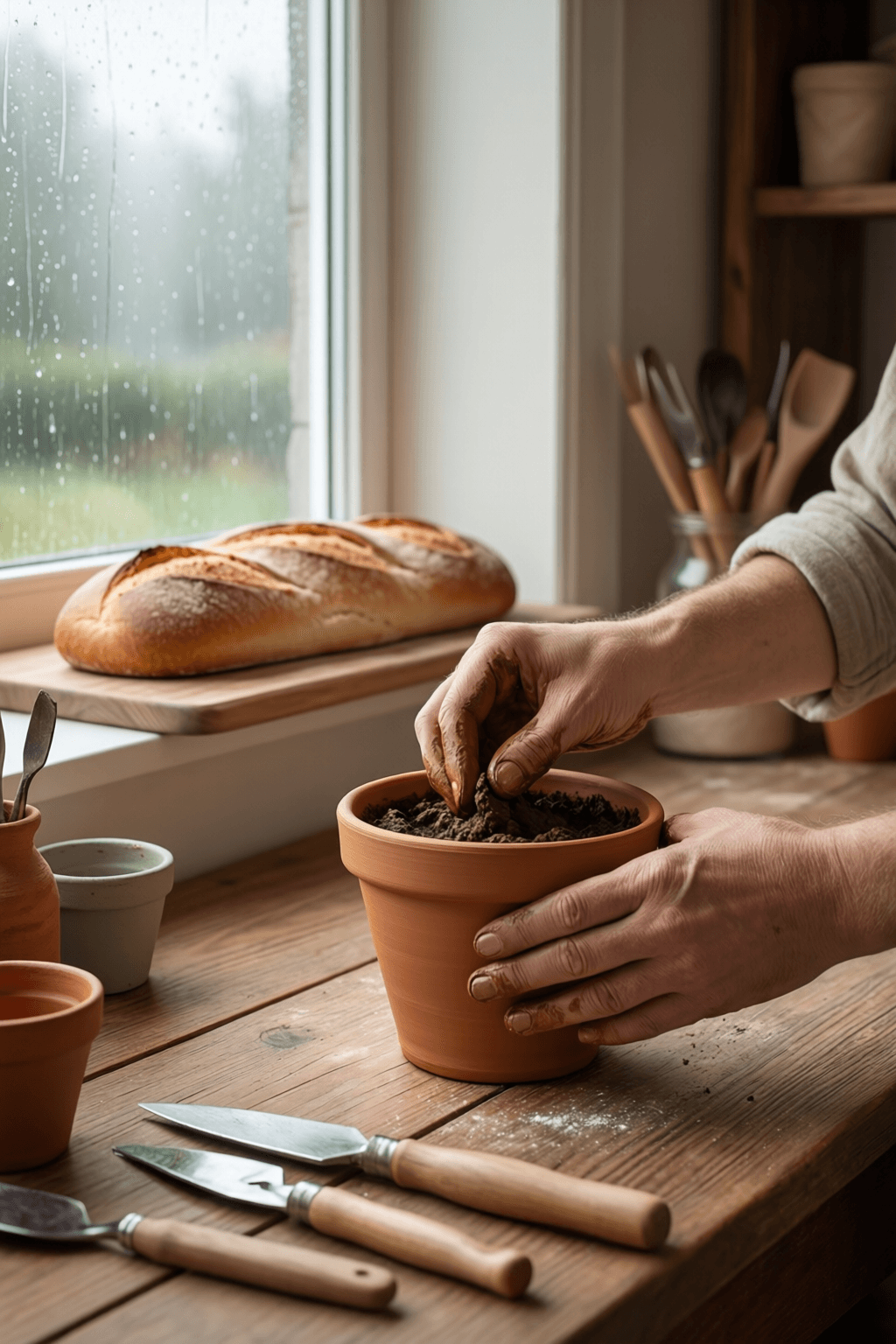
Accordingly, the quote carries an ethic of disciplined action. “Do something else” does not mean flee responsibility or suppress concern forever; it means choose a constructive task while events ripen in their own time. A gardener cannot force a seed to sprout faster, but can water nearby plants, mend tools, and prepare the next bed. That quiet anecdotal wisdom appears across ordinary life. While awaiting exam results, people clean their rooms, help a friend, or begin a new book; while waiting for grief to lighten, they cook dinner and answer letters. In each case, occupation does not erase uncertainty, but it restores agency.
A Psychological Insight Before Psychology
Seen through a modern lens, Savile anticipates later psychological ideas about attention and emotional regulation. Contemporary research on rumination shows that repeatedly focusing on distress tends to amplify it, whereas structured engagement in another activity can reduce anxiety and improve resilience. His aphorism sounds elegant because it compresses this truth into a single memorable line. Moreover, the advice works because the mind has limited bandwidth. When attention is absorbed by a task—especially one with rhythm or purpose—the emotional sting of delay often diminishes. Savile thus seems less like a mere wit and more like an early observer of how mental focus shapes experience.
Patience Without Helplessness
Yet the quote is not simply about distraction; it is about preserving dignity in situations we cannot control. Waiting can make people feel powerless, as if life has been suspended until an answer arrives. By doing something else in the meantime, one refuses that suspension and continues living rather than merely anticipating. This is why the saying remains relevant in an age of instant updates and restless expectation. Whether one is waiting for a message, a promotion, or a medical result, the deeper lesson is the same: patience is easier when life does not narrow around a single outcome. Action, even modest action, protects the spirit from helplessness.
A Practical Philosophy for Daily Life
Finally, Savile offers a philosophy small enough to use every day. His words do not demand heroic serenity; they recommend a humble practice: when delay frustrates you, turn to the next worthy thing. Wash the dishes, finish the page, take the walk, make the call. Patience, then, is built out of ordinary substitutions. Because of that, the aphorism feels both realistic and humane. It admits that waiting is hard, yet it declines to romanticize suffering. Instead, it teaches that time becomes bearable when filled with intention. In the end, doing something else is not avoiding life—it is how we keep living while time does its work.
Recommended Reading
As an Amazon Associate, we earn from qualifying purchases.
One-minute reflection
What feeling does this quote bring up for you?
Related Quotes
6 selectedOne moment of patience may ward off great disaster. One moment of impatience may ruin a whole life. — Chinese Proverb
Chinese Proverb
This proverb highlights how a brief moment of patience can prevent significant negative outcomes. Exercising patience can avert disasters or avoidable troubles.
Read full interpretation →Patience is not simply the ability to wait—it’s how we behave while we’re waiting. — Joyce Meyer
Joyce Meyer
This quote highlights that patience is not merely a passive activity where one just waits. True patience is about maintaining composure and grace during the waiting period, which reflects inner strength.
Read full interpretation →The craft of living is a slow art, requiring the courage to be ordinary and the patience to be consistent. — Parker Palmer
Parker Palmer
Parker Palmer’s line frames living not as a sudden achievement but as a craft, something formed through repetition, attention, and humility. By calling it a “slow art,” he shifts the focus away from dramatic breakthrough...
Read full interpretation →When you plant seeds in the garden, you don't dig them up every day to see if they have sprouted yet. You simply water them and clear away the weeds; you know that the seeds will grow in time. — Thubten Chodron
Thubten Chodron
Thubten Chodron’s image of planting seeds turns patience into something practical and visible. Once a seed is placed in the soil, constant interference does not help it grow; in fact, it can damage what is beginning invi...
Read full interpretation →Gardening is the slowest of the performing arts. — Mac Griswold
Mac Griswold
Mac Griswold’s remark transforms gardening from a practical chore into a form of performance, one staged not on a theater floor but in soil, weather, and seasons. At first glance, the comparison seems surprising; yet the...
Read full interpretation →Anything worth having is worth waiting for, and everything worth doing is worth doing with patience. — Confucius
Confucius
At its core, this saying ties value to delay. Confucius suggests that truly meaningful things do not arrive instantly; instead, they ask us to endure uncertainty, effort, and time.
Read full interpretation →More From Author
More from George Savile →