
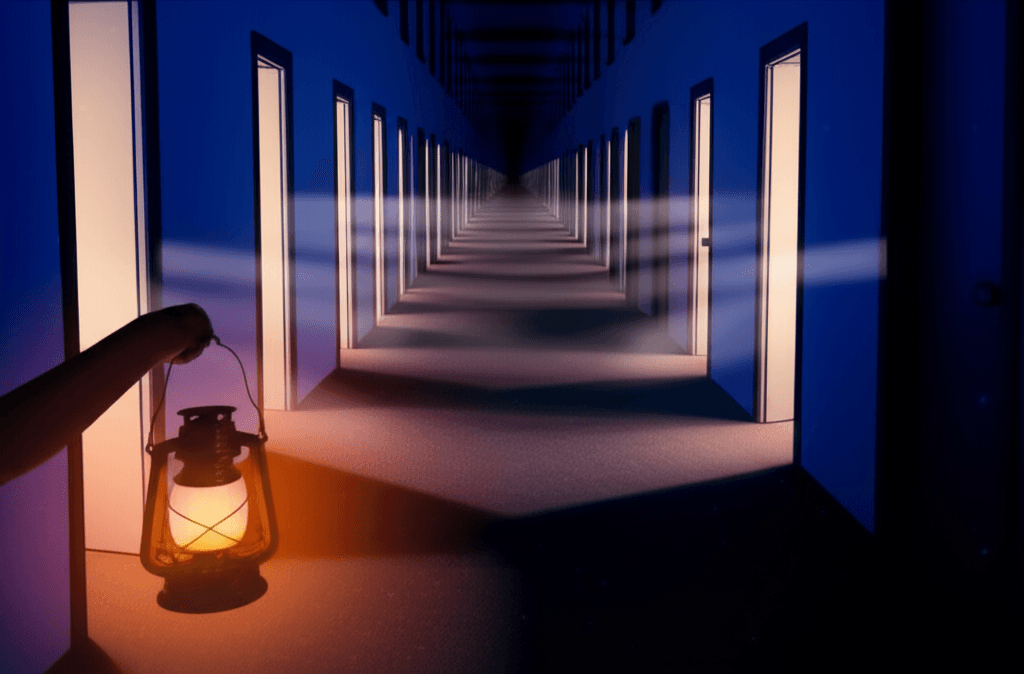
Carry light into the corners of doubt; your small flame can brighten a thousand rooms. — Marcus Aurelius
—What lingers after this line?
Light as a Stoic Metaphor
Though this line is often attributed to Marcus Aurelius, it does not appear verbatim in Meditations; still, the image accords with his counsel to cultivate an inner radiance guided by reason. Stoics called the ruling faculty the hegemonikon, the source of clear judgment that keeps fear and confusion from overrunning the mind. When we carry light into doubt’s corners, we enact Marcus’s steady practice of returning to first principles and the common human logos. In this way, illumination is not a flare of emotion but the quiet steadiness of character that makes things visible and thus manageable.
The Power of Small Beginnings
From that inner spark, influence grows by contact and example. A single candle does not diminish by lighting another; rather, it multiplies visibility. Social network research suggests that prosocial states can ripple outward, sometimes across three degrees of separation (Christakis and Fowler, BMJ 2008). Thus, a small act of clarity—sharing a concise summary, naming an overlooked risk, or expressing measured reassurance—can brighten rooms you never enter. In this light, modest beginnings are not a compromise; they are a strategy for scale.
Practices That Carry Light
To transform metaphor into method, Stoics favored daily exercises. Begin by distinguishing what is up to you—your judgments—and what is not, a move that already reduces the shadow of helplessness. Next, interrogate anxious thoughts for evidence and alternatives; the lineage from Stoicism to modern cognitive therapy is well documented (Beck, Cognitive Therapy of Depression, 1979). Finally, premeditate setbacks and rehearse virtuous responses, so uncertainty becomes a field for preparedness rather than panic. These habits keep the flame fueled, not merely struck.
Leadership as Quiet Illumination
Moreover, light spreads most reliably through climate, not command. Teams thrive where candor is safe and error signals are welcomed; Google’s Project Aristotle (2015) identified psychological safety as a core predictor of effectiveness. Leaders brighten rooms by modeling calm inquiry, setting norms for fact-finding, and celebrating the correction of mistakes as progress. In effect, they install more lamps rather than shouting in the dark. As the environment warms, people venture into the unlit corners and return with the details everyone needs.
A Heritage of Lanterns
This imagery resonates beyond Stoicism. Diogenes the Cynic roamed Athens with a lantern at noon, saying he searched for an honest person; whether playful or piercing, the anecdote points to light as a test of reality. Roman households, too, relied on small oil lamps to gather, read, and work after dusk—humble flames enabling civic and domestic life. By invoking many rooms, the saying draws on this heritage: illumination is cumulative, communal, and ordinary. Small flames make culture possible.
Meeting Doubt With Inquiry
Doubt, like shadow, is not an enemy but an absence. The remedy is not denial but directed attention. A practical sequence helps: name the question precisely, list what is known, identify the next reversible experiment, and set a timebox. This is the spirit of Socratic probing, which treats unclarity as an invitation rather than a verdict. Once the first answers appear, uncertainty contracts into workable tasks; the room is not conquered in one beam, but corner by corner.
Keeping the Flame From Fading
Finally, a light that must brighten many rooms needs fuel. Marcus exhorted himself to rise to the work of a human being, yet he also counseled alignment with nature’s limits; endurance is steadier than frenzy. Sleep, rhythm, and community replenish the lamp. Rotate responsibilities, schedule intervals for reflection, and create shared repositories of insight so the burden is distributed. In this way, the flame ceases to be personal heroics and becomes a shared infrastructure for clarity.
One-minute reflection
What feeling does this quote bring up for you?
Related Quotes
6 selectedThe art of life is more like the wrestler's art than the dancer's; stand ready and firm to meet sudden and unexpected onsets. — Marcus Aurelius
Marcus Aurelius
Marcus Aurelius contrasts two arts to clarify what living well demands. A dancer suggests elegance, rhythm, and practiced beauty; a wrestler, by contrast, suggests balance under pressure, resistance, and constant readine...
Read full interpretation →The mind adapts and converts to its own purposes the obstacle to our acting. — Marcus Aurelius
Marcus Aurelius
At its heart, Marcus Aurelius’s line expresses a central Stoic conviction: external events do not fully determine our lives; rather, our judgments about them shape what they become. In his Meditations (c.
Read full interpretation →Reject your sense of injury and the injury itself disappears. — Marcus Aurelius
Marcus Aurelius
At first glance, Marcus Aurelius’s line seems severe, yet its central claim is distinctly Stoic: much of suffering arises not from the event itself but from our judgment about it. In his Meditations (c.
Read full interpretation →A blazing fire makes flame and brightness out of everything that is thrown into it. — Marcus Aurelius
Marcus Aurelius
Marcus Aurelius compresses a central Stoic lesson into a vivid image: a strong fire does not merely endure what is cast into it, but transforms it into more flame and light. In that sense, adversity is not just something...
Read full interpretation →When jarred, unavoidably, by circumstance, revert at once to yourself, and don't lose the rhythm more than you can help. — Marcus Aurelius
Marcus Aurelius
Marcus Aurelius urges a swift inward recovery when life shakes us out of balance. In this short instruction, the disturbance itself is treated as inevitable, but the real test lies in how quickly we return to our center.
Read full interpretation →Whatever challenge you might find yourself in, has a solution. It is very much possible that it is not an obvious one. — Anonymous (skipped) → You have power over your mind – not outside events. Realise this, and you will find strength. — Marcus Aurelius
Marcus Aurelius
Taken together, these two quotations form a single philosophy of endurance: every challenge contains the possibility of a solution, even when that solution is difficult to see. The anonymous saying begins with hope, insi...
Read full interpretation →More From Author
More from Marcus Aurelius →The art of life is more like the wrestler's art than the dancer's; stand ready and firm to meet sudden and unexpected onsets. — Marcus Aurelius
Marcus Aurelius contrasts two arts to clarify what living well demands. A dancer suggests elegance, rhythm, and practiced beauty; a wrestler, by contrast, suggests balance under pressure, resistance, and constant readine...
Read full interpretation →How much time he gains who does not look to see what his neighbour says or does or thinks, but only at what he does himself, to make it just and holy. — Marcus Aurelius
Marcus Aurelius argues that a great deal of life is wasted in watching other people—what they say, what they do, and even what they might be thinking. Instead, he recommends a disciplined inward turn: focus on your own c...
Read full interpretation →Sometimes, protecting your peace is the better choice. — Marcus Aurelius
At first glance, the saying frames peace not as passivity but as discipline. To protect one’s peace is to recognize that not every conflict deserves entry into the mind.
Read full interpretation →Don't go expecting perfection; be satisfied with even the smallest progress. — Marcus Aurelius
Marcus Aurelius advises against the exhausting demand for flawlessness and redirects attention toward modest improvement. In the spirit of Stoic thought, especially in his Meditations (c.
Read full interpretation →