
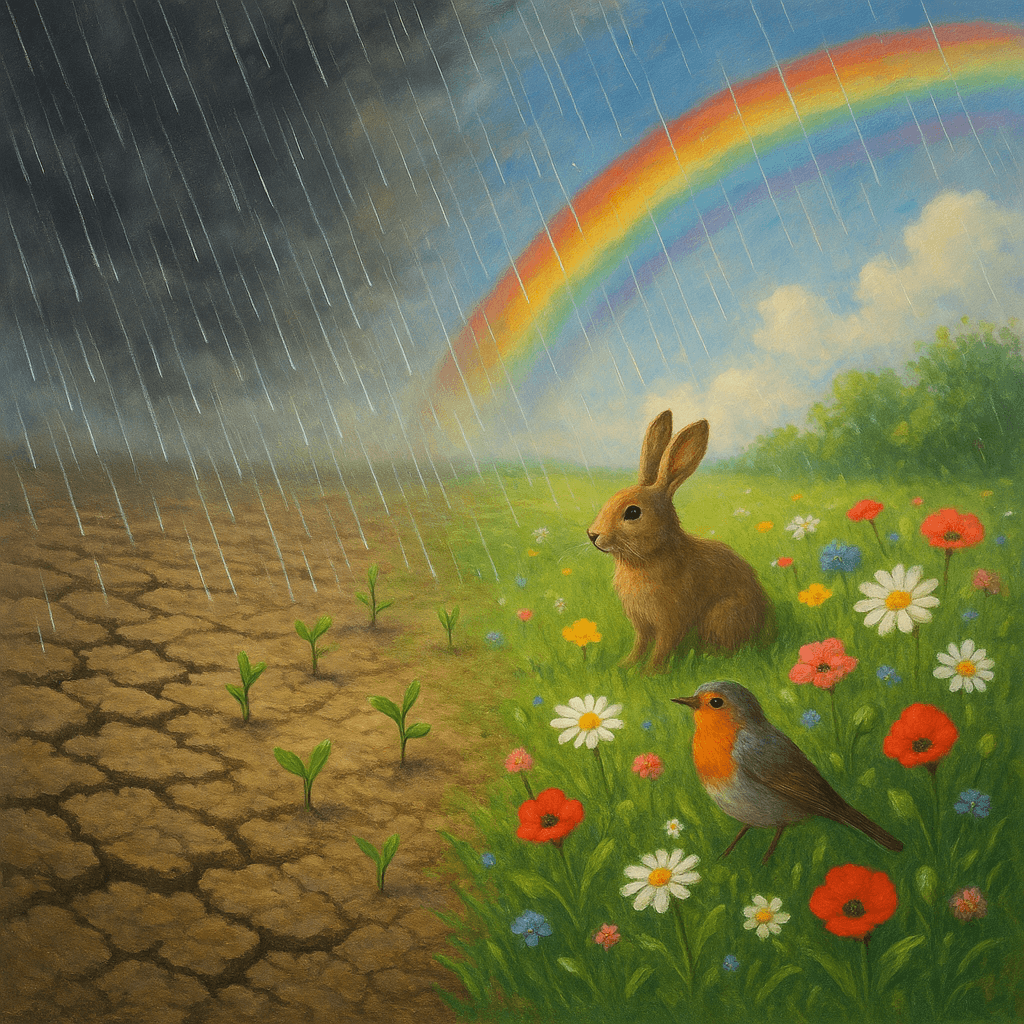
Dreams grow great when watered with persistence. — African Proverb
—What lingers after this line?
Importance of Persistence
The proverb emphasizes that achieving dreams requires continuous effort and perseverance.
Growth Metaphor
It likens dreams to plants, suggesting they need nurturing and regular attention to flourish.
Overcoming Challenges
Persistence is key to overcoming obstacles and setbacks on the path to success.
African Wisdom Tradition
The proverb reflects the values of hard work and resilience commonly found in African cultures.
Encouragement to Persevere
It serves as a motivational reminder not to give up, even when progress seems slow.
One-minute reflection
What feeling does this quote bring up for you?
Related Quotes
6 selectedDreams are the seeds of possibility planted in the soil of the future. - Unknown
Unknown
This quote highlights the importance of dreams as the foundation for what can be achieved in the future. Dreams ignite the potential within us to create and accomplish great things.
Read full interpretation →If we are facing in the right direction, all we have to do is keep walking. — Thích Nhất Hạnh
Thich Nhat Hanh
Thích Nhất Hạnh’s words begin with a simple but profound premise: progress depends first on direction, not speed. If a person is turned toward compassion, clarity, healing, or truth, then each modest step becomes meaning...
Read full interpretation →In the heart of every dream, there are seeds of hope waiting to bloom.
Unknown
This quote suggests that within every dream lies the potential for hope. Dreams are seen as beacons that harbor the possibility of positive outcomes and new beginnings.
Read full interpretation →Do the best one can. Do it over again. Then still improve, even if ever so slightly, those retouches. — Marguerite Yourcenar
Marguerite Yourcenar
Yourcenar’s words begin with a simple demand: do the best one can. Yet she immediately refuses to let effort become an excuse for stopping.
Read full interpretation →A good-enough novel violently written now is better than a perfect novel meticulously written never. — Elizabeth Gilbert
Elizabeth Gilbert
Elizabeth Gilbert’s line immediately shifts the argument from artistic purity to artistic existence. A “good-enough” novel, even one “violently written,” has entered the world and can move, provoke, or comfort someone; b...
Read full interpretation →There is no road too long to the man who advances deliberately and without undue haste; there are no honors too distant to the man who prepares himself for them with patience. — Jean de La Bruyère
Jean de La Bruyère
At its core, La Bruyère’s line praises steady movement over restless speed. A long road feels intimidating only when seen all at once; once it is broken into deliberate steps, distance loses much of its power.
Read full interpretation →More From Author
More from African Proverb →When the roots are deep, there is no reason to fear the wind. — African Proverb
The proverb frames life as weather and character as a tree: when roots run deep, wind becomes something to endure rather than something to dread. In that image, fear is not denied so much as put in its place—storms still...
Read full interpretation →The closer one comes to truth, the simpler everything becomes. — African Proverb
The proverb suggests that truth has a clarifying power: as you approach what is real, the extra clutter—misdirection, anxiety, and needless complication—falls away. In other words, complexity often signals that we are st...
Read full interpretation →The sun does not hurry to rise, yet it never misses its mark. — African Proverb
The proverb begins with an image so familiar it’s easy to overlook: sunrise. The sun appears without strain, without haste, and without visible anxiety about being “on time.” And yet, day after day, it arrives.
Read full interpretation →Do not look where you fell, but where you slipped. — African Proverb
The proverb urges a subtle but powerful change in attention: don’t fixate on the place where you landed in pain or embarrassment; instead, examine the moment your footing first failed. In other words, the visible setback...
Read full interpretation →