
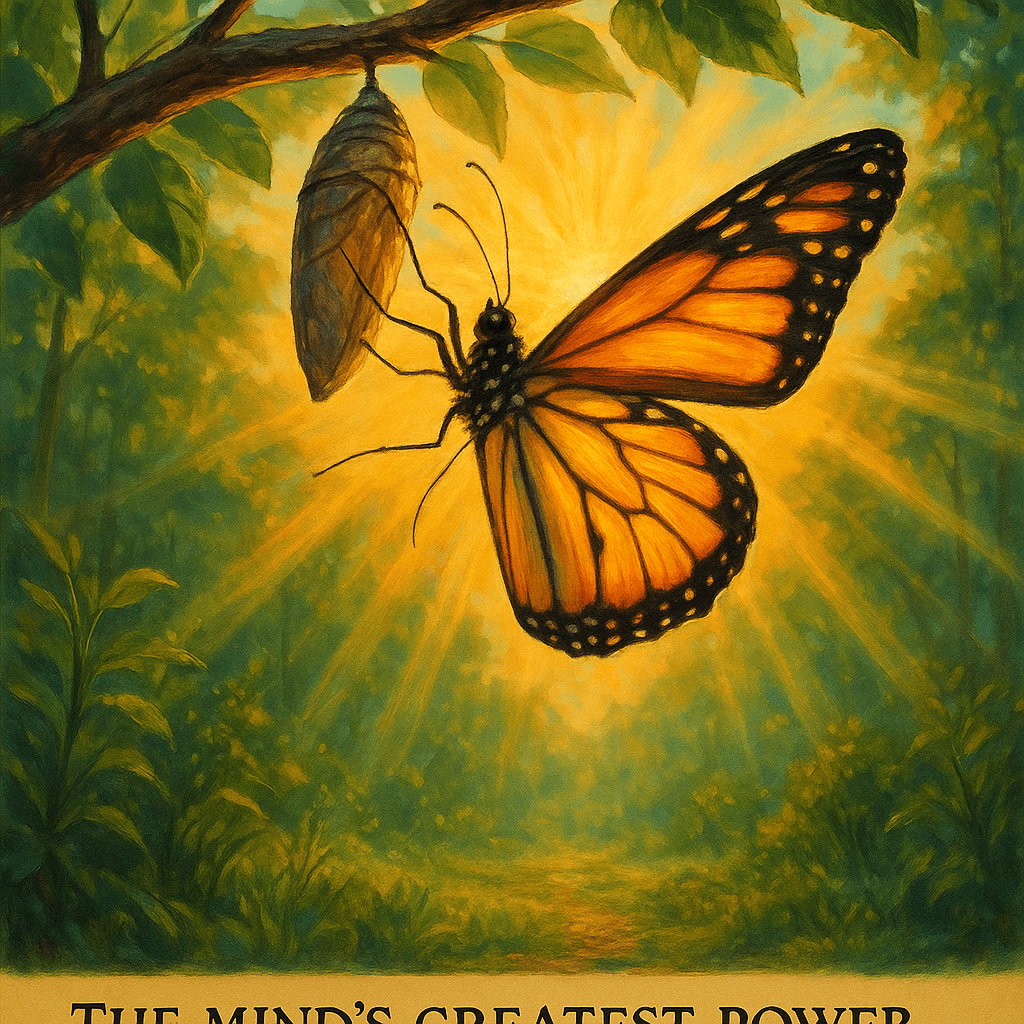
The mind’s greatest power lies in its ability to reinvent itself. — bell hooks
—What lingers after this line?
Reinvention as the Ultimate Strength
bell hooks’s observation underscores a crucial facet of human experience: the mind’s unparalleled capacity for change. Unlike static attributes or physical limitations, our cognitive abilities allow us to reshape who we are at the core. This power surpasses mere adaptation; it invites a complete transformation, demonstrating that mental reinvention is central to growth and self-discovery.
Historical Perspectives on Self-Transformation
From ancient philosophers to modern thinkers, the concept of self-reinvention recurs throughout history. Plato’s allegory of the cave (Republic, c. 375 BC) illustrates the journey from ignorance to enlightenment as one of mental transformation. Similarly, figures such as Frederick Douglass described their personal emancipation as a shift in consciousness, made possible by the mind’s adaptability.
The Role of Reinvention in Overcoming Adversity
Moreover, the mind’s ability to reinvent itself serves as a powerful tool for overcoming hardship. bell hooks herself often wrote about transforming pain into empowerment through critical reflection and new perspectives. In her memoir, ‘Bone Black’ (1996), she reflects on how reimagining her story allowed her to reclaim agency. Such reinvention often paves the way for healing and resilience.
Practical Pathways to Cognitive Renewal
Building on this, contemporary psychology supports the notion that we can intentionally reshape our thought patterns. Practices such as cognitive behavioral therapy and mindfulness encourage individuals to challenge old narratives and construct healthier mental frameworks—real-life examples of the mind’s transformative power. By actively choosing how we interpret experiences, we unlock continual renewal.
Embracing Reinvention for Lifelong Growth
Ultimately, the ability to reinvent the mind is key to lifelong learning and meaningful change. Whether navigating new careers, relationships, or beliefs, embracing mental flexibility equips us for evolving circumstances. As bell hooks suggests, by trusting this innate power, we continually expand our possibilities—uncovering not only who we are, but also who we can become.
One-minute reflection
What's one small action this suggests?
Related Quotes
6 selectedEvery next level of your life will demand a different you. — Leonardo DiCaprio
Leonardo DiCaprio
This quote emphasizes that growth is a continuous process. Each new stage in life requires you to evolve and adapt to meet new challenges and opportunities.
Read full interpretation →Let today be the day you give up who you've been for who you can become. — Hal Elrod
Hal Elrod
This quote encourages individuals to let go of their past identity or limitations and to focus on the potential for growth and transformation. It's about striving to become the best version of yourself.
Read full interpretation →Every next level of your life will demand a different you. — Sara Blakely
Sara Blakely
This quote emphasizes that as we advance in life, we must continuously evolve. What got us to our current level might not be sufficient for the challenges and opportunities of the next, demanding personal development and...
Read full interpretation →To refuse to reinvent yourself is the surest way to disappear. — Hugh Prather
Hugh Prather
Hugh Prather’s statement compels us to recognize that standing still in an ever-evolving world is not a neutral act but one that leads swiftly toward irrelevance. Just as rivers constantly shift their courses, individual...
Read full interpretation →A single inked promise to yourself can redraw a life's map. — Seamus Heaney
Seamus Heaney
Seamus Heaney evokes a simple but tectonic act: writing down a promise to oneself. In that moment, a private intention becomes a visible landmark, like a new coordinate on a chart.
Read full interpretation →The power to create lies dormant within your daily choices. — bell hooks
bell hooks
bell hooks’ insight draws attention to the often-overlooked significance of routine decisions. Rather than viewing creativity as an occasional spark or the domain of artists alone, she underscores how every small action...
Read full interpretation →More From Author
More from bell hooks →Your presence is a form of resistance against a culture that profits from your isolation. Show up for those you love, even when it is inconvenient. — bell hooks
At first glance, bell hooks reframes something ordinary—being present for others—as a political and moral act. Her words suggest that care is not merely private sentiment; rather, it pushes back against a social order th...
Read full interpretation →If you don't build your own sanctuary, you will spend your life living in the wreckage of someone else's expectations. — Bell Hooks
Bell hooks frames sanctuary as more than a physical refuge; it is an inner and outer space where a person can live by values they have consciously chosen. At first glance, the quote sounds like a warning about independen...
Read full interpretation →The art of living is a constant process of refining one's own sanctuary against the tide of external expectations. — bell hooks
At its core, bell hooks presents living not as a finished achievement but as a continuous act of shaping and reshaping the self. The phrase “constant process” suggests that identity, peace, and integrity are never perman...
Read full interpretation →Quiet confidence is not about what you say, but about the space you hold for yourself when the world gets loud. — bell hooks
At first glance, bell hooks shifts confidence away from performance and toward presence. She suggests that real assurance is not measured by how forcefully someone speaks, but by how steadily they remain grounded when ex...
Read full interpretation →