
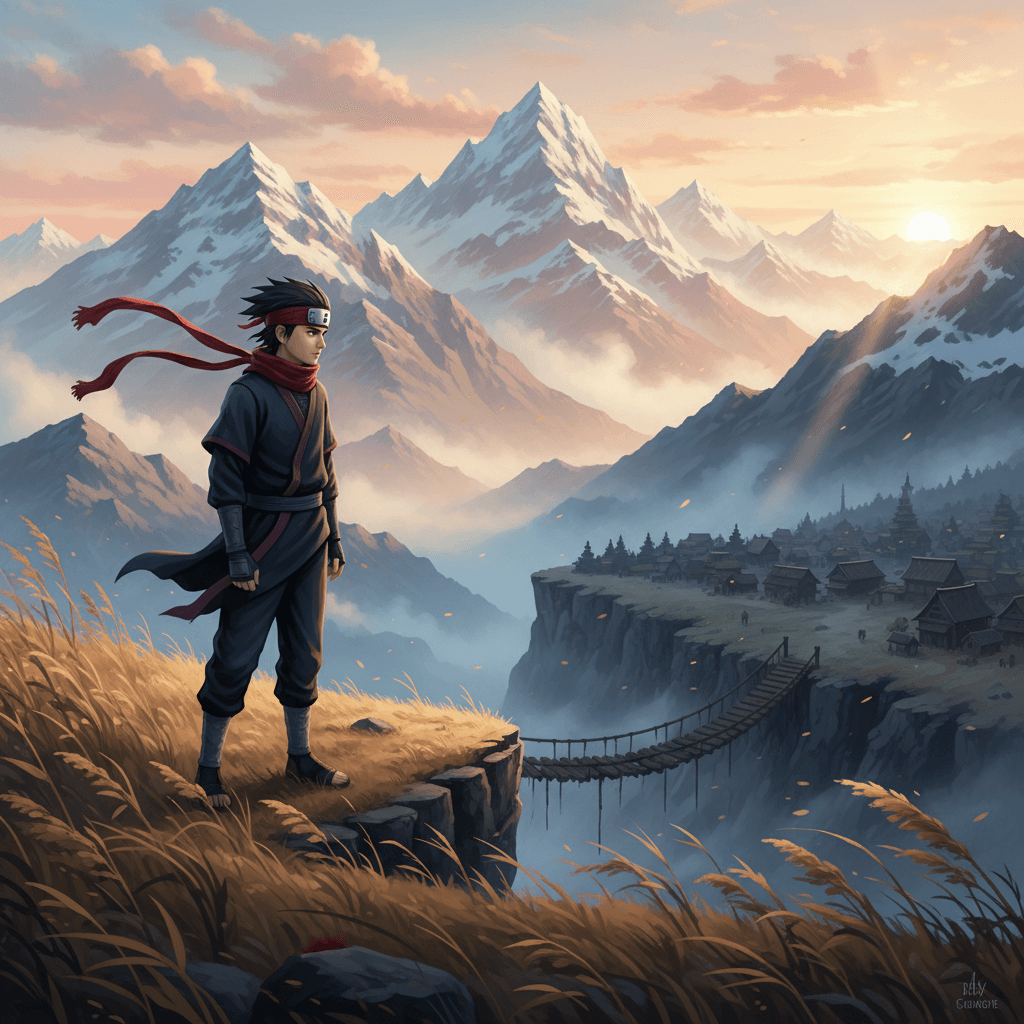
I’m not gonna run away, I never go back on my word! That’s my nindō: my ninja way. - Naruto Uzumaki
—What lingers after this line?
A Vow Forged in Loneliness
At the outset, Naruto’s declaration—never running away and never breaking his word—emerges from isolation. As an orphan shunned for the Nine-Tails within him, he crafts a promise sturdy enough to anchor a drifting identity. Early on, saving Iruka and vowing to be acknowledged as Hokage converts pain into purpose (Naruto, Part I, Land of Waves arc). Thus, his words are not bravado; they are self-definition under pressure.
What Nindō Really Means
Moving from origin to concept, nindō is a personal code rather than a village statute. Unlike shinobi rules that can be bent for expediency, nindō is inward and inviolate. Naruto contrasts with figures like Haku, whose devotion to Zabuza shows a different, self-effacing code (Land of Waves, ep. 9–19). By insisting “that’s my nindō,” he stakes out an ethical stance: tactics may adapt, but promises crystallize character.
Promises That Shape the Journey
This creed is tested repeatedly. In the Chūnin Exams, he defeats Neji by refusing predetermined fate, proving effort can trump pedigree (ep. 60–62). Later, he makes the “promise of a lifetime” to Sakura to bring Sasuke home, a vow that propels years of training and restraint (Part I finale; Shippuden’s early arcs). When Pain devastates Konoha, Naruto upholds Jiraiya’s legacy by rejecting vengeance and choosing dialogue, persuading Nagato to end the cycle of hatred (Shippuden ep. 166–175). Each moment tightens the bond between his word and his world.
The Psychology of Not Running Away
Beyond myth, research illuminates why Naruto’s stance works. Angela Duckworth’s Grit (2016) shows sustained passion and perseverance predict achievement more than talent alone—echoing Naruto’s “dropout beats genius” ethos. Self-determination theory (Deci & Ryan, 2000) suggests internalized, value-aligned goals increase resilience; nindō functions as such an identity-rooted goal. Moreover, public commitments heighten follow-through by aligning action with self-image (Cialdini, Influence, rev. ed., 2009). Thus, narrative conviction finds empirical footing.
Leadership Through Kept Promises
Consequently, Naruto’s reliability becomes social capital. His steadfastness transforms rivals into allies—Gaara’s turn from weapon to Kazekage mirrors the impact of being truly seen and kept faith with (Rescue Gaara arc, Shippuden ep. 1–32). By the Fourth Great Ninja War, his word binds disparate villages into a genuine alliance. Trust, earned through consistent follow-through, scales from friendship to nationhood.
Flexibility in Tactics, Fidelity in Values
Yet constancy does not mean rigidity. Naruto innovates—shadow clone feints, sage mode, and teamwork evolve constantly—while core promises remain intact. He refuses false dichotomies, seeking third paths: sparing Sasuke while protecting the village, or convincing Nagato without abandoning justice. In this way, nindō is a compass, not a cage—fixing direction while allowing agile navigation through changing terrain.
Carrying the Ninja Way Into Life
In closing, Naruto’s line doubles as a practical ethic. Define a personal code in one sentence; make visible promises that reflect it; and rehearse the identity that promise implies. When setbacks come, treat them as detours, not exits. Like Naruto, let adaptability serve your values, not replace them. In keeping your word, you slowly become the person your promise already names.
One-minute reflection
What feeling does this quote bring up for you?
Related Quotes
6 selectedIf you believe in yourself, you can open any gate. — Might Guy, Naruto Series
Might Guy, Naruto Series
Might Guy’s line, “If you believe in yourself, you can open any gate,” frames every obstacle as a closed gate rather than an impenetrable wall. A gate implies something designed to move, suggesting that limitations are n...
Read full interpretation →Originally, chakra was a power that was meant to connect people to each other. - Naruto Uzumaki
Naruto Uzumaki
Naruto’s line recalls the earliest teaching of Hagoromo Ōtsutsuki, the Sage of Six Paths, who spread chakra among people to help them understand one another. He called this practice Ninshū—a way to link hearts, not to ov...
Read full interpretation →It’s all right to cry when you’re happy. - Naruto Uzumaki
Naruto Uzumaki
At first glance, “It’s all right to cry when you’re happy” feels contradictory, yet Naruto’s line names a common human truth: powerful emotions rarely arrive in neat boxes. Joy often carries traces of relief, awe, and re...
Read full interpretation →To ignite your life you must focus on one thing long enough for it to catch fire. — Gary Keller
Gary Keller
Gary Keller’s quote begins with a simple but demanding idea: transformation rarely comes from scattered effort. To “ignite your life” is to create momentum, meaning, and visible progress, yet that spark needs sustained a...
Read full interpretation →Saying no is an act of integrity. It aligns what you do with what you believe. — Annie Wright
Annie Wright
Annie Wright’s statement reframes the word “no” not as rejection, but as moral clarity. At its core, saying no is a way of protecting the space between one’s values and one’s actions.
Read full interpretation →The best people possess a feeling for beauty, the courage to take risks, the discipline to tell the truth, the capacity for sacrifice. — Ernest Hemingway
Ernest Hemingway
Hemingway’s line presents goodness not as politeness or success, but as a demanding inner code. The “best people” are those who combine sensitivity, bravery, honesty, and self-denial—qualities that do not always coexist...
Read full interpretation →More From Author
More from Naruto Uzumaki →Originally, chakra was a power that was meant to connect people to each other. - Naruto Uzumaki
Naruto’s line recalls the earliest teaching of Hagoromo Ōtsutsuki, the Sage of Six Paths, who spread chakra among people to help them understand one another. He called this practice Ninshū—a way to link hearts, not to ov...
Read full interpretation →It’s all right to cry when you’re happy. - Naruto Uzumaki
At first glance, “It’s all right to cry when you’re happy” feels contradictory, yet Naruto’s line names a common human truth: powerful emotions rarely arrive in neat boxes. Joy often carries traces of relief, awe, and re...
Read full interpretation →