
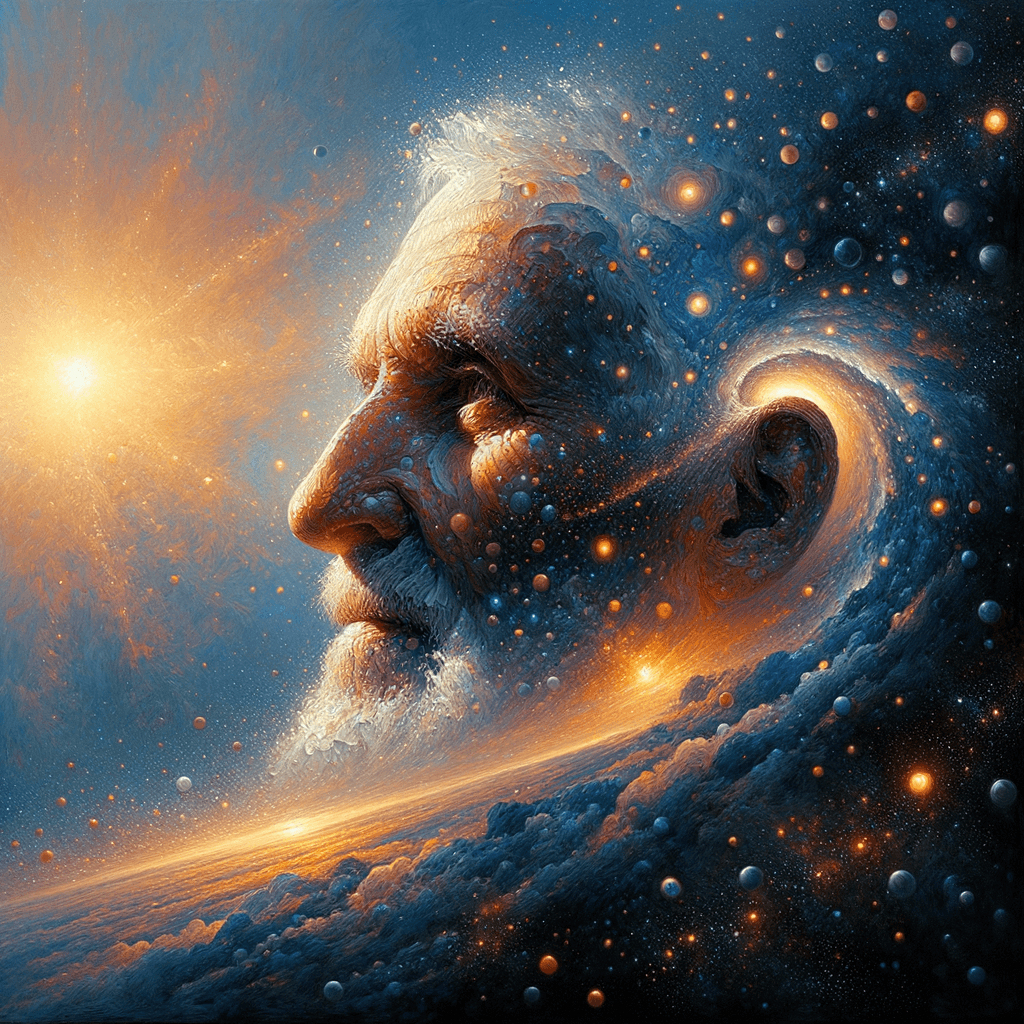
Every day we know more and understand less. — Albert Einstein
—What lingers after this line?
Paradox of Knowledge
This quote highlights a paradox where the accumulation of knowledge does not necessarily lead to a deeper understanding. As we gather more information, it can sometimes create confusion rather than clarity.
Complexity of Modern World
Albert Einstein's statement reflects the complexity of the modern world, where advances in science and technology have greatly increased the amount of information available, but our ability to make sense of it all has not kept pace.
Human Limitation
It underscores the limitations of human cognition. While we are capable of acquiring vast amounts of data, our understanding and interpretation of that data are often limited by our mental and emotional capabilities.
Overload of Information
The quote can also be seen as a critique of information overload in contemporary society, where the sheer volume of data can overwhelm individuals, making it harder to find meaningful insights.
Philosophical Perspective
From a philosophical standpoint, Einstein's words suggest that true understanding goes beyond factual knowledge and requires wisdom, insight, and perhaps an element of intuition that is not easily quantified.
Albert Einstein's Legacy
As one of the most influential scientists of the 20th century, Einstein's reflections often extended beyond physics to touch on broader philosophical questions about knowledge, understanding, and the human condition.
One-minute reflection
What's one small action this suggests?
Related Quotes
6 selectedEvery day we know more and understand less. - Albert Einstein
Albert Einstein
This quote highlights the paradox where the accumulation of information and data does not necessarily lead to a deeper understanding of the world. As we gather more facts, the complexity of interpreting and integrating t...
Read full interpretation →Every day we know more and understand less. - Albert Einstein
Albert Einstein
This quote highlights the paradox that as our collective knowledge expands, our overall understanding of the world can seem increasingly insufficient. More information does not always translate to deeper insight.
Read full interpretation →We are all very ignorant. What happens is that we do not all ignore the same things. - Albert Einstein
Albert Einstein
This quote highlights the inherent limitations of human knowledge. It acknowledges that each person has gaps in their understanding, no matter how knowledgeable they may appear to be.
Read full interpretation →The more you know, the more you realize you don’t know. — Aristotle
Aristotle
Aristotle’s famous observation encapsulates a profound truth about the pursuit of knowledge: every discovery unveils new questions. In his *Metaphysics*, Aristotle explores the nature of understanding and concludes that...
Read full interpretation →Wisdom tends to grow in proportion to one’s awareness of one’s ignorance. — Anthony de Mello
Anthony de Mello
Anthony de Mello’s insight, that wisdom grows as we recognize our ignorance, evokes a thought-provoking paradox. He contends that only by becoming acutely aware of what we do not know can we begin to cultivate true under...
Read full interpretation →The capacity to change one's mind in the face of new reality is the highest form of intelligence. — Ursula K. Le Guin
Ursula K. Le Guin
At first glance, Ursula K. Le Guin’s statement shifts intelligence away from raw knowledge and toward responsiveness.
Read full interpretation →More From Author
More from Albert Einstein →Be a loner. That gives you time to wonder, to search for the truth. Have holy curiosity. Make your life worth living. — Albert Einstein
At first glance, Einstein’s advice to “be a loner” may sound like a rejection of society, yet his deeper point is about protecting the inner space where thought can mature. Solitude gives a person room to hear their own...
Read full interpretation →The best of community does give one a deep sense of belonging and well-being; and in that sense, community takes away loneliness. — Albert Einstein
Einstein’s observation begins with a quiet but profound insight: loneliness is not solved merely by being around other people, but by feeling meaningfully connected to them. In his phrasing, the “best of community” offer...
Read full interpretation →It is entirely possible that behind the perception of our senses, worlds are hidden of which we are unaware. — Albert Einstein
At first glance, Einstein’s remark invites intellectual humility. He suggests that what we see, hear, and touch may represent only a thin surface of reality, not its full depth.
Read full interpretation →It is not that I'm so smart, it's just that I stay with problems longer. — Albert Einstein
At first glance, Einstein’s remark sounds like modesty, yet it does more than downplay genius. By saying he simply ‘stays with problems longer,’ he shifts attention from innate talent to sustained effort, suggesting that...
Read full interpretation →