
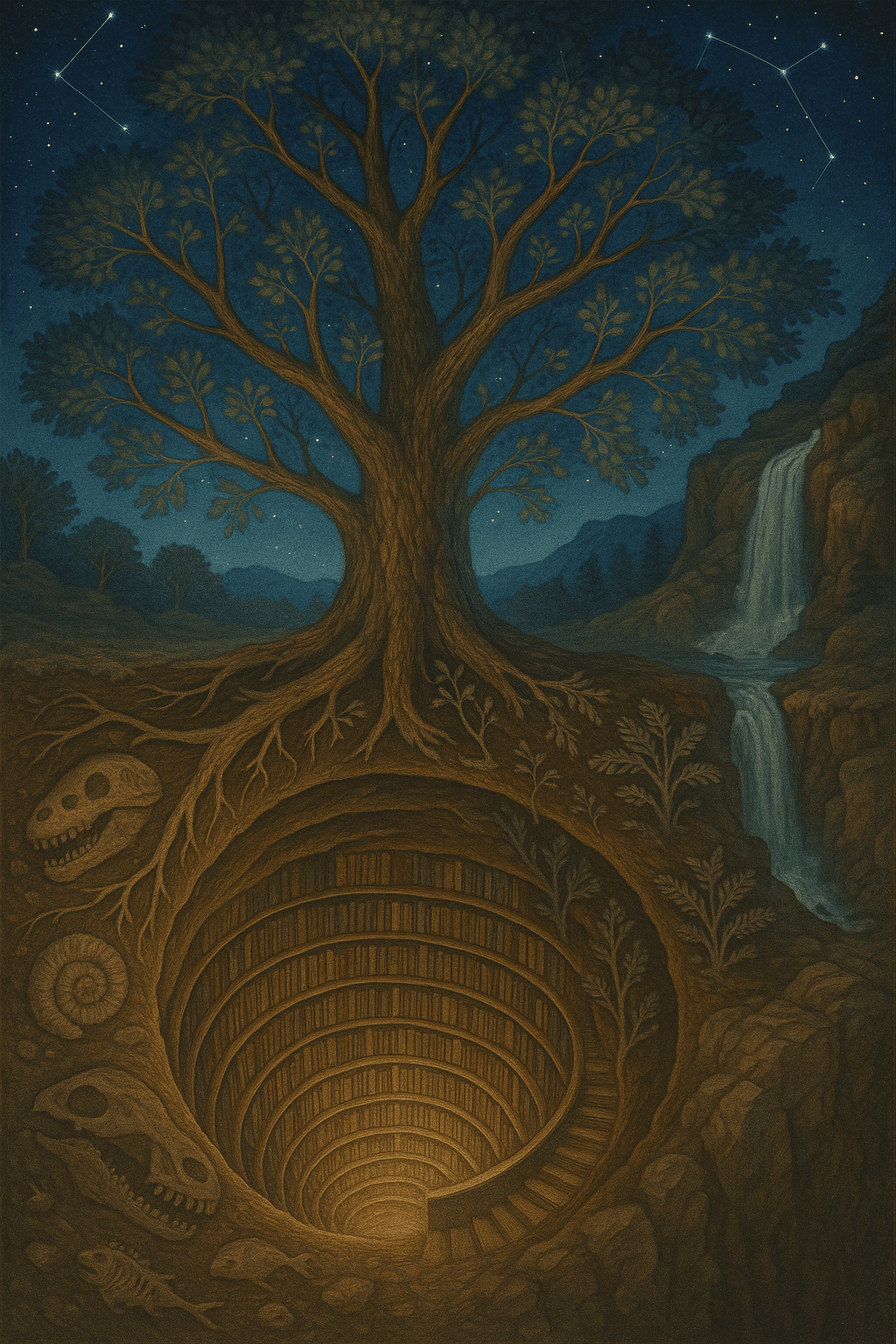
The more you know, the more you realize you don’t know. — Aristotle
—What lingers after this line?
Aristotle’s Insight into Intellectual Humility
Aristotle’s famous observation encapsulates a profound truth about the pursuit of knowledge: every discovery unveils new questions. In his *Metaphysics*, Aristotle explores the nature of understanding and concludes that inquiry is endless. The deeper our intellectual journey, the more we perceive the vastness of our ignorance. This humility, he suggests, is not a mark of failure but a necessary attitude for true wisdom.
The Illusion of Certainty in Early Learning
Initially, learners often feel confident in what they know, basking in the clarity of basic concepts. However, as their studies grow more advanced, complexities emerge. For instance, students encountering mathematics may find early arithmetic straightforward, but the intricacies of calculus or abstract algebra quickly challenge assumed mastery. This phenomenon, reminiscent of the Dunning-Kruger effect identified centuries later, shows that beginners tend to overestimate their knowledge—a bias Aristotle’s wisdom subtly warns against.
Knowledge as an Expanding Circle
Moving forward, think of knowledge as a circle on a vast plain: as the circle’s radius grows, so does its circumference—the boundary with the unknown. With each subject mastered or skill acquired, the surface of unfamiliar territory widens. This metaphor, echoed by thinkers like Albert Einstein and Isaac Newton, illustrates why increased knowledge often leads not to certainty, but to a greater awareness of unanswered questions.
Historical and Scientific Examples
Consider the age of exploration or the scientific revolution. Each geographic or scientific breakthrough led to unforeseen mysteries: the discovery of new continents unveiled unfamiliar peoples and cultures, while Newton’s laws, though monumental, led scientists to confront the enigmatic nature of gravity. These advances, instead of providing closure, paved the way for deeper investigations—a recurring pattern throughout intellectual history.
Embracing Lifelong Curiosity
Ultimately, Aristotle’s insight encourages a mindset of lifelong curiosity. Rather than seeking definitive endings, he advocates for continuous questioning and open-mindedness. In modern education and research, acknowledging our limitations is seen as a strength—not a weakness—fostering innovation and collaboration. By accepting that increased knowledge expands our recognition of the unknown, we are inspired to keep learning and exploring, perpetually pushing the boundaries of understanding.
One-minute reflection
What's one small action this suggests?
Related Quotes
6 selectedEvery day we know more and understand less. — Albert Einstein
Albert Einstein
This quote highlights a paradox where the accumulation of knowledge does not necessarily lead to a deeper understanding. As we gather more information, it can sometimes create confusion rather than clarity.
Read full interpretation →Every day we know more and understand less. - Albert Einstein
Albert Einstein
This quote highlights the paradox where the accumulation of information and data does not necessarily lead to a deeper understanding of the world. As we gather more facts, the complexity of interpreting and integrating t...
Read full interpretation →We are all very ignorant. What happens is that we do not all ignore the same things. - Albert Einstein
Albert Einstein
This quote highlights the inherent limitations of human knowledge. It acknowledges that each person has gaps in their understanding, no matter how knowledgeable they may appear to be.
Read full interpretation →The only true wisdom is in knowing you know nothing. — Socrates
Socrates
This quote highlights the importance of humility. It suggests that true wisdom comes from acknowledging the limits of one's knowledge rather than assuming to know everything.
Read full interpretation →The capacity to change one's mind in the face of new reality is the highest form of intelligence. — Ursula K. Le Guin
Ursula K. Le Guin
At first glance, Ursula K. Le Guin’s statement shifts intelligence away from raw knowledge and toward responsiveness.
Read full interpretation →Don't be intimidated by what you don't know. That can be your greatest strength. — Sara Blakely
Sara Blakely
At first glance, Sara Blakely’s quote sounds like a simple encouragement, yet it points to a deeper truth: ignorance is not always a weakness. When people are not trapped by assumptions about how things are “supposed” to...
Read full interpretation →More From Author
More from Aristotle →Self-mastery is the hardest victory. — Aristotle
Aristotle’s remark turns victory inward, suggesting that the fiercest contest is not against rivals, armies, or public obstacles, but against one’s own impulses. At first glance, conquering external challenges may seem m...
Read full interpretation →Without friends, no one would want to live, even if he had all other goods. — Aristotle
Aristotle’s statement places friendship not at the margins of a good life, but at its very center. Even if someone possessed wealth, status, health, and comfort, he argues, life would still feel lacking without companion...
Read full interpretation →Anybody can become angry—that is easy, but to be angry with the right person and to the right degree and at the right time and for the right purpose, and in the right way—that is not within everybody's power and is not easy. — Aristotle
At first glance, Aristotle’s remark from the Nicomachean Ethics (c. 4th century BC) seems to state the obvious: anger comes easily.
Read full interpretation →The secret to a life of quality is found in your daily agenda; it is what you do consistently that becomes your reality. — Aristotle
At its heart, this saying argues that life is not transformed mainly by rare dramatic moments, but by ordinary actions repeated over time. The phrase “daily agenda” points to the quiet structure of a day—what we prioriti...
Read full interpretation →