Tags
#Assertiveness
Quotes: 10
Quotes tagged #Assertiveness

The Quiet Power of Saying No Clearly
Anne Lamott’s line condenses a powerful truth into everyday language: “No” stands on its own. At its core, the quote rejects the idea that refusal must be softened, justified, or wrapped in politeness to be valid. In that sense, Lamott reframes a simple word as an act of self-definition, reminding us that boundaries are not rude by default—they are necessary. From there, the quote opens into a broader conversation about agency. If a person must always explain a refusal, then their autonomy is treated as negotiable. Lamott’s phrasing pushes back against that expectation, suggesting that clarity is sometimes the most respectful response of all. [...]
Created on: 3/24/2026

Learning to Say No Gives Yes Meaning
Paulo Coelho’s line hinges on a simple contrast: a “yes” only carries weight when an alternative is genuinely available. If you can’t—or won’t—say “no,” agreement becomes automatic rather than chosen, and it starts to resemble compliance more than consent. In that sense, the quote reframes affirmation as an act that requires freedom, not just friendliness. From here, the central idea becomes clearer: value comes from selectivity. Just as a promise matters because it could have been withheld, a yes matters because it survived deliberation rather than habit. [...]
Created on: 3/11/2026

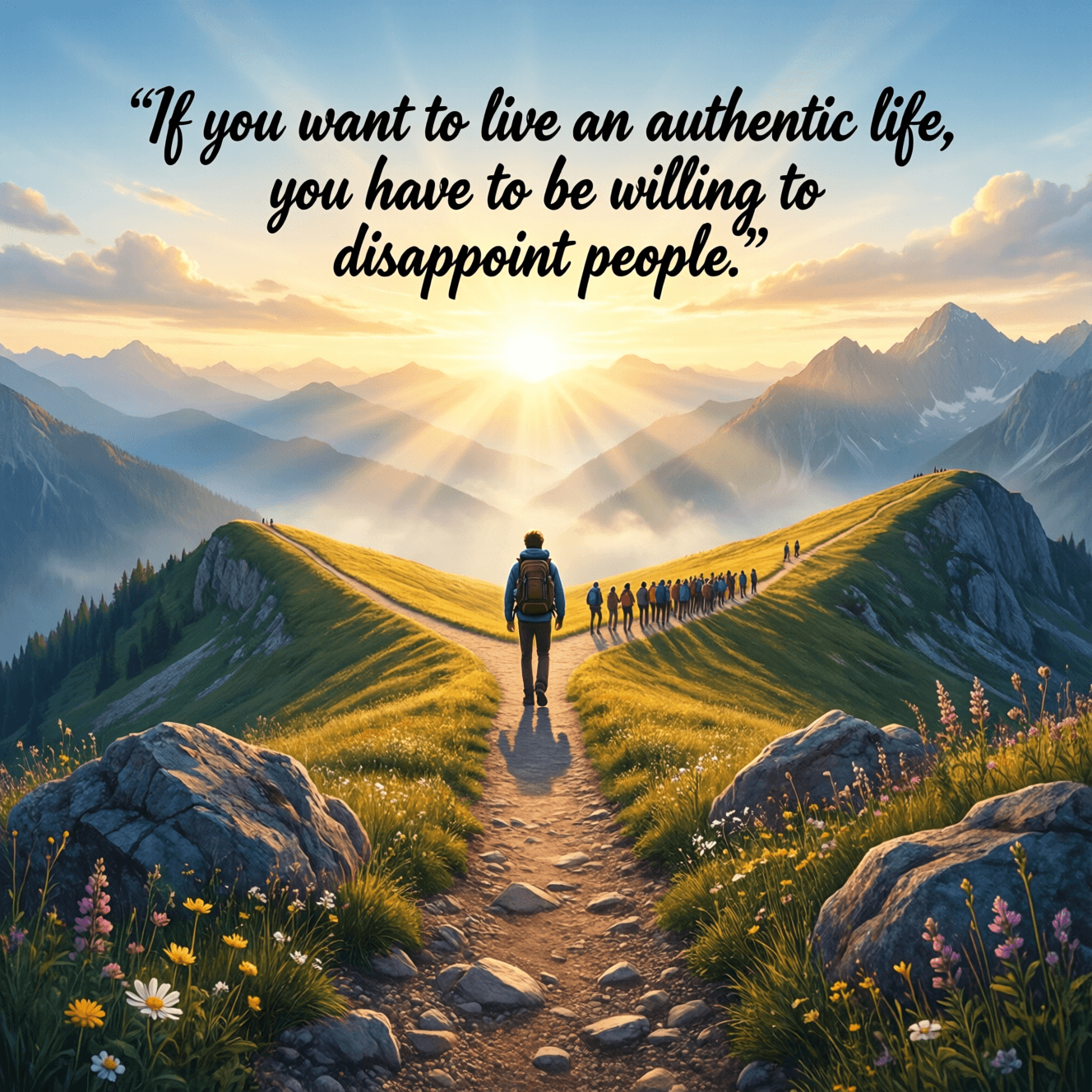
Authenticity Requires the Courage to Disappoint Others
To understand why disappointing others feels so threatening, it helps to see people-pleasing as a learned tool. Many of us were rewarded—through approval, safety, or belonging—for being agreeable and low-maintenance. Over time, that external validation can become a substitute for inner alignment, making “being liked” feel synonymous with “being good.” Consequently, when you start living more authentically—declining requests, expressing needs, or changing long-held patterns—it can trigger anxiety that is less about the current moment and more about old fears of rejection. Tawwab’s point is that growth may require tolerating that discomfort rather than obeying it. [...]
Created on: 2/28/2026

How Your Boundaries Teach Others to Treat You
Tony Gaskins’ line points to a simple but often overlooked truth: people learn how to engage with you from the patterns you tolerate and the patterns you challenge. Even without a direct conversation, your daily responses—silence, laughter, withdrawal, or engagement—function like lessons that shape what others think is acceptable. From there, the quote shifts responsibility back to the individual, not as blame but as agency. If relationships feel repeatedly disrespectful or draining, it can be useful to ask what has been unintentionally “taught” through consistent reactions, and what might be re-taught through clearer choices. [...]
Created on: 2/28/2026

Anger at Boundaries Reveals Their Necessity
Wolfe’s insight ultimately helps you decide what to do next. If anger erupts, you can treat it as data: hold the boundary steady, restate it briefly, and watch whether the person regains composure and respects it. If they escalate, you may need stronger boundaries—reduced contact, clearer consequences, or third-party support. In this way, the quote doesn’t encourage conflict for its own sake; it encourages self-trust. The anger isn’t proof you were wrong—it’s often proof the boundary touched the very place where protection was overdue. [...]
Created on: 2/12/2026

No, Boundaries, and the Price of Peace
Moving beyond the grammar of “no,” the quote anchors the message in a deeper goal: peace. Peace here isn’t laziness or avoidance; it’s the internal steadiness that comes from living in alignment with one’s limits. When peace is treated as valuable, boundaries stop looking like walls and start looking like maintenance—like locking your door at night. This perspective challenges the assumption that being “good” means being endlessly available. Instead, it suggests that emotional well-being is a legitimate priority, not a prize you earn after everyone else is satisfied. [...]
Created on: 2/5/2026

Finding the Courage to Say No – Charlotte Eriksson
The message reminds us that prioritizing our happiness and health over toxic influences is an act of self-care and self-preservation. [...]
Created on: 2/5/2025