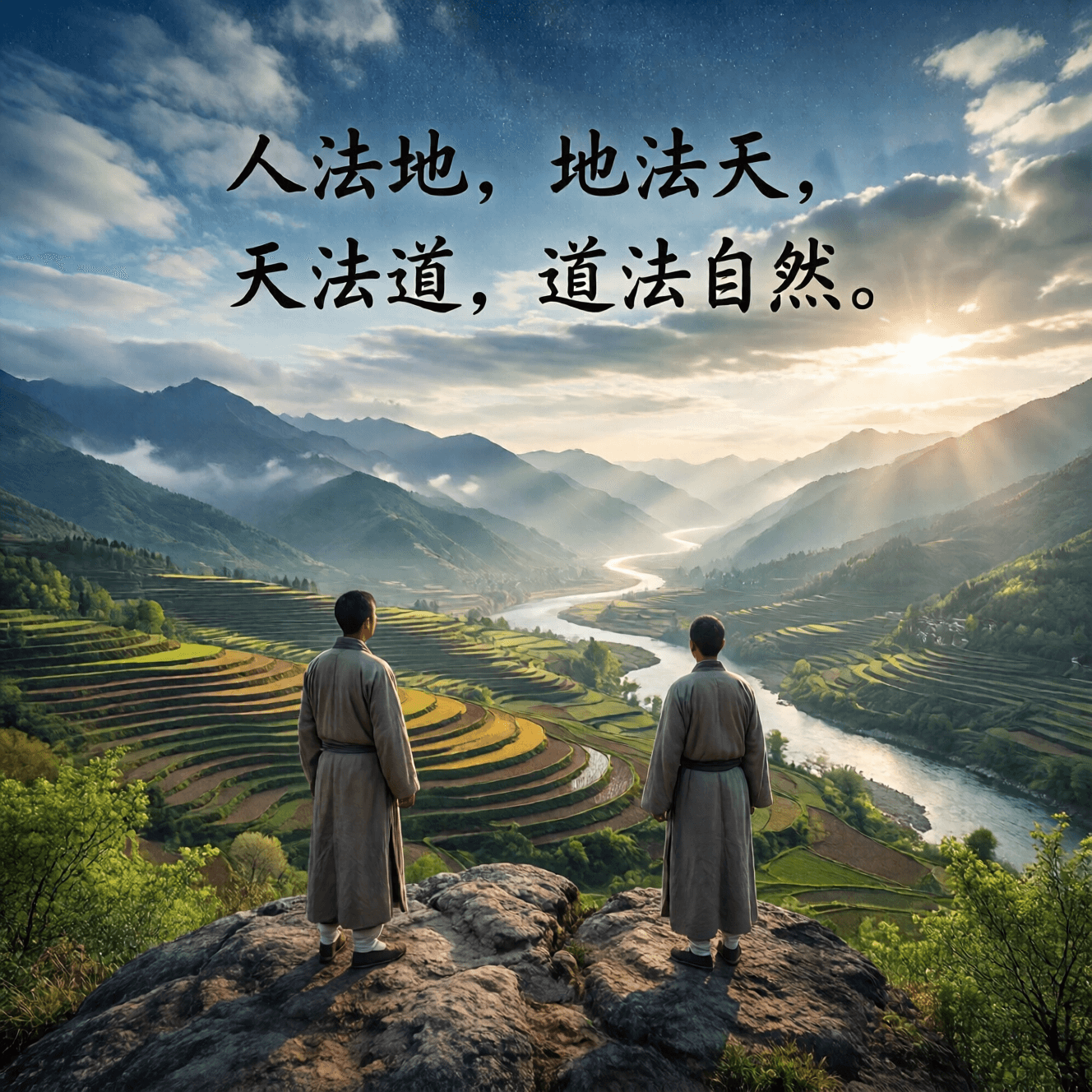
Having established observable patterns, Laozi then points to their source: Heaven follows the Dao. Here the Dao is not merely “rules” or “laws,” but the generative way things arise, change, and return—an underlying coherence that gives Heaven its regularity without being a controlling deity. In the Daodejing, the Dao is famously elusive, described more as an ever-present process than an object one can possess.
Accordingly, Heaven’s order is not ultimate; it is an expression. This shift keeps the reader from idolizing mere predictability or treating the cosmos like a machine. The regular cycles of Heaven are meaningful because they echo the Dao’s deeper movement—quiet, continuous, and not dependent on human recognition. From here, Laozi can make his most paradoxical claim about what the Dao itself “follows.” [...]