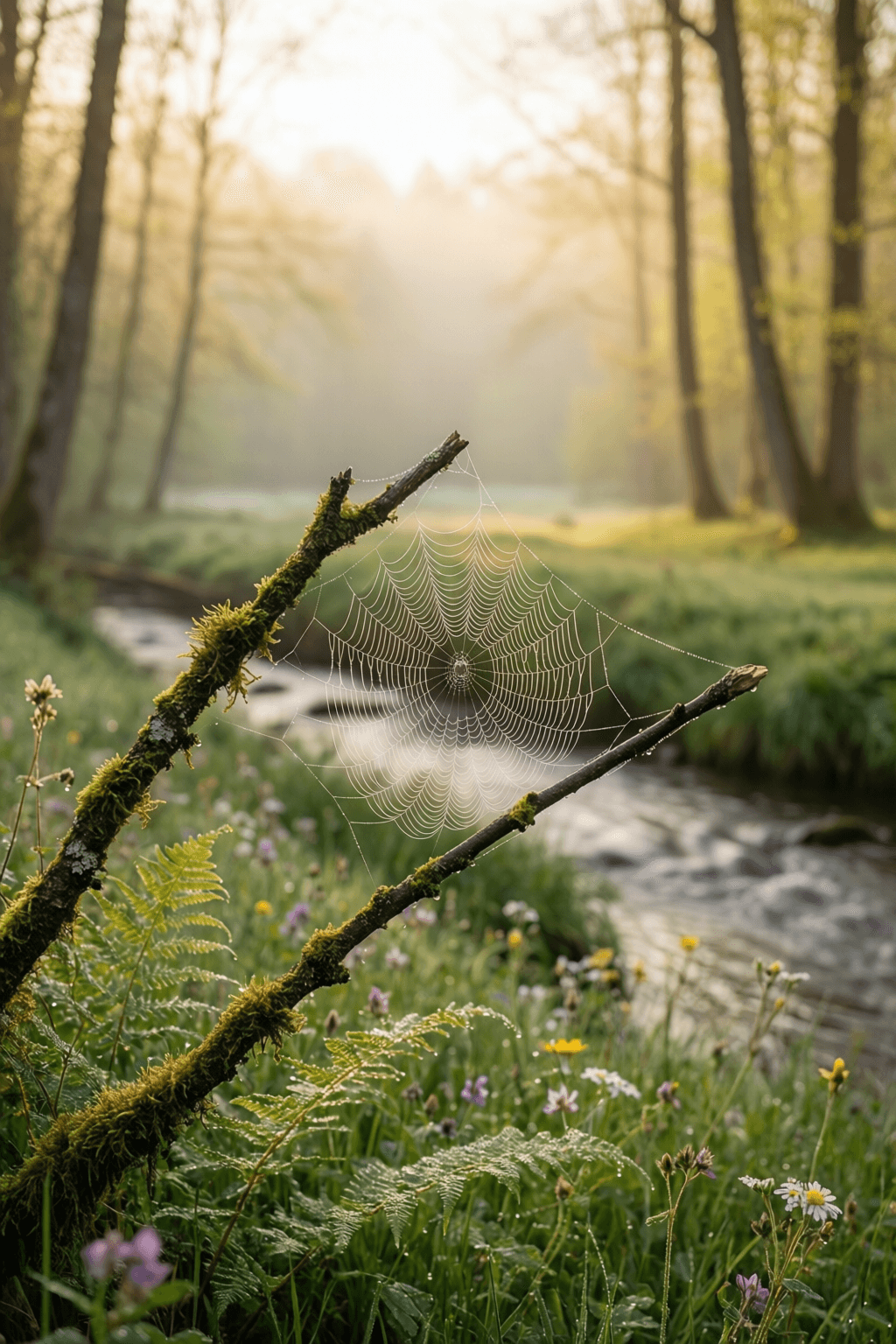
As the idea unfolds, Goethe’s statement begins to sound like an early ecological principle. Long before ecology emerged as a formal discipline in the nineteenth century, he recognized that life depends on networks of exchange. A river shapes the forest around it; insects pollinate flowers; fungi nourish roots underground; predators alter the behavior of prey. Nothing stands alone for long.
Modern ecology confirms this intuition with countless examples. The reintroduction of wolves to Yellowstone National Park, documented by the U.S. National Park Service, changed deer movement, allowed vegetation to recover, and even influenced riverbanks through trophic cascades. In that sense, Goethe’s quote is not merely poetic. It captures a scientific truth: when one element changes, many others respond, often in ways we do not immediately expect. [...]