#Idea Cultivation
Quotes tagged #Idea Cultivation
Quotes: 7

Planting Ideas Through Action That Creates Change
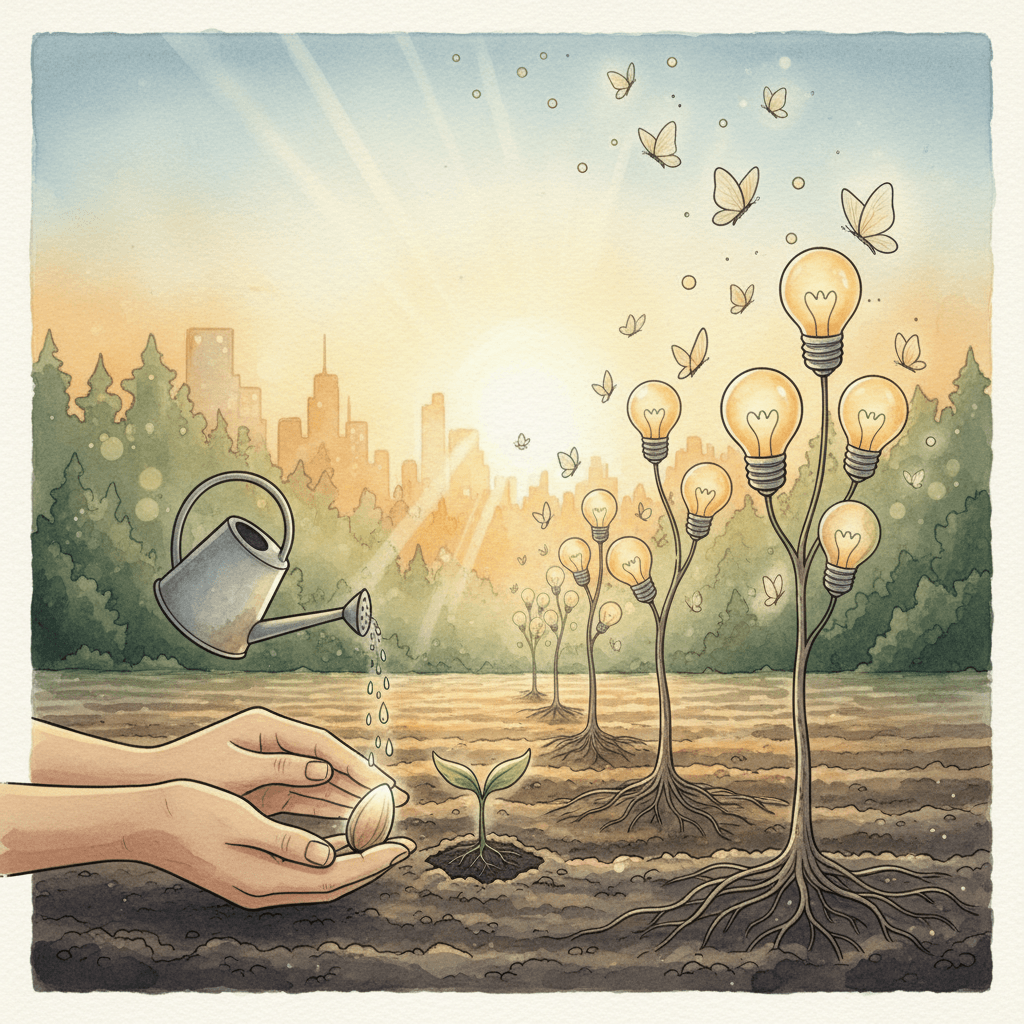
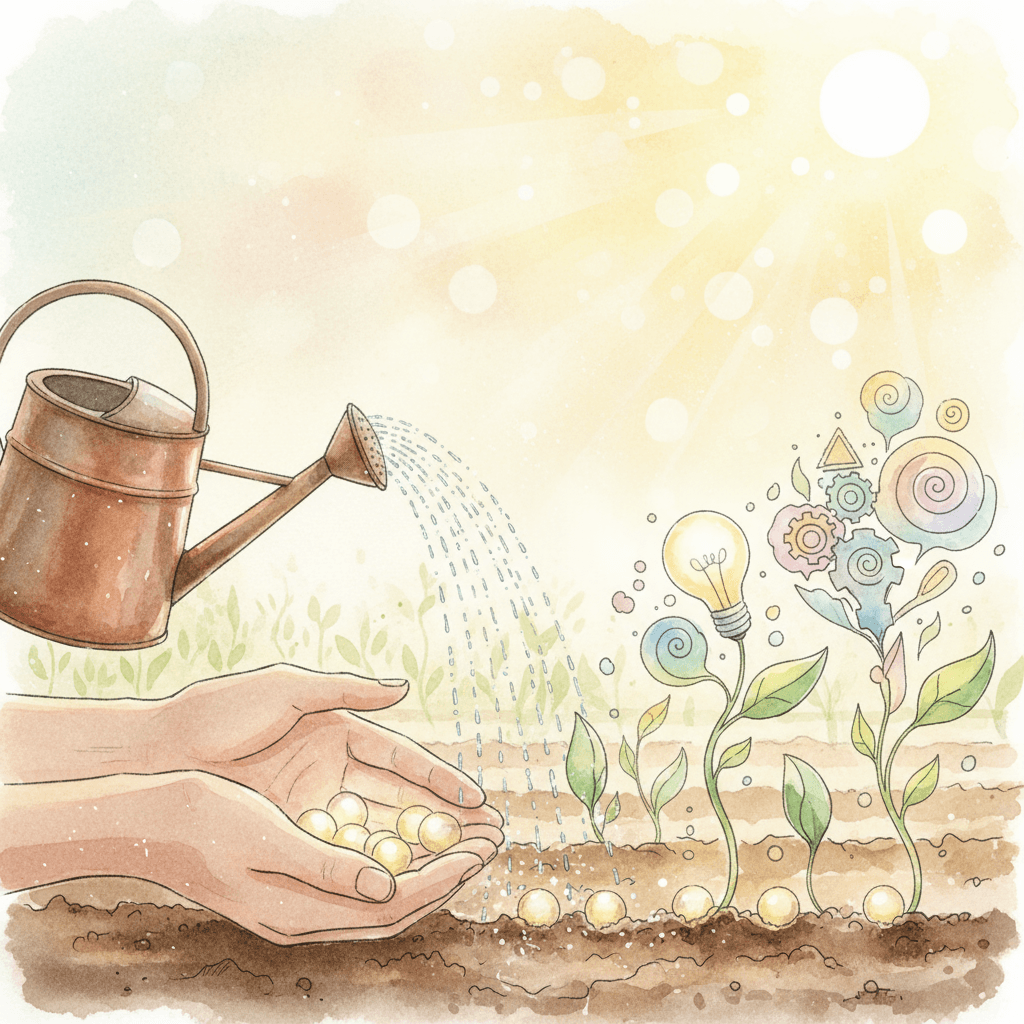
Once an idea is planted, Curie emphasizes “tending” it—an image that highlights continuity rather than bursts of inspiration. Tending is daily behavior: making time, removing obstacles, gathering resources, and returning to the work when it’s still unfinished. This is where action becomes more than execution; it becomes care. As a transition from imagination to reality, tending also implies patience. Just as watering a garden rarely shows results overnight, action often precedes visible progress. The quote suggests that persistence is not a separate virtue from creativity—it is the mechanism that allows creativity to mature. [...]
Created on: 3/8/2026

Planting Honest Ideas Makes Change Inevitable
Honest ideas often face pruning—censorship, discrediting, or fatigue. Yet integrity confers resilience. Rachel Carson’s Silent Spring (1962) endured fierce pushback but seeded modern environmentalism by resting on meticulous evidence. Likewise, samizdat writings in the Soviet era circulated truths quietly, showing how roots can spread even under concrete. Resistance may slow the canopy, but it also compels deeper rooting. The more carefully an idea is examined and vindicated, the harder it becomes to uproot. [...]
Created on: 11/15/2025

From Brave Seeds to Forests of Action
Even thriving forests face drought, pests, and fire. So too do ideas meet resistance, fatigue, and missteps. The task is not avoiding disturbance but designing for renewal. Nassim Nicholas Taleb’s Antifragile (2012) argues that systems can gain from stressors when shocks are bounded and feedback is fast. By staging small burns—prototypes, time-boxed trials—we prevent catastrophic fires and enrich the soil with lessons. [...]
Created on: 10/6/2025

Cultivating Ideas Through Patient Daily Effort
From this starting point, growth depends on small, consistent acts—the daily watering of effort. Habit research suggests that steady, modest inputs compound over time; James Clear’s Atomic Habits (2018) popularizes the idea that 1 percent improvements accumulate into striking gains. Tagore embodied this cadence: across decades he composed more than two thousand songs in the Rabindra Sangeet tradition, proof that regular practice can yield a forest of work. Crucially, daily effort is not rote repetition; it is attentive iteration that refines both the idea and the person tending it. In this light, discipline becomes devotion, turning routine into a quiet engine of originality. [...]
Created on: 10/5/2025

From Sparks to Shared Light: Tagore's Invitation
Once an ember glows, it must travel. Everett Rogers's Diffusion of Innovations (1962) describes how early adopters bridge the gap from niche to norm by translating benefits for their communities. Stories, not specs, carry heat: Linus Torvalds's 1991 post releasing a hobby OS invited thousands to contribute, turning Linux into infrastructure. Likewise, a teacher's classroom blog can seed practices across districts. To light the room, package your idea for the next person—write the README, share the demo, and equip others to become sources of light themselves. [...]
Created on: 9/21/2025

Cultivating Ideas with Courage, From Seeds to Forests
As forests mature, diversity protects against blight; so too with ideas. Scott E. Page’s The Difference (2007) shows that cognitively diverse groups often outperform homogeneous ones on complex problems. Chasing single metrics—clicks, quarterly wins—can create intellectual monocultures that crash when conditions change. Better measures track resilience: replication, cross-domain uptake, and equitable access. Elinor Ostrom’s Governing the Commons (1990) suggests stewardship principles that help communities manage shared resources; similarly, we can govern knowledge ecosystems to encourage plurality, renewal, and long-term health. [...]
Created on: 9/12/2025

The Enduring Power of Unanswered Questions
Finally, by treating questions as seeds, Ciardi advocates for an intellectual environment where uncertainty and wonder are embraced. Such a culture resists quick fixes and instead encourages ongoing dialogue, empathy, and creativity. If we allow the ‘landscape of idea’ to flourish with such questions, not only do we grow as individuals, but society as a whole becomes more resilient and innovative. [...]
Created on: 6/5/2025