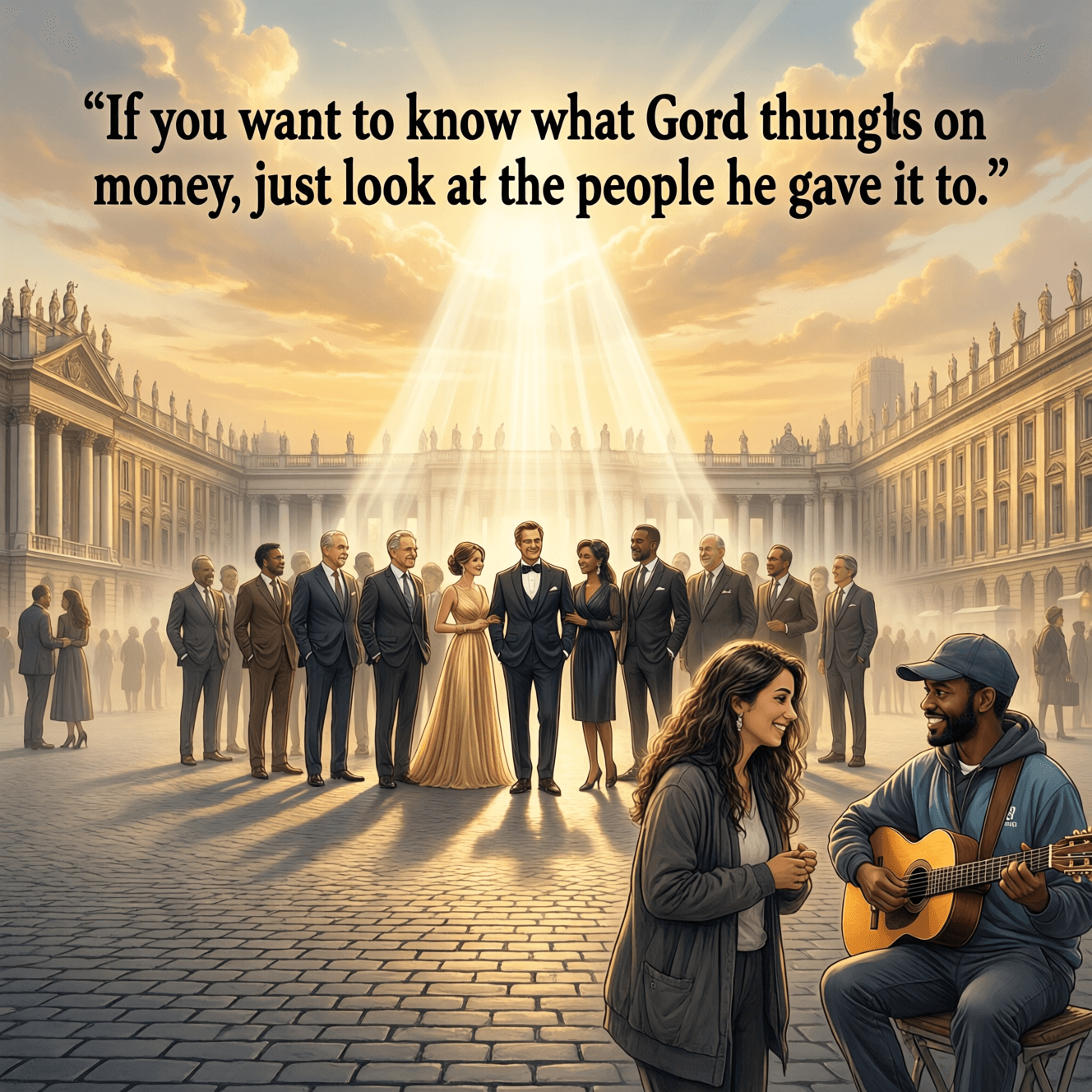
Dorothy Parker’s line lands as a joke, but it quickly turns into a dare: if money were a reliable sign of virtue, then the moral quality of the wealthy should inspire confidence. Instead, her punchline implies the opposite—wealth often sits with people whose behavior makes the idea of “divine endorsement” feel absurd. By framing the question as “what God thinks,” Parker borrows religious language to expose a human habit: treating financial success as a kind of moral certificate.
From there, the quip nudges the reader to notice the gap between what we say we value—generosity, humility, justice—and what society frequently rewards. The laughter is a doorway into critique. [...]