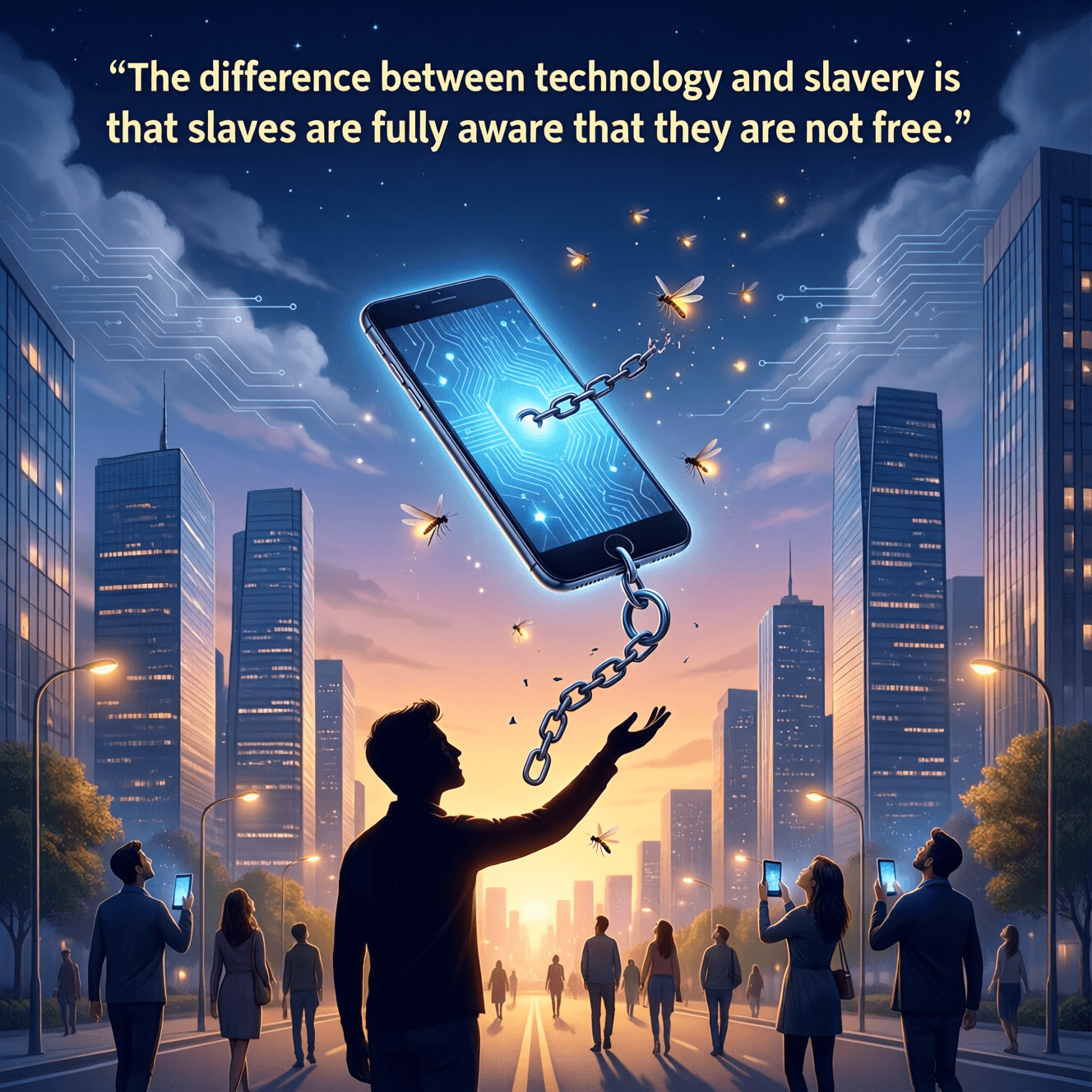
Once dependence is framed as comfort, technology’s constraints can feel like choices rather than obligations. Navigation apps reduce getting lost, messaging collapses distance, and digital payment eliminates friction; in exchange, users may surrender self-reliance, patience, and privacy without experiencing the surrender as a loss. The relationship is subtle because each step is small, and each benefit is immediate.
This is why the comparison hinges on awareness: overt coercion triggers resistance, while incremental convenience invites consent. Over time, what started as “optional” can become socially mandatory—try attending modern work, school, or healthcare without certain apps or accounts—and the boundary between opting in and being locked in grows harder to see. [...]