Tags
#Wonder
Quotes: 40
Quotes tagged #Wonder

When Technology Looks Like Magic to Us
The way out of “magic” is not to reject advanced tools but to cultivate literacy around them—basic models of how networks route information, how sensors measure the world, how algorithms learn patterns, and where failure modes hide. Even partial understanding restores a sense of causality and invites better questions. Ultimately, Clarke’s line captures a moving frontier: as knowledge spreads, magic recedes, and new magic appears at the next edge of comprehension. The healthiest response is to keep that frontier dynamic—allowing ourselves wonder while insisting on clarity about how the wonder is made. [...]
Created on: 2/14/2026

Finding Wonder and Contentment in Every State
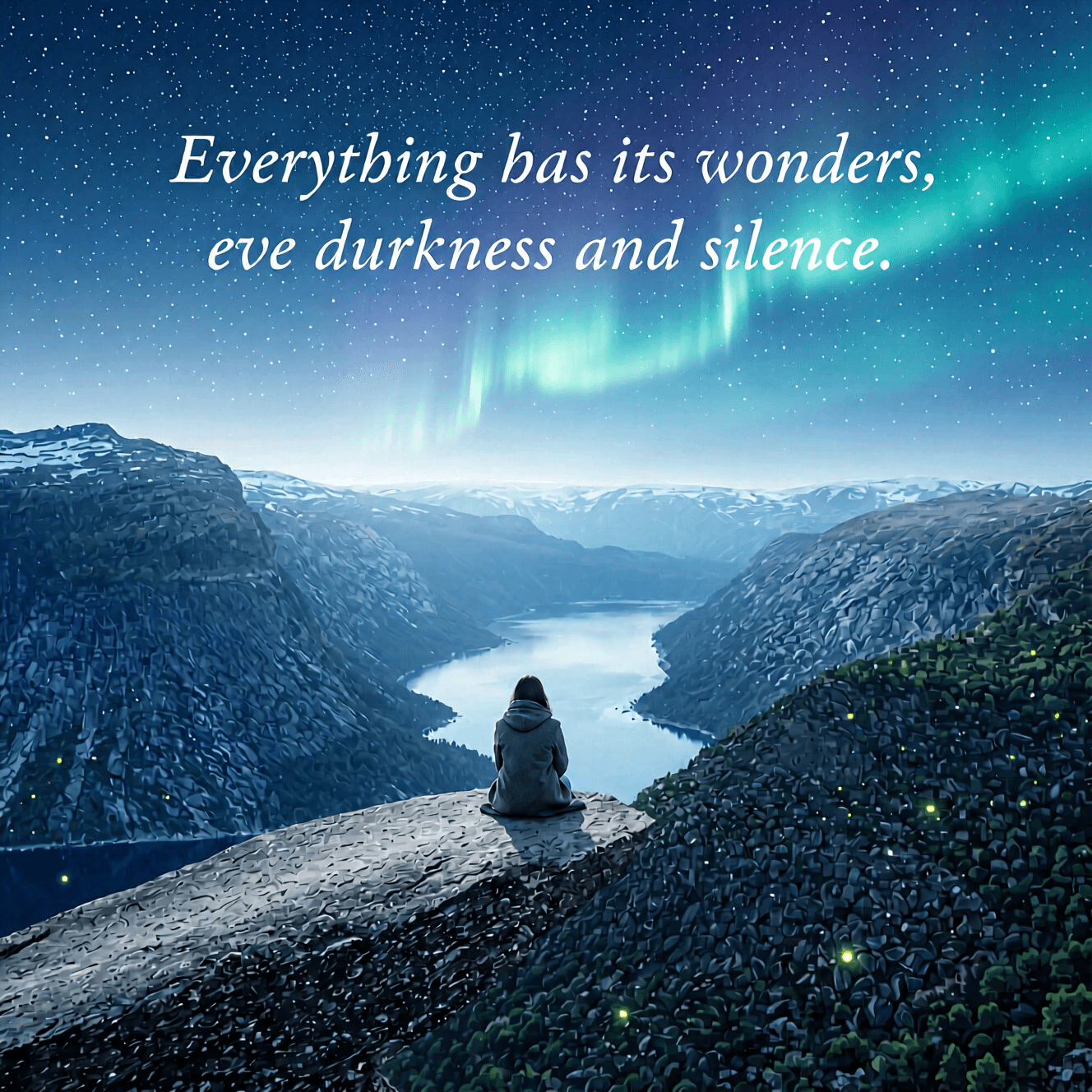
Helen Keller’s line begins by widening the definition of “wonder.” Rather than reserving amazement for bright, dramatic, or easily celebrated experiences, she insists that every aspect of existence contains something worthy of attention. In this view, wonder is not a rare event that happens to us; it is a way of perceiving what is already present. From there, the quote gently challenges the reader’s habits: if we only call life wondrous when it aligns with comfort or spectacle, then we miss most of what life is. Keller’s phrasing sets up an ethic of perception—one that treats each condition as potentially meaningful, even when it appears empty at first glance. [...]
Created on: 2/7/2026

Daily Wonder Invites Possibility Into Your Life
Although the quote stands alone, it resonates with the sensibility often associated with García Márquez’s fiction, where the ordinary and the astonishing coexist. Works like One Hundred Years of Solitude (1967) are frequently read as invitations to see the marvelous within the daily rhythms of life, not only in distant fantasies. Following that logic, wonder is not an escape from reality but an enriched encounter with it. The “window” becomes a way of granting the everyday the dignity of mystery—an attitude that keeps life from hardening into mere repetition. [...]
Created on: 1/18/2026

Believing the Impossible Before Breakfast
From there, the quote quietly challenges adult seriousness. Children often accept improbable scenarios with ease, not because they lack intelligence, but because their models of the world are still flexible. As we age, skepticism becomes a form of self-protection, yet it can harden into reflexive dismissal. Carroll’s breakfast-time boast proposes an alternative: keep skepticism, but loosen the grip. If belief can be tried on temporarily—like a costume—then the mind can explore without committing to gullibility. [...]
Created on: 1/10/2026

Planting Wonder in the Open Field Today
Seeds are planted into uncertainty: weather may turn, soil may resist, and results may arrive late—or differently than expected. By choosing wonder anyway, the line quietly teaches resilience. It implies that even when outcomes are unclear, the act of sowing curiosity and openness is worthwhile, because it shapes who we become while we wait. In everyday terms, this can look like starting a notebook of questions, learning a skill as a beginner, or reaching out to someone with genuine interest. The courage is not grand heroism; it’s the steady willingness to invest attention in life despite not controlling the harvest. [...]
Created on: 12/29/2025

Staying Alert to Wonder in Everyday Life
E. B. White’s line turns “wonder” from a rare lightning strike into a discipline of noticing. To be “on the lookout” implies intention: you scan the ordinary the way a birder scans a hedgerow, expecting something alive to appear. In that sense, wonder is less about what happens to you and more about how you meet what happens. This framing subtly shifts responsibility to the observer. Instead of waiting for grand events to produce awe, White suggests cultivating a posture of receptivity—an alertness that makes small marvels visible, whether it’s a pattern of rain on a window or a child’s unexpected question that reframes a whole afternoon. [...]
Created on: 12/18/2025

Curiosity as a Compass for New Effort
If curiosity points the way, Abe’s “wonder” supplies the energy to open the first door. Wonder is the emotional spark—an experience of “there’s more here than I expected”—that turns passive interest into active engagement. It’s the moment a question stops being abstract and becomes personal. Consequently, wonder is not mere daydreaming; it’s a threshold experience. It nudges us from observing to trying, from reading about a skill to practicing it, because the unknown begins to feel inviting rather than intimidating. [...]
Created on: 12/14/2025