
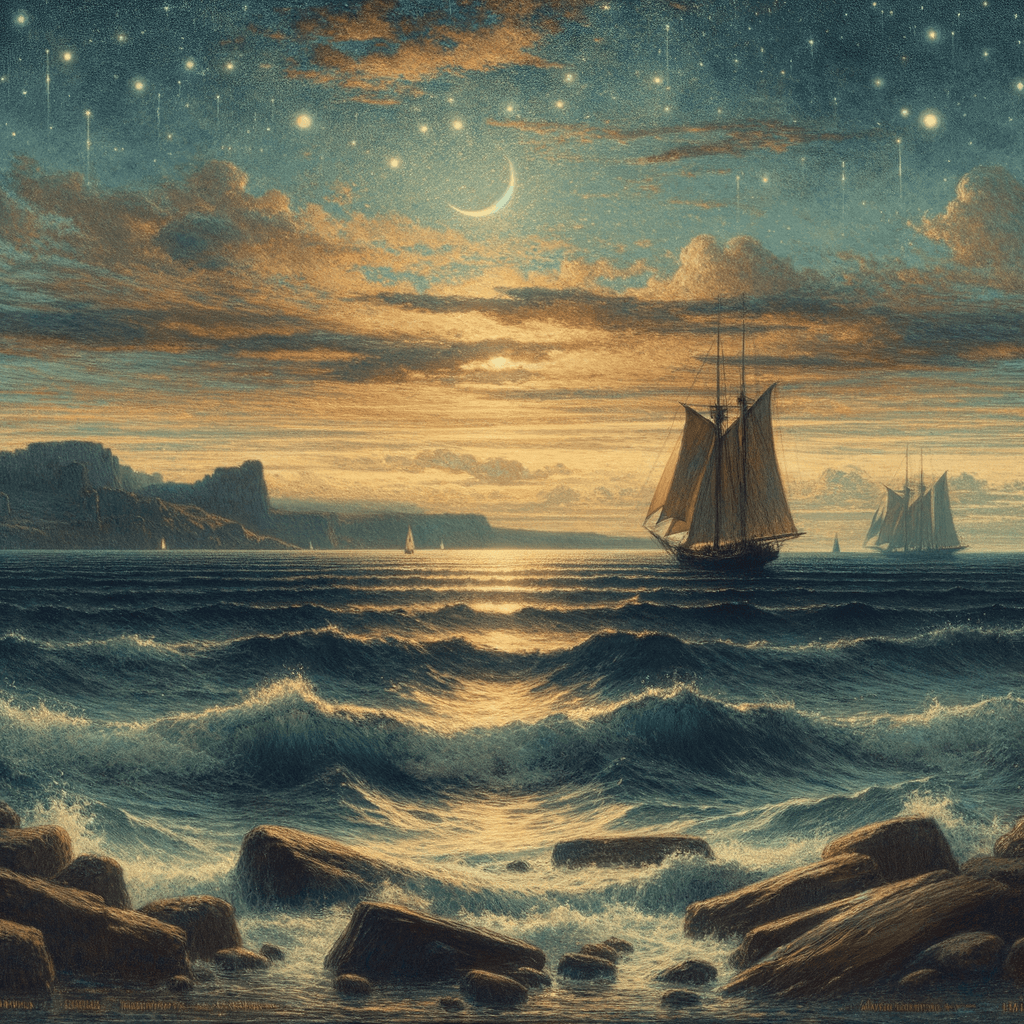
大海将给予每个人新的希望,就像睡眠带给人们梦境一般。 – 克里斯托弗·哥伦布
—读完这句,什么在心中回响?
Analogy Between Ocean and Sleep
Christopher Columbus draws a parallel between the ocean and sleep. He suggests that just as sleep provides individuals with dreams and a respite from reality, the ocean holds the promise of new opportunities and hope.
Symbolism of the Ocean
The ocean symbolizes vastness, mystery, and the potential for discovery. Columbus views the ocean as a source of endless possibilities, similar to how unexplored territories can inspire hope and adventure.
Inspiration and Optimism
This quote emphasizes the inspirational and optimistic outlook one can have when faced with the unknown. Columbus believed that venturing into the unknown, like navigators exploring the seas, can lead to unexpected and hopeful outcomes.
Exploration and Dreams
Columbus equates exploration with the realm of dreams, highlighting the adventurous spirit and the pursuit of the unknown. Just as dreams fuel our imagination, exploring new horizons can fuel our sense of purpose and hope.
Historical Context
Christopher Columbus, an Italian explorer from the late 15th century, is known for his voyages across the Atlantic Ocean. His explorations were driven by the desire to find new routes and lands, embodying the hope and ambition of the Age of Discovery.
一分钟思考
这句话给你带来了什么感受?
相关名言
已选6条希望是清醒者的梦想。 - 亚里士多德
亚里士多德
这句话表明,希望是一种积极的、具备现实可能性的愿望。它不仅是对美好未来的期待,还带有实际可行性的成分。
阅读完整解读 →希望是清醒者的梦。 - 亚里士多德
亚里士多德
这句话表明,希望是一种在清醒状态下进行的设想和向往。与睡眠中的梦不同,希望是基于现实并可能实现的愿望。
阅读完整解读 →希望是清醒者的梦。 —— 亚里士多德
亚里士多德
这句话暗示希望是理性的产物。清醒的人在清晰认知和现实中建立起对未来的期望,而不是盲目的幻想。
阅读完整解读 →在每一个晨曦的开始,都是新的希望和力量的见证。
佚名
这句话强调了每日清晨的象征意义,新的晨曦代表新的一天的开始,给人带来新的希望和机遇。
阅读完整解读 →仅仅因为你的光闪烁,并不意味着它就快要熄灭。——Yohancé Salimu
约翰塞·萨利穆
这句话首先纠正了一种常见误解:我们往往把闪烁看成衰弱的征兆,却忽略它也可能是能量仍在顽强运作的表现。Yohancé Salimu借“光”的意象提醒人们,外在的不稳定并不自动等于内在的终结;有时,正是因为仍然燃烧,光才会在风中摇曳。 进一步说,这种判断反映了人类面对不确定性时的本能焦虑。我们习惯于把顺畅、恒定与安全联系起来,于是任何波动都被误读为失败的前奏。然而,这句箴言温和地扭转了这种思维:闪烁不是死亡证明,而可能只是生命正在抵抗环境。
阅读完整解读 →今天的泪水,浇灌着明天的花园。——马绍纳·德里瓦约
马特肖纳·德利瓦约
这句话首先借“泪水”与“花园”的对照,揭示了痛苦并非只是消耗,它也可能成为未来成长的养分。眼前的悲伤看似令人失去力量,但在更长的时间尺度里,它往往沉淀为理解、韧性与温柔,最终让人生开出新的花朵。 进一步说,这种表达之所以动人,正在于它没有否认痛苦本身的真实性。相反,它承认哭泣的重量,同时又赋予它方向:今天的失落并不只是结束,也可能是明天更新的开始。
阅读完整解读 →更多作者内容
来自克里斯托弗·哥伦布的更多内容 →