
Quote of the day
Why Talent Needs Discipline to Create Direction
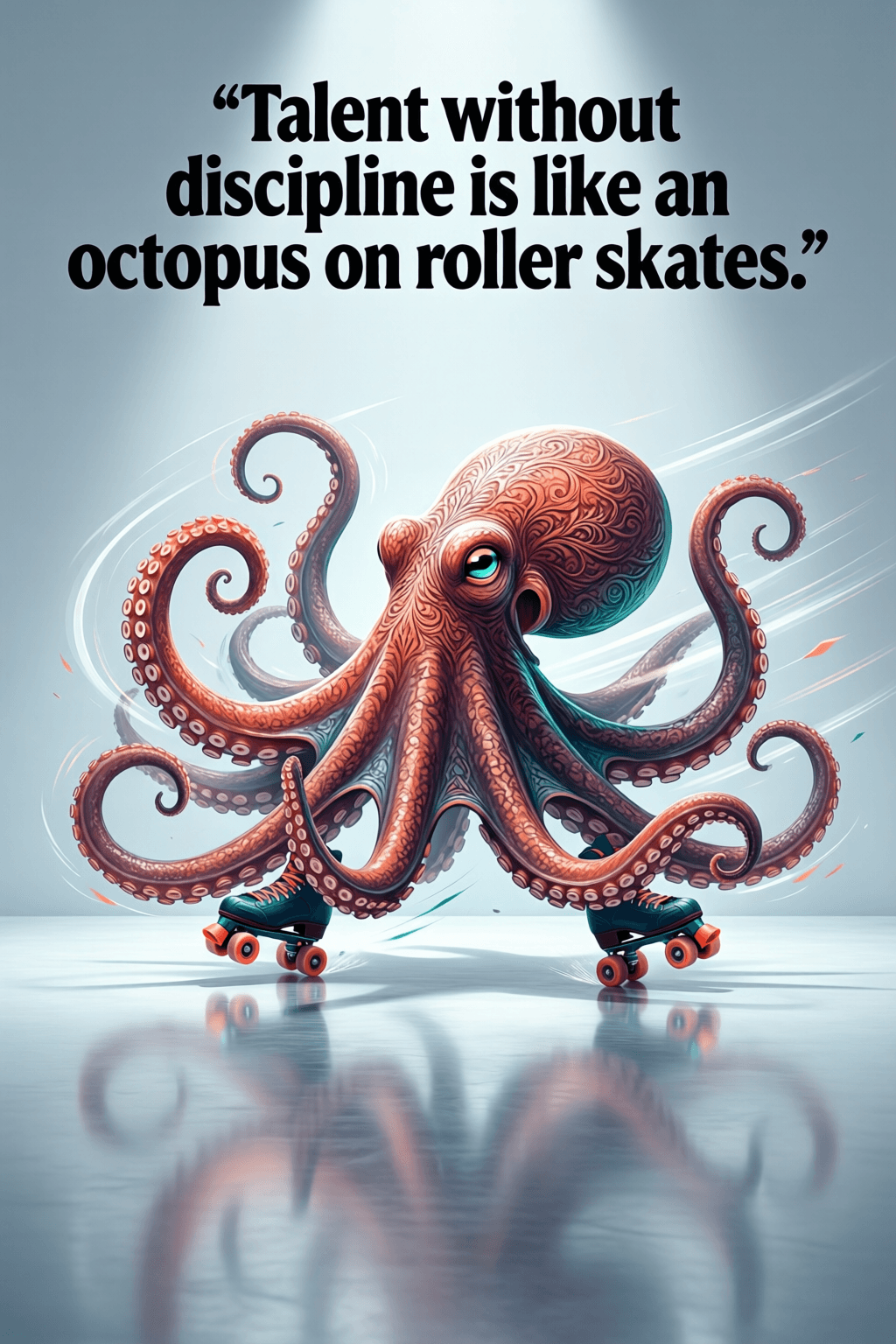
Talent without discipline is like an octopus on roller skates. There's plenty of movement, but you never know if it's going to be forward, backward, or sideways. — H. Jackson Brown, Jr.
— H. Jackson Brown Jr.
Interpretation
Read full interpretation →H. Jackson Brown, Jr.
Read full interpretation →
A Vivid Image of Wasted Motion
H. Jackson Brown, Jr. captures a serious truth through a comic image: an octopus on roller skates would certainly be active, but its energy would be scattered and unpredictable. In the same way, raw talent can produce excitement, flashes of brilliance, and constant motion without necessarily leading to real progress. The quote reminds us that ability alone does not guarantee meaningful results. From that starting point, the metaphor becomes especially powerful because it separates movement from direction. Many gifted people appear productive simply because they generate ideas quickly or perform with ease. Yet without structure, their efforts can drift, stall, or collapse into inconsistency.
The Difference Between Gift and Mastery
Building on that image, Brown’s remark distinguishes natural talent from disciplined mastery. Talent is often an initial advantage—a sensitivity, speed, or instinct that makes certain tasks come more easily. Discipline, however, is what shapes that advantage into something dependable through repetition, correction, and endurance. This distinction appears throughout history. Leonardo da Vinci is remembered for genius, yet his notebooks also reveal relentless observation and study. Likewise, athletes such as Serena Williams have long been praised not only for extraordinary ability but for the rigorous training that turned promise into sustained excellence. In this sense, discipline is what converts potential into form.
Why Consistency Beats Spurts of Brilliance
As the quote suggests, undirected talent may produce occasional dazzling moments, but it rarely creates a stable trajectory. Discipline matters because it establishes habits, and habits make performance repeatable. A person who depends only on inspiration may shine one day and disappear the next, whereas a disciplined person keeps moving toward a goal even when motivation fades. This is why so many fields prize routine over mood. The novelist Anthony Trollope, for example, famously maintained strict writing hours while holding a full-time job, proving that steady labor can outperform erratic genius. Brown’s metaphor therefore points to a practical lesson: progress depends less on dramatic bursts than on reliable forward motion.
Discipline as a Source of Freedom
At first glance, discipline can seem restrictive, as though it limits spontaneity. Yet the quote implies the opposite: without discipline, talent becomes chaotic, and chaos reduces control. Structure actually gives gifted people the ability to steer their strengths instead of being dragged around by them. Musicians illustrate this especially well. A jazz improviser may sound completely free in performance, but that freedom usually rests on years of scales, timing, and technical study. In other words, discipline does not crush talent; it gives talent traction. The octopus image is humorous precisely because the creature has plenty of ability to move, but no stable way to direct that movement.
A Lesson in Purposeful Growth
Ultimately, Brown’s quote is less a criticism of talent than a warning against relying on it too much. It encourages humility by suggesting that gifts are only the beginning. To move forward with purpose, people must pair ability with patience, self-control, and repeated effort. Seen this way, the saying offers a hopeful message as well. Discipline is learnable, even when talent seems mysterious or unevenly distributed. Someone with modest natural ability but strong habits can often surpass a more gifted person who lacks focus. Thus the quote closes on a timeless principle: direction, not mere motion, is what turns promise into achievement.
One-minute reflection
What's one small action this suggests?