
How One Determined Heartbeat Rewrites a Lifetime
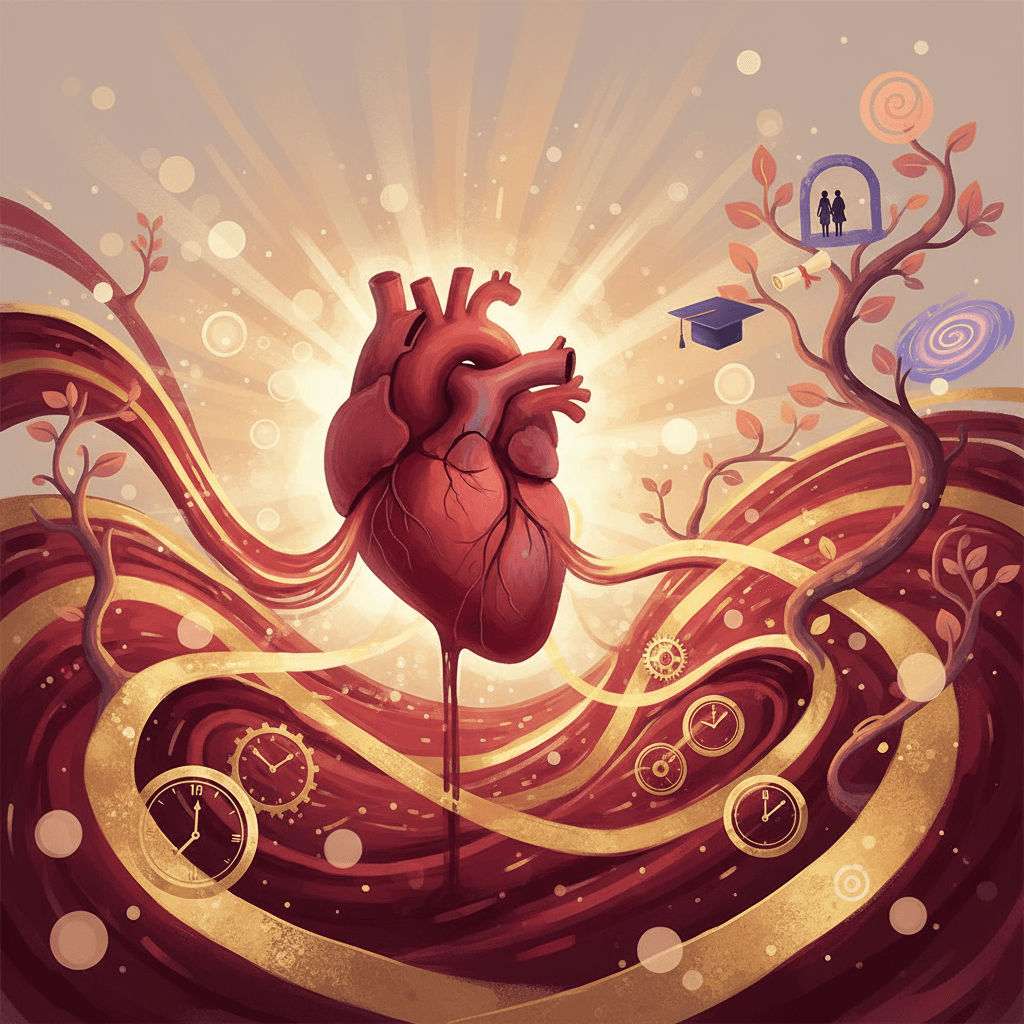
A single determined heartbeat can change the rhythm of a lifetime. — Toni Morrison
—What lingers after this line?
The Power Hidden in a Single Moment
Toni Morrison’s line suggests that transformation does not always unfold gradually; sometimes it ignites in one decisive instant. A “single determined heartbeat” evokes the precise moment when hesitation gives way to resolve—when fear, doubt, or inertia are interrupted by an inner yes. Rather than treating life as a fixed score, Morrison frames it as a living composition whose rhythm can be altered in an instant, much like a jazz musician who pivots mid-song and changes the entire mood with one bold note.
Determination as an Act of Inner Rebellion
Moving from the image of a heartbeat to its meaning, determination here functions as a quiet form of rebellion against whatever has kept us stuck. In *Beloved* (1987), Morrison’s characters repeatedly confront histories that threaten to dictate their futures, and a crucial shift often arrives when someone refuses to keep marching to an inherited tempo. That singular, defiant beat inside the chest says: I will not move exactly as I have been taught to move. It is small in form yet immense in consequence because it challenges the inevitability of our old patterns.
Rhythm as the Story of a Life
By invoking rhythm rather than simply “direction,” Morrison broadens the idea from a change of path to a change of being. Rhythm captures pace, pattern, and feeling—how days string together into a recognizable life. A person living in hurried anxiety has a different rhythm than someone anchored in patient courage. Thus, when that one heartbeat hardens into determination, it does more than redirect a single choice; it begins to retune the tempo of everyday existence, from how we speak to how we hope.
Small Decisions, Compounding Over Time
From here it becomes clear that a single heartbeat matters not only in isolation but in what it initiates. Psychologist William James argued that our lives are shaped by “nothing so much as the small, unremembered acts” we repeat; yet each pattern starts somewhere. The first determined step out of an unhealthy relationship, the first brave application for a dream job, or the first honest conversation after years of silence—all are single beats that, when sustained, evolve into a new rhythm. Over time, these beats layer into habit, and habit crystallizes into character.
Choosing a New Tempo for the Future
Ultimately, Morrison’s image is an invitation rather than a mere observation. If a determined heartbeat can alter a lifetime’s rhythm, then the future is not solely the extension of the past; it is also the echo of the next courageous decision. This does not dismiss pain, history, or constraint—real forces that Morrison’s novels never sentimentalize. Instead, it asserts a counterforce: the possibility that a single, resolute pulse of will can become the downbeat for an entirely new movement, allowing us to live the rest of our days to a rhythm we have consciously chosen.
Recommended Reading
One-minute reflection
Where does this idea show up in your life right now?
Related Quotes
6 selectedKeep a stubborn heart and a flexible plan. — Toni Morrison
Toni Morrison
Toni Morrison’s sentence splits strength into two complementary forms: a “stubborn heart” that refuses to surrender what matters, and a “flexible plan” that accepts reality’s constant revisions. Rather than treating grit...
Read full interpretation →You are the author of your own story. You don't need permission to begin. — Ctrl+Alt+Write
The quote opens with a bracing premise: your life is not merely something that happens to you, but something you shape. By calling you “the author,” it reframes identity from a fixed description into an ongoing draft—rev...
Read full interpretation →Suffering is universal. But victimhood is optional. — Edith Eger
Edith Eger
Edith Eger’s line begins by naming what no life escapes: suffering arrives through loss, illness, disappointment, and injustice, often without warning or consent. By calling it universal, she removes the illusion that pa...
Read full interpretation →Action isn't just the effect of motivation; it's also the cause of it. — Mark Manson
Mark Manson
Mark Manson’s line challenges a familiar assumption: that we must first feel inspired, confident, or ready before we can act. Instead, he argues that action can be the spark rather than the reward.
Read full interpretation →Write your own part. It's the only way to get exactly what you want. — Mindy Kaling
Mindy Kaling
Mindy Kaling’s advice reads like a simple directive, but it carries a larger philosophy: if you want a role that truly fits you, you may have to create it. Rather than waiting for permission or perfect circumstances, she...
Read full interpretation →If you do not take charge of your own mind, someone else will. — Sadhguru
Sadhguru
Sadhguru’s line frames the mind as a powerful instrument that will not remain neutral for long. If you don’t direct it with intention, it tends to be directed by external forces—advertising, social pressure, fear-driven...
Read full interpretation →More From Author
More from Toni Morrison →The ability to endure is the discipline of the soul. — Toni Morrison
Toni Morrison’s line shifts endurance from a mere survival trait into a deliberate inner practice: a discipline cultivated in the soul. Rather than glorifying pain for its own sake, she suggests that the capacity to cont...
Read full interpretation →You are your best thing. — Toni Morrison
Toni Morrison’s line, “You are your best thing,” quietly overturns a common habit: looking outward for proof of worth. Instead of treating love, status, or achievement as the final measure, the quote plants value inside...
Read full interpretation →Keep a stubborn heart and a flexible plan. — Toni Morrison
Toni Morrison’s sentence splits strength into two complementary forms: a “stubborn heart” that refuses to surrender what matters, and a “flexible plan” that accepts reality’s constant revisions. Rather than treating grit...
Read full interpretation →Open your hands and the world will learn how to fit in them. — Toni Morrison
Toni Morrison’s line sounds gentle, yet it carries a bracing claim: the way you hold yourself teaches the world how to approach you. “Open your hands” evokes release—of tight control, fear, and the reflex to clutch what...
Read full interpretation →