
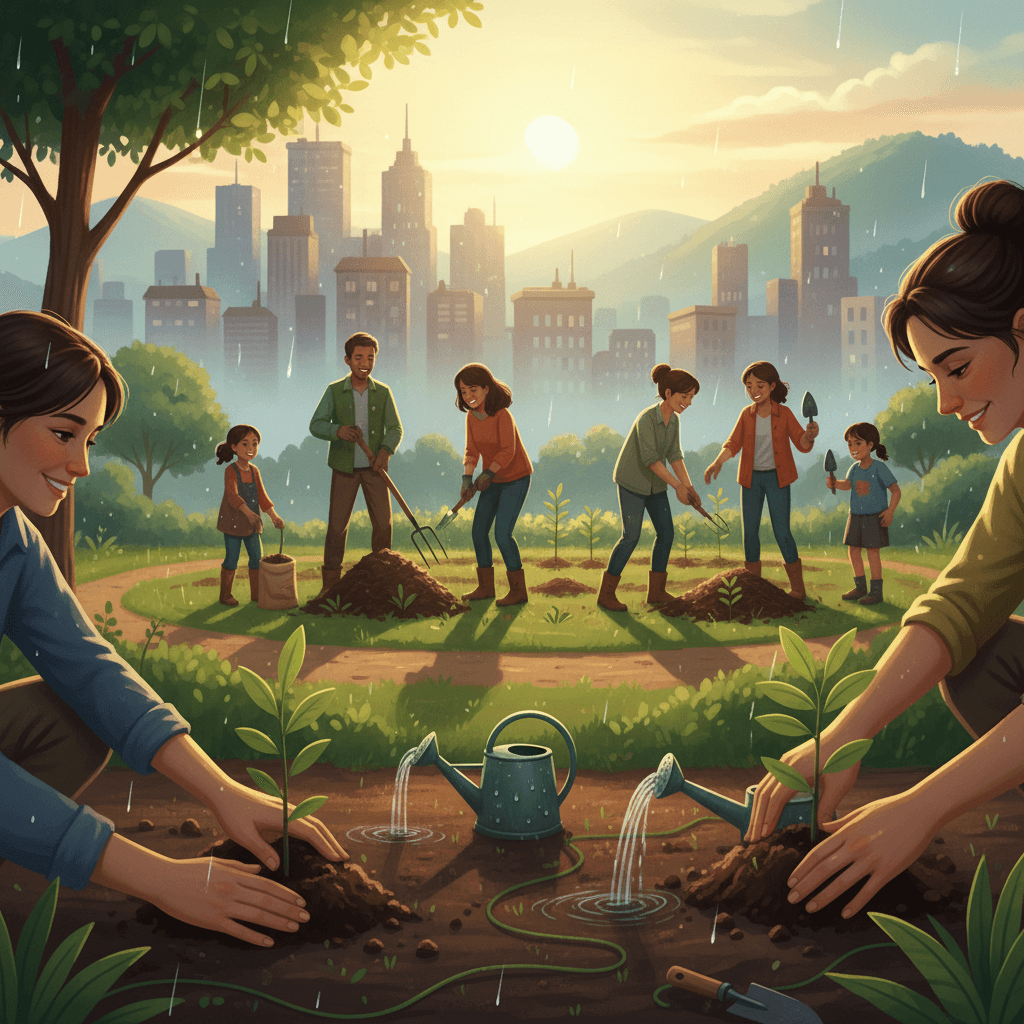
Nurture one task at a time; collective care becomes a resilient world. — Wangari Maathai
—What lingers after this line?
From Small Actions to Global Change
Wangari Maathai’s line begins with a deceptively simple instruction: focus on one task at a time. Rather than glorifying grand gestures, she frames transformation as something built from manageable steps, repeated steadily. This approach keeps people from freezing in the face of overwhelming problems—environmental collapse, poverty, conflict—and replaces paralysis with forward motion. From there, the quote quietly widens its scope. A single completed task is not just personal progress; it becomes a building block in a much larger structure of change, suggesting that the path to a healthier world often starts with the next doable thing.
Attention as an Ethical Practice
Focusing on one task also implies discipline: the willingness to give attention where it is needed most. In an age of constant distraction, Maathai’s counsel reads like an ethical stance—care is not only a feeling but a practice of sustained commitment. By choosing a single task, we refuse the shallow comfort of “awareness” without follow-through. This is where the quote transitions from productivity to responsibility. The task is “nurtured,” not merely finished, implying patience, maintenance, and respect for living systems—an orientation that fits Maathai’s environmental legacy.
Collective Care as a Social Ecosystem
The second clause shifts from individual focus to shared obligation: “collective care.” Care becomes communal infrastructure, like clean water systems, mutual aid networks, or neighborhood stewardship of public spaces. Maathai suggests that resilience is not produced by solitary heroes but by people coordinating their efforts and looking after one another. In this sense, each person’s “one task” matters because it plugs into a wider web. When care is distributed—across families, communities, institutions—it becomes harder for crises to isolate or break people.
The Green Belt Movement in One Sentence
Maathai’s own work offers a lived example of her message. Through Kenya’s Green Belt Movement (founded 1977), communities—especially women—planted trees to restore degraded land, secure firewood, and protect watersheds. Planting a tree is the archetypal “one task at a time” action: concrete, local, and repeatable. Yet the impact compounds. Millions of trees, combined with civic education and community organizing, demonstrate how collective care can turn modest actions into environmental restoration and social empowerment—precisely the resilient world her quote points toward.
Resilience Means Withstanding and Regenerating
A “resilient world” is not one that never suffers shocks; it is one that can absorb them and recover without losing what makes life dignified. Ecologically, diversity and redundancy help systems survive stress; socially, strong relationships and shared norms of care do the same. Maathai’s wording ties these together, implying that the health of forests and the health of communities follow similar principles. Consequently, resilience emerges as something cultivated, not promised. It is built through consistent caretaking—of soil, institutions, neighbors, and future generations.
A Practical Blueprint for Everyday Citizenship
Taken as guidance, the quote offers a blueprint: pick a task small enough to sustain, then connect it to a wider culture of care. That might mean restoring a local habitat, mentoring a student, organizing a community garden, or maintaining a mutual aid pantry—actions that look modest but gain power when shared. Finally, Maathai’s message counters despair with structure. When many people nurture one task at a time—and do so with collective intent—the result is not merely incremental progress but a sturdier world capable of enduring and renewing itself.
One-minute reflection
Why might this line matter today, not tomorrow?
Related Quotes
6 selectedPlant kindness steadily, for a forest of care steadies any storm. — Desmond Tutu
Desmond Tutu
Desmond Tutu’s image links patient acts of kindness to a living canopy of care. Rooted in the ethic of ubuntu—“I am because we are”—his vision treats goodness not as sporadic heroics but as daily cultivation.
Read full interpretation →A single steady step often redraws the map of what's possible. — Wangari Maathai
Wangari Maathai
Wangari Maathai’s line begins with a deceptively small image: a single steady step. Yet the consequence is enormous—“redraws the map of what’s possible”—suggesting that reality is not fixed so much as revised by action.
Read full interpretation →I will be a hummingbird. I will do the best I can. — Wangari Maathai
Wangari Maathai
By saying, “I will be a hummingbird,” Wangari Maathai chooses a creature defined less by size than by relentless motion. The hummingbird becomes a metaphor for the person who keeps showing up—quick, focused, and undeterr...
Read full interpretation →Act with small, steady fires; they will warm the coldest doubt. — Wangari Maathai
Wangari Maathai
Wangari Maathai’s image of “small, steady fires” reframes change as something cultivated rather than forced. Instead of one dramatic blaze that flares out, she points to consistent, modest actions that keep heat alive ov...
Read full interpretation →The generation that destroys the environment is not the generation that pays the price. That will be our children and grandchildren. — Wangari Maathai
Wangari Maathai
Wangari Maathai’s warning exposes a moral imbalance at the heart of modern development: those who benefit most from environmental destruction are rarely those who bear its full costs. Instead, today’s comforts—fossil-fue...
Read full interpretation →Sharpen your courage in the quiet hours and use it when the light returns — Wangari Maathai
Wangari Maathai
Beginning in the stillness, Maathai’s counsel suggests that bravery is not improvised in crises but forged beforehand. Quiet hours invite reflection, skill-building, and the moral rehearsal that gives courage its edge.
Read full interpretation →More From Author
More from Wangari Maathai →A single steady step often redraws the map of what's possible. — Wangari Maathai
Wangari Maathai’s line begins with a deceptively small image: a single steady step. Yet the consequence is enormous—“redraws the map of what’s possible”—suggesting that reality is not fixed so much as revised by action.
Read full interpretation →I will be a hummingbird. I will do the best I can. — Wangari Maathai
By saying, “I will be a hummingbird,” Wangari Maathai chooses a creature defined less by size than by relentless motion. The hummingbird becomes a metaphor for the person who keeps showing up—quick, focused, and undeterr...
Read full interpretation →Act with small, steady fires; they will warm the coldest doubt. — Wangari Maathai
Wangari Maathai’s image of “small, steady fires” reframes change as something cultivated rather than forced. Instead of one dramatic blaze that flares out, she points to consistent, modest actions that keep heat alive ov...
Read full interpretation →The generation that destroys the environment is not the generation that pays the price. That will be our children and grandchildren. — Wangari Maathai
Wangari Maathai’s warning exposes a moral imbalance at the heart of modern development: those who benefit most from environmental destruction are rarely those who bear its full costs. Instead, today’s comforts—fossil-fue...
Read full interpretation →