
Shaping Hope Through Steady, Patient Hands
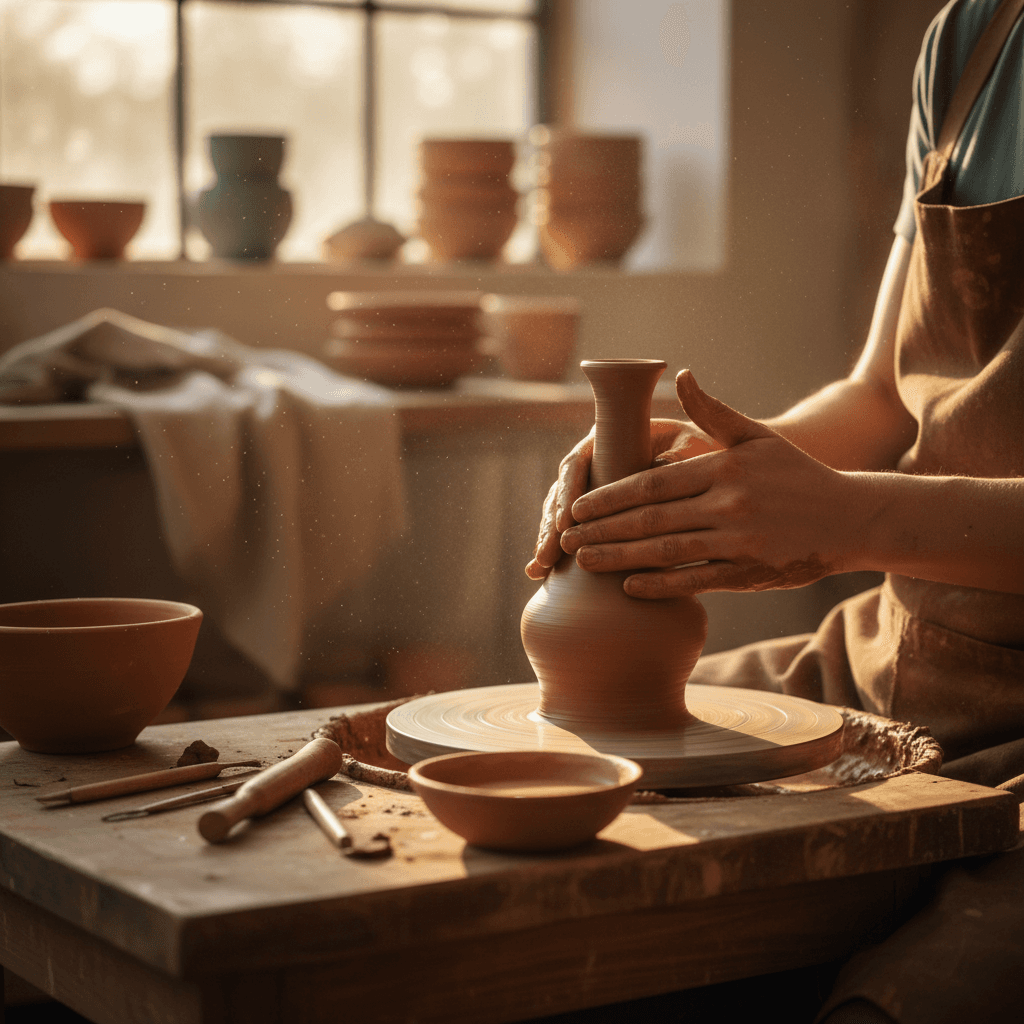
Let your hands shape hope like pottery — steady, patient, beautiful. — Kahlil Gibran
—What lingers after this line?
Hope as Something Made, Not Found
Gibran’s image begins by treating hope as a craft rather than a wish. Instead of arriving suddenly, hope is formed through deliberate effort—pressed, guided, and revised over time. This shifts the reader from passive longing to active participation: if hope can be shaped, then despair is not a final verdict but raw material. From that starting point, the quote implies that our daily choices are the potter’s tools. Even small actions—writing one more page, applying again, apologizing, practicing—become touches that gradually give hope a workable form.
The Discipline of Steadiness
The word “steady” introduces the ethics of consistency. Pottery collapses when hands are erratic; likewise, hope falters when we swing between frantic effort and total surrender. Gibran suggests that steadiness is a kind of faith expressed through rhythm: showing up, adjusting, and continuing even when the outcome is unclear. This is why long projects often teach hope better than short bursts of inspiration. Training for a marathon, rebuilding after loss, or learning a difficult skill requires the calm persistence that keeps the clay centered and prevents the vessel from warping.
Patience as Creative Time
Next, “patient” reframes waiting as part of creation rather than a delay. Clay needs time to settle; it must be wedged, shaped, dried, and fired. In the same way, hope matures through phases—some active, some quiet—where progress is not immediately visible but still real. This aligns with the idea found in Stoic thought, such as Epictetus’ Discourses (c. 108 AD), which emphasizes focusing on what is within our control and allowing outcomes to unfold in their proper season. Patience, then, is not weakness; it is the tempo that makes durable change possible.
Beauty as a Moral Aim
By ending with “beautiful,” Gibran adds an aesthetic dimension: hope is not only functional, but also humane. Beauty here is less about perfection and more about care—the tenderness of making something worth living with. A beautiful vessel may carry marks of the process, and hope may include scars, yet still be worthy. This suggests that how we pursue hope matters as much as whether we achieve it. Kindness, dignity, and attentiveness become part of the finished shape, turning mere survival into something that can inspire others.
Hands as Symbols of Agency and Service
The focus on “hands” grounds the quote in the body and in action. Hands represent agency: we can touch reality, alter it slightly, and learn from the feedback. But hands also imply service—hands that work often work for someone, or alongside someone, binding hope to community rather than solitary willpower. Consider a simple anecdote: a teacher staying after class to help a struggling student, or a friend cooking during a hard week. These are not dramatic rescues, yet they shape hope with the quiet force of repeated, competent care.
From Fragile Clay to Fired Resilience
Finally, pottery’s process points to resilience. The vessel is most vulnerable before firing, just as hope can be delicate early on. Yet with continued shaping—and the heat of testing—what was soft becomes strong. Gibran’s metaphor gently acknowledges hardship without glorifying it: the kiln is real, but so is the possibility of transformation. In that closing movement, the quote becomes a guide for living: keep your hands steady, give time its role, and aim for a hope that is not merely intact, but meaningful—formed into something you can carry forward and offer to others.
Recommended Reading
As an Amazon Associate, we earn from qualifying purchases.
One-minute reflection
What's one small action this suggests?
Related Quotes
6 selectedPlant hope like trees of fruit: their shade and harvest arrive long after the first seed. — Kahlil Gibran
Kahlil Gibran
Gibran frames hope as something planted rather than simply felt, shifting it from a mood into a practice. A seed is small, even unimpressive, yet it carries a future that can’t be rushed into view.
Read full interpretation →In the heart of every winter lives a throbbing spring, and behind every night comes a smiling dawn. - Khalil Gibran
Kahlil Gibran
This quote emphasizes the idea of hope and renewal. It suggests that even in the darkest and coldest times (winter), there is always the promise of rejuvenation and warmth (spring).
Read full interpretation →Let patience be the scaffold for your dreams. — Khalil Gibran
Khalil Gibran
Gibran’s image turns patience from passive endurance into something engineered and purposeful: a scaffold. Rather than suggesting you simply “wait” for dreams to arrive, the line implies that patience is the temporary st...
Read full interpretation →Trust the slow crafting of your life; steady hands build enduring shapes. — Rumi
Rumi
Rumi’s line invites a radical shift in tempo: away from the frantic pace of modern expectations toward the quieter rhythm of genuine growth. Rather than demanding quick resolutions, he suggests we “trust” a process we ca...
Read full interpretation →In the heart of every winter lives a throbbing spring, and behind every night comes a smiling dawn. - Khalil Gibran
Kahlil Gibran
This quote suggests that even in our darkest and most challenging times (winter and night), there is always the promise of better days ahead (spring and dawn). It emphasizes the cyclical nature of life and the certainty...
Read full interpretation →In the heart of every winter lives a throbbing spring, and behind every night, comes a smiling dawn. - Khalil Gibran
Kahlil Gibran
This quote emphasizes the natural cycles of the world, where harsh winters eventually give way to vibrant springs, and dark nights are always followed by bright mornings. It speaks to the inevitable rhythm and balance fo...
Read full interpretation →More From Author
More from Kahlil Gibran →March on. Do not tarry. To go forward is to move toward perfection. — Kahlil Gibran
Gibran’s opening imperative—“March on. Do not tarry.”—sets a tone of disciplined urgency.
Read full interpretation →There must be spaces in your togetherness, and let the winds of the heavens dance between you. — Kahlil Gibran
Gibran’s line opens with a gentle paradox: he speaks to people who are already “together,” yet insists that togetherness is healthiest when it includes room. Rather than portraying love as fusion, he frames it as a relat...
Read full interpretation →Our anxiety does not come from thinking about the future, but from wanting to control it. — Kahlil Gibran
Kahlil Gibran reframes anxiety as something more specific than mere anticipation. The future itself—uncertain, unfolding, and not yet real—doesn’t automatically distress us; rather, distress appears when we demand certai...
Read full interpretation →Work on the bright corner of your world and light will spread. — Kahlil Gibran
Kahlil Gibran’s line points to a deceptively simple strategy for change: begin with what is closest and most workable. “Your world” need not mean the entire planet; it can mean your desk, your household, your street, or...
Read full interpretation →