
In the Heart of Every Winter Lives a Throbbing Spring - Khalil Gibran
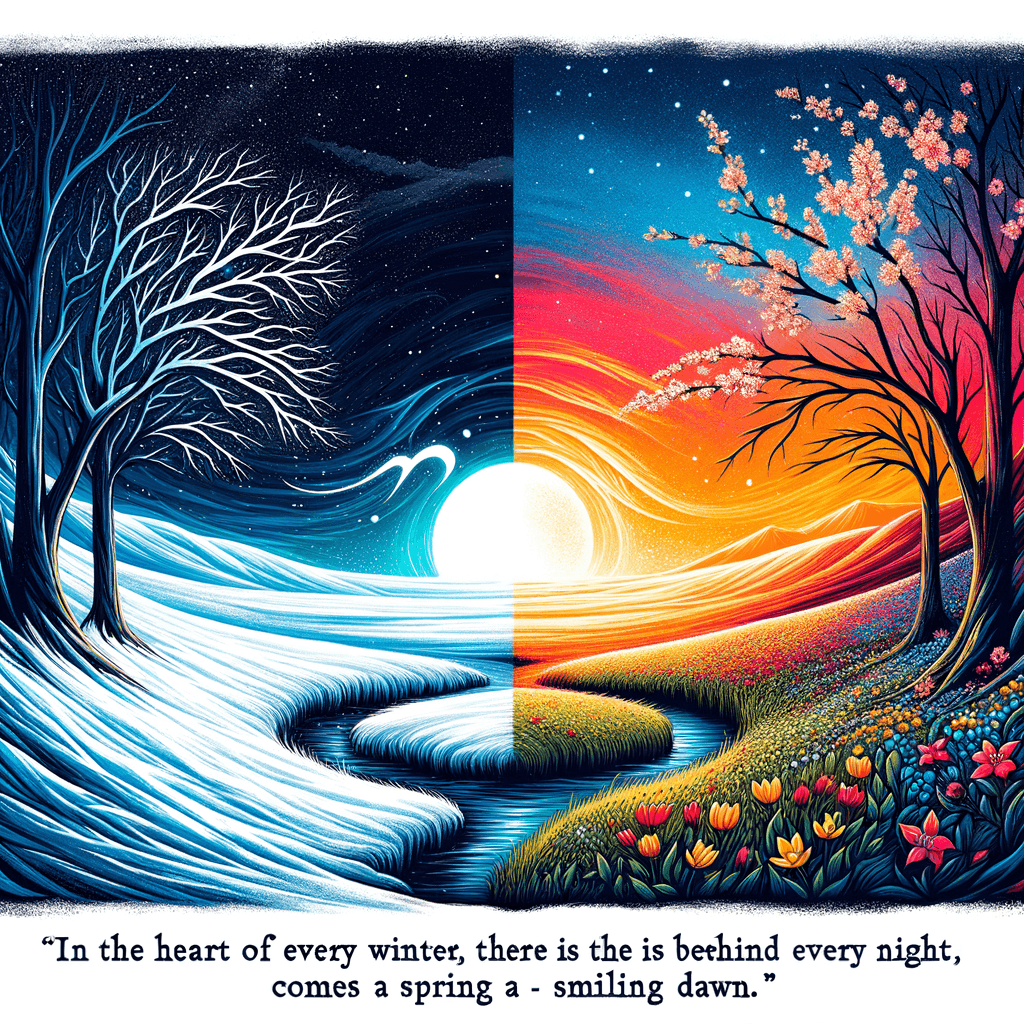
In the heart of every winter lives a throbbing spring, and behind every night comes a smiling dawn. - Khalil Gibran
—What lingers after this line?
Hope and Renewal
This quote emphasizes the idea of hope and renewal. It suggests that even in the darkest and coldest times (winter), there is always the promise of rejuvenation and warmth (spring). Similarly, the night might symbolize difficult or dark periods in life, but dawn brings new beginnings and opportunities.
Cyclical Nature of Life
Gibran highlights the cyclical nature of life and the inevitability of change. Just as seasons change and night turns into day, difficult times are followed by better ones. This cyclical perspective fosters resilience and patience during tough times.
Optimism and Positivity
The quote encourages optimism and a positive outlook. It reminds us that after every hardship, there will be relief and happiness, thus inspiring a sense of perseverance and optimism.
Metaphorical Representation
Winter and night serve as metaphors for despair and challenges, while spring and dawn symbolize hope and happiness. Gibran uses these natural elements to paint a picture of emotional and psychological transitions.
Philosophical Insight
Khalil Gibran, a Lebanese-American writer and philosopher, often delved into themes of human condition, nature, and spirituality. This quote reflects his philosophical insight on the enduring spirit of hope and the natural alignment of life's phases.
Recommended Reading
As an Amazon Associate, we earn from qualifying purchases.
One-minute reflection
Where does this idea show up in your life right now?
Related Quotes
6 selectedLet your hands shape hope like pottery — steady, patient, beautiful. — Kahlil Gibran
Kahlil Gibran
Gibran’s image begins by treating hope as a craft rather than a wish. Instead of arriving suddenly, hope is formed through deliberate effort—pressed, guided, and revised over time.
Read full interpretation →Plant hope like trees of fruit: their shade and harvest arrive long after the first seed. — Kahlil Gibran
Kahlil Gibran
Gibran frames hope as something planted rather than simply felt, shifting it from a mood into a practice. A seed is small, even unimpressive, yet it carries a future that can’t be rushed into view.
Read full interpretation →In the heart of every winter lives a throbbing spring, and behind every night comes a smiling dawn. - Khalil Gibran
Kahlil Gibran
This quote suggests that even in our darkest and most challenging times (winter and night), there is always the promise of better days ahead (spring and dawn). It emphasizes the cyclical nature of life and the certainty...
Read full interpretation →In the heart of every winter lives a throbbing spring, and behind every night comes a smiling dawn. - Khalil Gibran
Kahlil Gibran
This quote conveys a message of hope and the inevitability of renewal. It suggests that even in the darkest and coldest times, there is the promise of warmth and light to come.
Read full interpretation →In the heart of every winter lives a throbbing spring, and behind every night, comes a smiling dawn. - Khalil Gibran
Kahlil Gibran
This quote emphasizes the natural cycles of the world, where harsh winters eventually give way to vibrant springs, and dark nights are always followed by bright mornings. It speaks to the inevitable rhythm and balance fo...
Read full interpretation →In the heart of every winter lives a pulsating spring, and behind every night, comes a smiling dawn. - Khalil Gibran
Kahlil Gibran
This quote emphasizes that even during the darkest and coldest times in life, there is always a promise of renewal and hope, symbolized by spring and dawn. It reassures us that hardships are temporary and better times ar...
Read full interpretation →More From Author
More from Kahlil Gibran →March on. Do not tarry. To go forward is to move toward perfection. — Kahlil Gibran
Gibran’s opening imperative—“March on. Do not tarry.”—sets a tone of disciplined urgency.
Read full interpretation →There must be spaces in your togetherness, and let the winds of the heavens dance between you. — Kahlil Gibran
Gibran’s line opens with a gentle paradox: he speaks to people who are already “together,” yet insists that togetherness is healthiest when it includes room. Rather than portraying love as fusion, he frames it as a relat...
Read full interpretation →Our anxiety does not come from thinking about the future, but from wanting to control it. — Kahlil Gibran
Kahlil Gibran reframes anxiety as something more specific than mere anticipation. The future itself—uncertain, unfolding, and not yet real—doesn’t automatically distress us; rather, distress appears when we demand certai...
Read full interpretation →Work on the bright corner of your world and light will spread. — Kahlil Gibran
Kahlil Gibran’s line points to a deceptively simple strategy for change: begin with what is closest and most workable. “Your world” need not mean the entire planet; it can mean your desk, your household, your street, or...
Read full interpretation →