
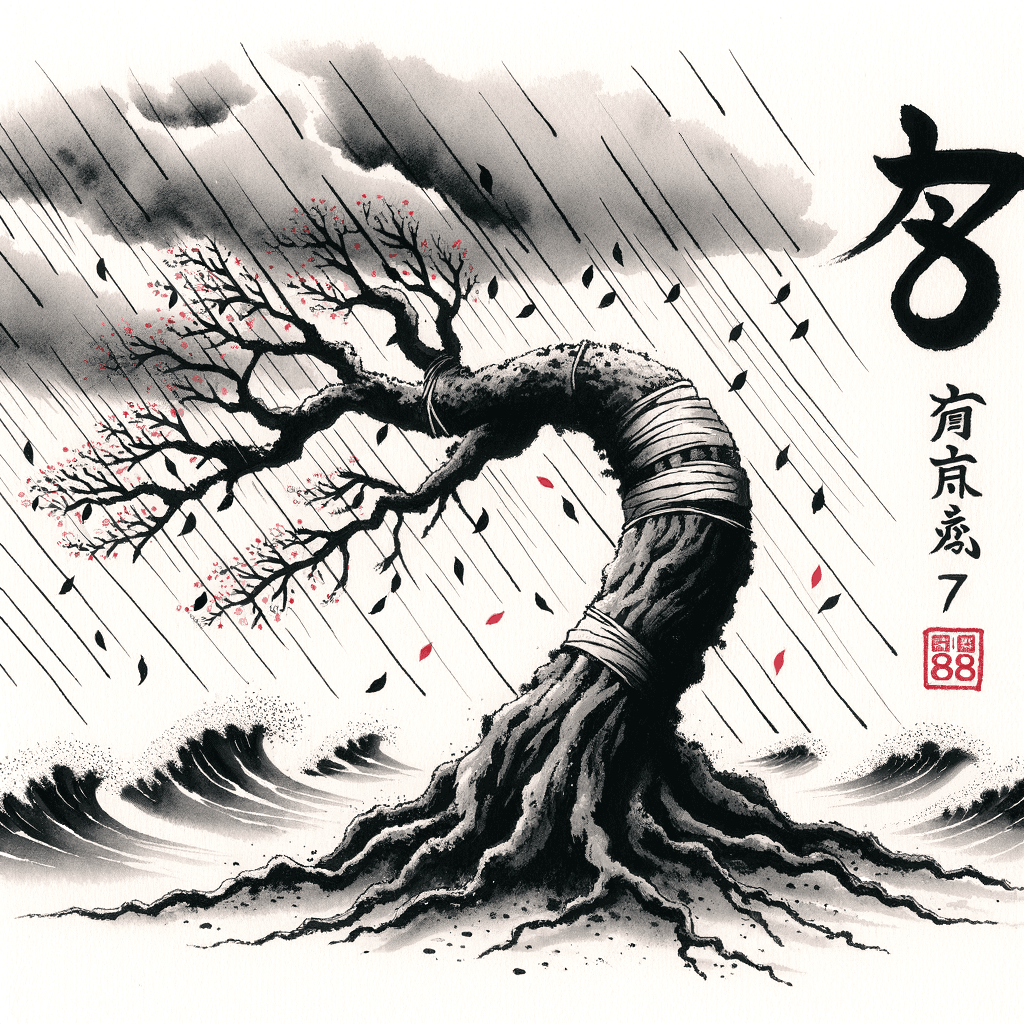
Fall seven times, stand up eight. — Japanese Proverb
—What lingers after this line?
Resilience
This proverb emphasizes the importance of resilience. It suggests that no matter how many times you fall or fail, you should always get back up and try again.
Perseverance
It highlights the significance of perseverance in the face of adversity. Continuously standing up after each fall indicates a relentless commitment to overcome obstacles.
Determination
The saying underscores the role of determination in achieving success. It implies that persistence and a strong will are key factors to reaching one's goals.
Positive Attitude
Maintaining a positive attitude despite setbacks is another takeaway from this proverb. It encourages individuals to focus on recovery and progress rather than dwelling on failures.
Cultural Context
Originating from Japanese culture, this proverb reflects a traditional value placed on endurance and steadfastness. Such values are deeply rooted in many aspects of Japanese society and philosophy.
One-minute reflection
What does this quote ask you to notice today?
Related Quotes
6 selectedWhen I hear somebody sigh, 'Life is hard,' I am always tempted to ask, 'Compared to what?' — Sydney J. Harris
Sydney J. Harris
Sydney J. Harris’s remark begins with an ordinary expression of fatigue: “Life is hard.” Yet his response, “Compared to what?” quietly turns complaint into inquiry.
Read full interpretation →If we are facing in the right direction, all we have to do is keep walking. — Thích Nhất Hạnh
Thich Nhat Hanh
Thích Nhất Hạnh’s words begin with a simple but profound premise: progress depends first on direction, not speed. If a person is turned toward compassion, clarity, healing, or truth, then each modest step becomes meaning...
Read full interpretation →Don't fight the challenges. Just find a new way to stand. — Germany Kent
Germany Kent
Germany Kent’s words begin with a quiet reversal of instinct: instead of treating every challenge as an enemy to defeat, she invites us to reconsider our posture toward difficulty. The emphasis is not on surrender, but o...
Read full interpretation →No matter how difficult yesterday was, you are stronger today. — Japanese Proverb
Japanese Proverb
This proverb highlights the concept of resilience, suggesting that overcoming challenges and hardships makes a person stronger. Each difficult experience contributes to personal growth and fortitude.
Read full interpretation →Do the best one can. Do it over again. Then still improve, even if ever so slightly, those retouches. — Marguerite Yourcenar
Marguerite Yourcenar
Yourcenar’s words begin with a simple demand: do the best one can. Yet she immediately refuses to let effort become an excuse for stopping.
Read full interpretation →Optimist: someone who figures that taking a step backward after taking a step forward is not a disaster, it's more like a cha-cha. — Robert Brault
Robert Brault
Robert Brault’s line begins with a witty redefinition: an optimist is not someone who denies backward motion, but someone who interprets it differently. Instead of treating a setback as proof of failure, the optimist see...
Read full interpretation →More From Author
More from Japanese Proverb →Even the monkey falls from the tree. — Japanese Proverb
“Even the monkey falls from the tree” begins with a vivid picture: a creature built for climbing still loses its grip. By choosing an expert climber rather than a novice, the proverb makes its point gently but firmly—ski...
Read full interpretation →The bamboo that bends is stronger than the oak that resists. - Japanese Proverb
This proverb emphasizes the strength found in adaptability and flexibility. Bamboo, which bends with the wind, can withstand forces that a rigid oak might not, suggesting that being flexible allows one to endure challeng...
Read full interpretation →The wind howls, but the mountain remains still. - Japanese Proverb
This proverb symbolizes the strength and resilience of one who remains unaffected by external turbulence. Just as the mountain stands firm despite the howling wind, a person can maintain their composure and stability ami...
Read full interpretation →When there is no wind, row. - Japanese Proverb
This proverb emphasizes the importance of relying on oneself. When external circumstances do not support your progress, you must take action and create your own momentum.
Read full interpretation →