
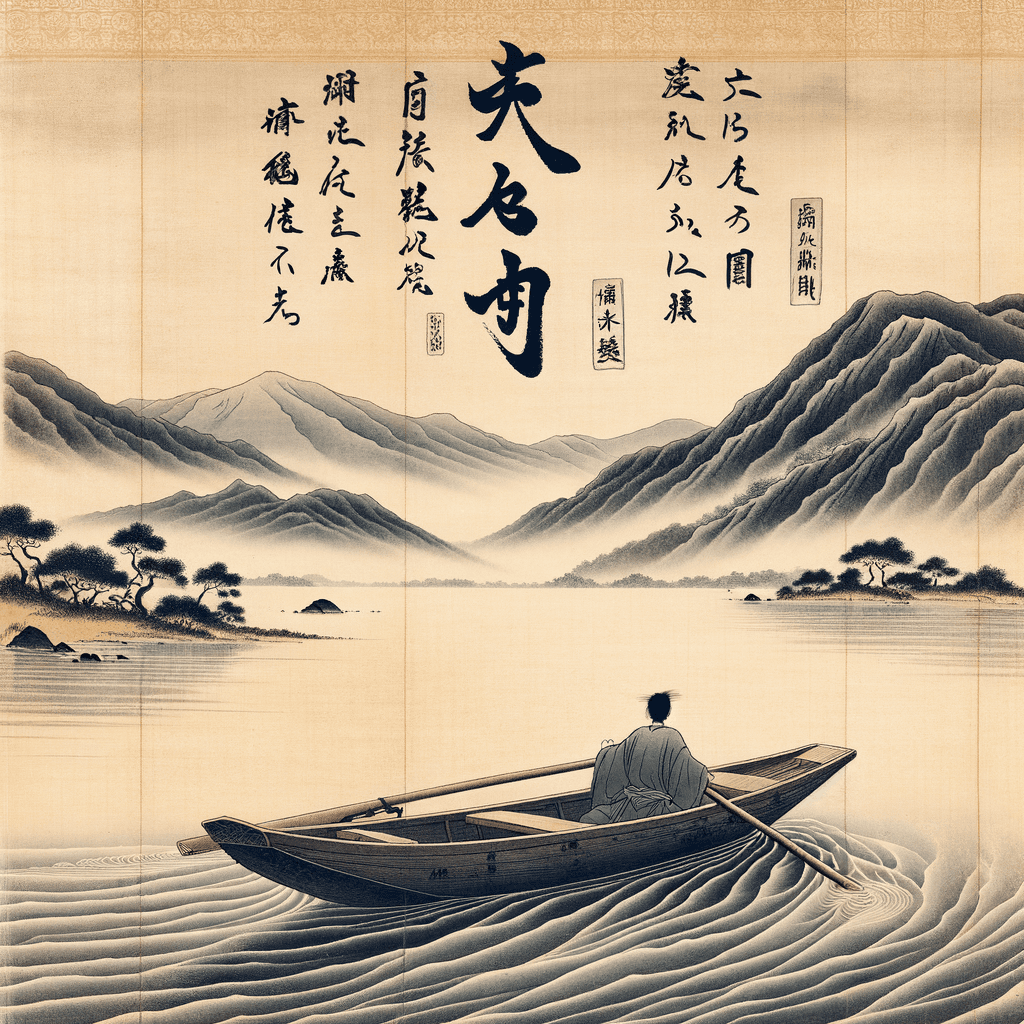
When there is no wind, row. - Japanese Proverb
—What lingers after this line?
Self-Reliance
This proverb emphasizes the importance of relying on oneself. When external circumstances do not support your progress, you must take action and create your own momentum.
Adaptability
It underlines the necessity of adaptability and resourcefulness. If the usual methods or paths are not working, find alternative ways to reach your goal.
Perseverance
The proverb illustrates the value of perseverance. Even in challenging situations where the support or aid is lacking, one should continue to strive and push forward.
Proactivity
This saying encourages taking proactive measures. Instead of waiting for favorable conditions, one should take initiative to overcome the obstacles.
Cultural Context
Japanese proverbs often reflect a deep wisdom about life, character, and nature. This particular saying reflects the cultural value placed on hard work, determination, and self-sufficiency in Japanese society.
One-minute reflection
What does this quote ask you to notice today?
Related Quotes
6 selectedAct, and you will have breakfast, but do not linger and you will have no dinner. — Japanese Proverb
Japanese Proverb
This proverb emphasizes the necessity of taking initiative. If one acts promptly and diligently, they will reap the rewards of their efforts, symbolized by having breakfast.
Read full interpretation →How to guarantee failure: let other people's opinions determine your priorities. — Alex Hormozi
Alex Hormozi
Alex Hormozi’s warning begins with a simple but uncomfortable truth: failure often starts when a person hands over the authority to decide what matters. Other people’s opinions may sound like advice, concern, criticism,...
Read full interpretation →You rise and fall by your own efforts. Remember, it is a waste of time to worry about anyone else in this struggle. — Rudyard Kipling
Rudyard Kipling
At its heart, Kipling’s statement insists that the decisive force in a person’s life is personal effort. To rise or fall is not, in the first instance, a matter of spectators, rivals, or public opinion, but of one’s own...
Read full interpretation →When you feel like you are drowning in life, don't blame the ocean. You have to learn how to swim. — Anne Lamott
Anne Lamott
Anne Lamott’s line begins with a blunt but compassionate shift in perspective: when life feels overwhelming, the first impulse is often to blame circumstances, other people, or fate itself. Yet the quote redirects attent...
Read full interpretation →The wind howls, but the mountain remains still. - Japanese Proverb
Japanese Proverb
This proverb symbolizes the strength and resilience of one who remains unaffected by external turbulence. Just as the mountain stands firm despite the howling wind, a person can maintain their composure and stability ami...
Read full interpretation →When jarred, unavoidably, by circumstance, revert at once to yourself, and don't lose the rhythm more than you can help. — Marcus Aurelius
Marcus Aurelius
Marcus Aurelius urges a swift inward recovery when life shakes us out of balance. In this short instruction, the disturbance itself is treated as inevitable, but the real test lies in how quickly we return to our center.
Read full interpretation →More From Author
More from Japanese Proverb →Even the monkey falls from the tree. — Japanese Proverb
“Even the monkey falls from the tree” begins with a vivid picture: a creature built for climbing still loses its grip. By choosing an expert climber rather than a novice, the proverb makes its point gently but firmly—ski...
Read full interpretation →The bamboo that bends is stronger than the oak that resists. - Japanese Proverb
This proverb emphasizes the strength found in adaptability and flexibility. Bamboo, which bends with the wind, can withstand forces that a rigid oak might not, suggesting that being flexible allows one to endure challeng...
Read full interpretation →The wind howls, but the mountain remains still. - Japanese Proverb
This proverb symbolizes the strength and resilience of one who remains unaffected by external turbulence. Just as the mountain stands firm despite the howling wind, a person can maintain their composure and stability ami...
Read full interpretation →Fall seven times, stand up eight. — Japanese Proverb
This proverb emphasizes the importance of resilience. It suggests that no matter how many times you fall or fail, you should always get back up and try again.
Read full interpretation →