
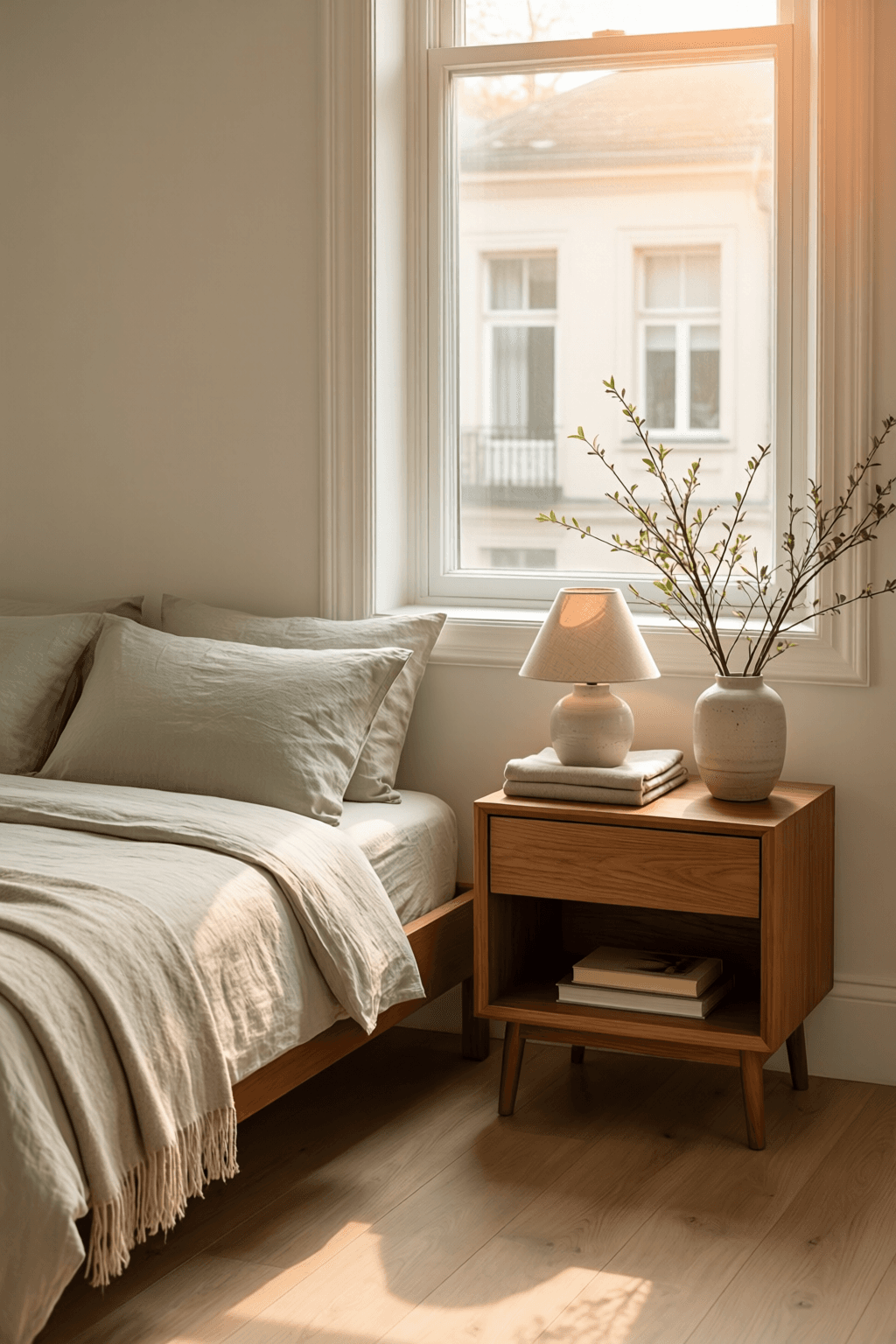
Have nothing in your house that you do not know to be useful, or believe to be beautiful. — William Morris
—What lingers after this line?
A Rule for Everyday Surroundings
William Morris compresses an entire philosophy of domestic life into one memorable sentence: keep only what serves a purpose or stirs genuine aesthetic delight. At first glance, the advice sounds like simple housekeeping. Yet it quickly becomes something larger—a test of attention, asking us to examine whether the objects around us truly earn their place in our lives. In that sense, Morris is not merely advocating tidiness but intentional living. His words invite us to reject clutter that accumulates through habit, status-seeking, or neglect. What remains, ideally, is a home shaped by conscious choice, where usefulness supports daily life and beauty nourishes the spirit.
The Arts and Crafts Ideal
To understand the force of the quote, it helps to place it within Morris’s wider work in the Arts and Crafts movement of 19th-century Britain. Reacting against shoddy industrial production, Morris argued in lectures such as “The Beauty of Life” (1880) that ordinary people deserved surroundings made with care, skill, and artistic integrity. Therefore, his statement is also a critique of mass-produced ugliness. Rather than separating fine art from household goods, Morris treated wallpaper, furniture, textiles, and books as part of a unified moral and aesthetic world. A chair, in this view, should not only function well but also reflect human craftsmanship. Thus usefulness and beauty are not rivals; they are partners in a dignified life.
Usefulness Beyond Mere Utility
Still, Morris’s notion of usefulness should not be read too narrowly. He did not mean that every object must justify itself in purely practical terms, like a tool in a workshop. A well-made lamp is useful because it gives light, but a treasured ceramic bowl may also be useful by organizing space, marking ritual, or simply anchoring memory in daily life. Consequently, usefulness includes fitness, durability, and harmony with how one actually lives. An object becomes useless when it burdens attention, demands upkeep without reward, or exists only as forgotten excess. Morris’s sentence encourages us to ask not only, “What does this do?” but also, “How does this help me live well?”
Why Beauty Matters in a Home
From there, the second half of the quote becomes especially revealing: Morris allows beauty to justify presence even when utility is not obvious. This is a profound defense of the emotional and civilizing power of art. Beauty can calm, elevate, and refine perception; a patterned textile, a framed print, or a vase of flowers may not perform a mechanical task, yet each shapes the mood and meaning of a room. Indeed, Morris echoes an older tradition in which beautiful surroundings are part of human flourishing. John Ruskin, a major influence on him, argued in The Stones of Venice (1851–1853) that aesthetic environments affect moral and social life. In that light, beauty is not decorative excess but a form of nourishment.
A Quiet Critique of Consumer Culture
Seen from a modern perspective, the quotation also reads like an early warning against consumer excess. Many homes fill with items bought impulsively, kept out of guilt, or displayed to signal identity rather than to meet need or inspire pleasure. Morris cuts through that confusion with a deceptively simple standard: if an object is neither useful nor beautiful, why let it occupy space, money, and attention? As a result, his advice anticipates contemporary minimalism, though it is warmer and more humane than bare austerity. He does not call for emptiness; he calls for discernment. The goal is not a showroom stripped of personality, but a home in which every object participates meaningfully in daily life.
Living with Chosen Things
Ultimately, Morris’s sentence endures because it speaks to more than interior design. It suggests a discipline of valuing things properly—choosing them with care, keeping them with gratitude, and letting them contribute either service or delight. A hand-thrown mug used each morning, a woven blanket inherited from family, or a painting that still arrests the eye after years: these are the kinds of possessions that justify themselves over time. In the end, the house becomes a mirror of character. When usefulness and beauty guide our choices, our surroundings grow less accidental and more expressive of what we love. Morris’s ideal is therefore not simply an attractive home, but a life arranged with clarity, restraint, and joy.
Recommended Reading
As an Amazon Associate, we earn from qualifying purchases.
One-minute reflection
Why might this line matter today, not tomorrow?
Related Quotes
6 selectedHome is where laughter and gratitude grow. — Melody Beattie
Melody Beattie
At first glance, Melody Beattie’s line reframes home as something more living than a building. Instead of focusing on property, décor, or permanence, it suggests that home is recognized by what flourishes inside it: laug...
Read full interpretation →The goal is not to become superhuman, but to feel less overstimulated and stop forcing your nervous system to live in constant emergency mode. Calm is a skill in its own right. — Kettj Talon
Kettj Talon
At first glance, Kettj Talon’s quote rejects a familiar modern fantasy: the idea that growth means becoming endlessly efficient, invulnerable, or somehow superhuman. Instead, it reframes personal progress as the quieter...
Read full interpretation →Home should be the treasure chest of living. — Le Corbusier
Le Corbusier
At first glance, Le Corbusier’s remark transforms the idea of home from a simple structure into something intimate and precious. A treasure chest does not merely contain objects; it safeguards what is valued most.
Read full interpretation →Home is where you are loved the most and act the worst. — Marjorie Pay Hinckley
Marjorie Pay Hinckley
Marjorie Pay Hinckley’s remark captures a familiar contradiction: home is often the place of deepest affection and least polished behavior. Precisely because love feels secure there, people drop the social restraint they...
Read full interpretation →The things that really matter are the things that stay when the house is empty. — Anne Lamott
Anne Lamott
Anne Lamott’s line begins with a quiet test: imagine the house emptied of furniture, noise, possessions, and display. What remains, she suggests, is the truest measure of value.
Read full interpretation →Your home is your larger body. It grows in the sun and sleeps in the stillness of the night. — Kahlil Gibran
Kahlil Gibran
At first glance, Gibran transforms the idea of home from a mere structure into something intimate and organic: “your larger body.” In this image, a dwelling is not separate from the person who inhabits it, but an outward...
Read full interpretation →More From Author
More from William Morris →Craftsmanship is the refusal to accept the mediocre, the patient pursuit of a standard that exists only in your own mind. — William Morris
William Morris defines craftsmanship not as mere skill, but as an act of resistance against the acceptable average. From the beginning, his words suggest that mediocrity often arrives disguised as practicality: good enou...
Read full interpretation →One's home should be a place where one can be oneself, a sanctuary from the noise of the world. — William Morris
William Morris presents home not merely as a physical shelter, but as a moral and emotional refuge. At the heart of the quote lies a simple human need: the desire for one place where performance ends and authenticity beg...
Read full interpretation →The beauty of a thing is not just in its final form, but in the slow, deliberate history of how it was made. — William Morris
At first glance, William Morris shifts attention away from the polished object and toward the human story embedded within it. His point is not that the final form does not matter, but that its beauty deepens when we unde...
Read full interpretation →The craft of life is not in the final product, but in the slow, intentional turning of the hands and the quiet cultivation of the soul. — William Morris
At its heart, this reflection shifts attention away from finished achievements and toward the manner in which a life is shaped. William Morris suggests that meaning does not reside chiefly in what we produce, display, or...
Read full interpretation →