
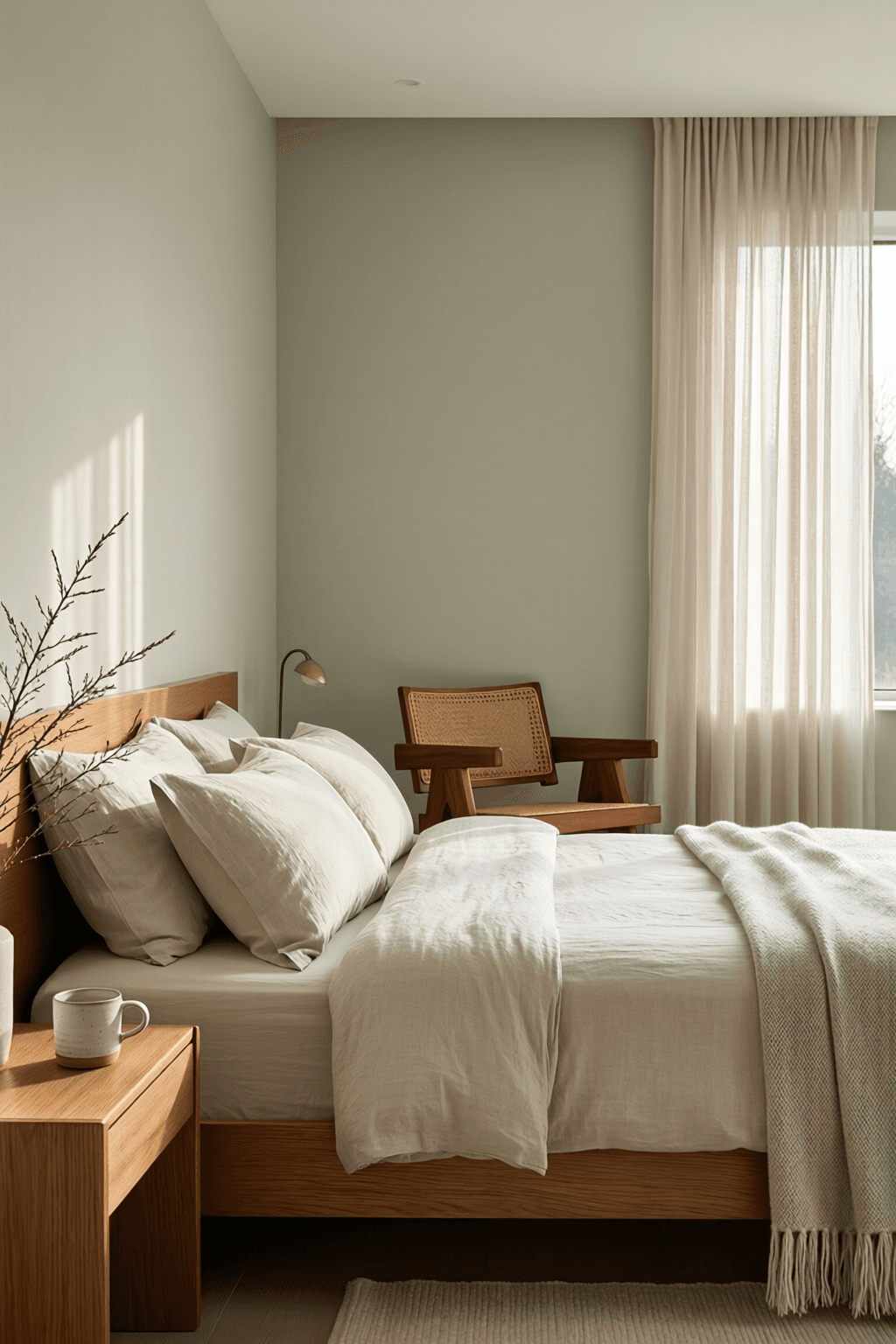
One's home should be a place where one can be oneself, a sanctuary from the noise of the world. — William Morris
—What lingers after this line?
The Meaning of Domestic Refuge
William Morris presents home not merely as a physical shelter, but as a moral and emotional refuge. At the heart of the quote lies a simple human need: the desire for one place where performance ends and authenticity begins. In this view, home becomes the setting in which a person can lay down social burdens and recover a sense of inward peace. From this starting point, the phrase “sanctuary from the noise of the world” widens the idea beyond architecture. Morris suggests that modern life—crowded, demanding, and often intrusive—can scatter the self. Therefore, home matters because it gathers that self back together, offering privacy, quiet, and belonging.
Being Oneself Without Pretense
Building on that refuge, Morris emphasizes that home should allow a person to be fully oneself. This is a profound claim, because much of public life requires adaptation: at work, in society, and even among acquaintances, people often shape their behavior to meet expectations. Home, by contrast, ought to be the rare environment where such masks are unnecessary. In this sense, domestic life supports dignity rather than display. Virginia Woolf’s “A Room of One’s Own” (1929) similarly argues that private space is essential for inner freedom and creative identity. Morris’s insight reaches the same conclusion from a different angle: we become more whole when our living spaces permit honesty, rest, and unguarded selfhood.
Morris and the Ideal of Everyday Beauty
This idea becomes even richer when placed beside Morris’s broader philosophy. As a leader in the Arts and Crafts movement, he argued in lectures such as “The Beauty of Life” (1880) that ordinary surroundings shape human well-being. He resisted the ugliness and alienation of industrial society, believing that beauty, craftsmanship, and harmony in the home could nourish the spirit. Consequently, sanctuary for Morris was not only emotional but aesthetic. A home should comfort through its textures, objects, and order, quietly affirming the life lived within it. In that way, the quote reflects his wider conviction that beauty is not a luxury for the few, but a daily necessity that protects the self from the harshness of the outside world.
A Response to Social and Modern Pressure
Seen this way, the quotation also reads as a response to social pressure. The “noise of the world” includes more than literal sound; it evokes judgment, haste, competition, and the endless claims others make upon our attention. Although Morris wrote in the nineteenth century, the thought feels especially modern in an age of constant connectivity and digital interruption. As a result, the home becomes a counterforce to overstimulation. Sociologists such as Erving Goffman in “The Presentation of Self in Everyday Life” (1956) examined how people perform roles in public settings. Morris anticipates that insight by imagining home as the backstage of existence—a place where the performed self can rest and the private person can breathe again.
The Ethics of Creating a Safe Interior
Yet Morris’s statement also carries an ethical challenge. If home is to be a sanctuary, it must be made safe not only by walls but by relationships. A beautifully furnished room cannot offer true refuge if the people within it bring fear, criticism, or instability. Thus the quote quietly implies that home depends on care, respect, and emotional generosity. This transition from space to conduct is crucial. Many traditions echo it: in Confucian thought, the ordered household forms the basis of social harmony, while Christian monastic writing often describes enclosure as meaningful only when joined to peace of spirit. Morris’s line belongs to that larger wisdom, reminding us that sanctuary is something both designed and practiced.
Why the Quote Still Endures
Finally, the enduring power of Morris’s words lies in their universality. Nearly everyone knows the fatigue of moving through loud, demanding environments and longing for a place of ease. His image of home answers that longing with clarity: true dwelling is not possession, status, or decoration alone, but the freedom to exist without defense. For that reason, the quotation remains compelling across generations. Whether in a cottage, an apartment, or a single cherished room, people continue to seek what Morris names so gracefully—a haven where identity is not negotiated but simply lived. In the end, his vision of home is both intimate and humane: a quiet center from which one can face the world again.
Recommended Reading
As an Amazon Associate, we earn from qualifying purchases.
One-minute reflection
Where does this idea show up in your life right now?
Related Quotes
6 selectedThe walls of your home should be a fortress of peace, not a cage of isolation. Claim your sanctuary; it is where your nervous system goes to remember who you are. — Nanea Hoffman
Nanea Hoffman
At its core, Nanea Hoffman’s line reframes home as more than a physical structure. Walls can protect, but they can also confine; the difference lies in whether a home restores the self or slowly disconnects it from the w...
Read full interpretation →A home should be a place where the soul feels at ease, not a showroom for someone else's expectations. — Kelly Wearstler
Kelly Wearstler
Kelly Wearstler’s quote begins by shifting the meaning of home away from performance and toward feeling. A home, in this view, is not primarily a stage for impressing visitors but a sanctuary where the inner self can fin...
Read full interpretation →Home is a state of mind, the peace that comes from being who you are and living an honest life. — Cecelia Ahern
Cecelia Ahern
At first glance, Ahern’s quote gently overturns the common idea that home is merely a physical place. Instead, she presents it as an inward condition: a sense of peace that arises when a person is no longer divided again...
Read full interpretation →Your home should be the antidote to the chaos of the world. — Elsie de Wolfe
Elsie de Wolfe
Elsie de Wolfe’s statement reframes the home as more than a shelter: it becomes an intentional remedy for the noise, haste, and unpredictability of public life. Rather than mirroring the world’s pressures, a well-made ho...
Read full interpretation →Your home should be a sanctuary that nurtures your soul, ignites your creativity, and inspires you to live your best life. — Nate Berkus
Nate Berkus
At first glance, Nate Berkus’s quote elevates the idea of home beyond walls, furniture, and utility. He frames it instead as a sanctuary—a place that actively restores the spirit rather than merely protecting the body.
Read full interpretation →Authenticity is a habit. It is a road we are comfortable with. — Ai Weiwei
Ai Weiwei
At first glance, Ai Weiwei’s statement shifts authenticity away from dramatic self-revelation and toward repetition. By calling it a habit, he suggests that being genuine is not an occasional act of courage but a pattern...
Read full interpretation →More From Author
More from William Morris →A man at work, making something which he feels will exist because he is working at it and wills it, is exercising the energies of his mind and soul as well as of his body. — William Morris
At its core, William Morris presents work not as drudgery but as an act of creation. A person who makes something with the conviction that it will endure is doing more than completing a task; he is shaping reality throug...
Read full interpretation →Craftsmanship is the refusal to accept the mediocre, the patient pursuit of a standard that exists only in your own mind. — William Morris
William Morris defines craftsmanship not as mere skill, but as an act of resistance against the acceptable average. From the beginning, his words suggest that mediocrity often arrives disguised as practicality: good enou...
Read full interpretation →The beauty of a thing is not just in its final form, but in the slow, deliberate history of how it was made. — William Morris
At first glance, William Morris shifts attention away from the polished object and toward the human story embedded within it. His point is not that the final form does not matter, but that its beauty deepens when we unde...
Read full interpretation →The craft of life is not in the final product, but in the slow, intentional turning of the hands and the quiet cultivation of the soul. — William Morris
At its heart, this reflection shifts attention away from finished achievements and toward the manner in which a life is shaped. William Morris suggests that meaning does not reside chiefly in what we produce, display, or...
Read full interpretation →