
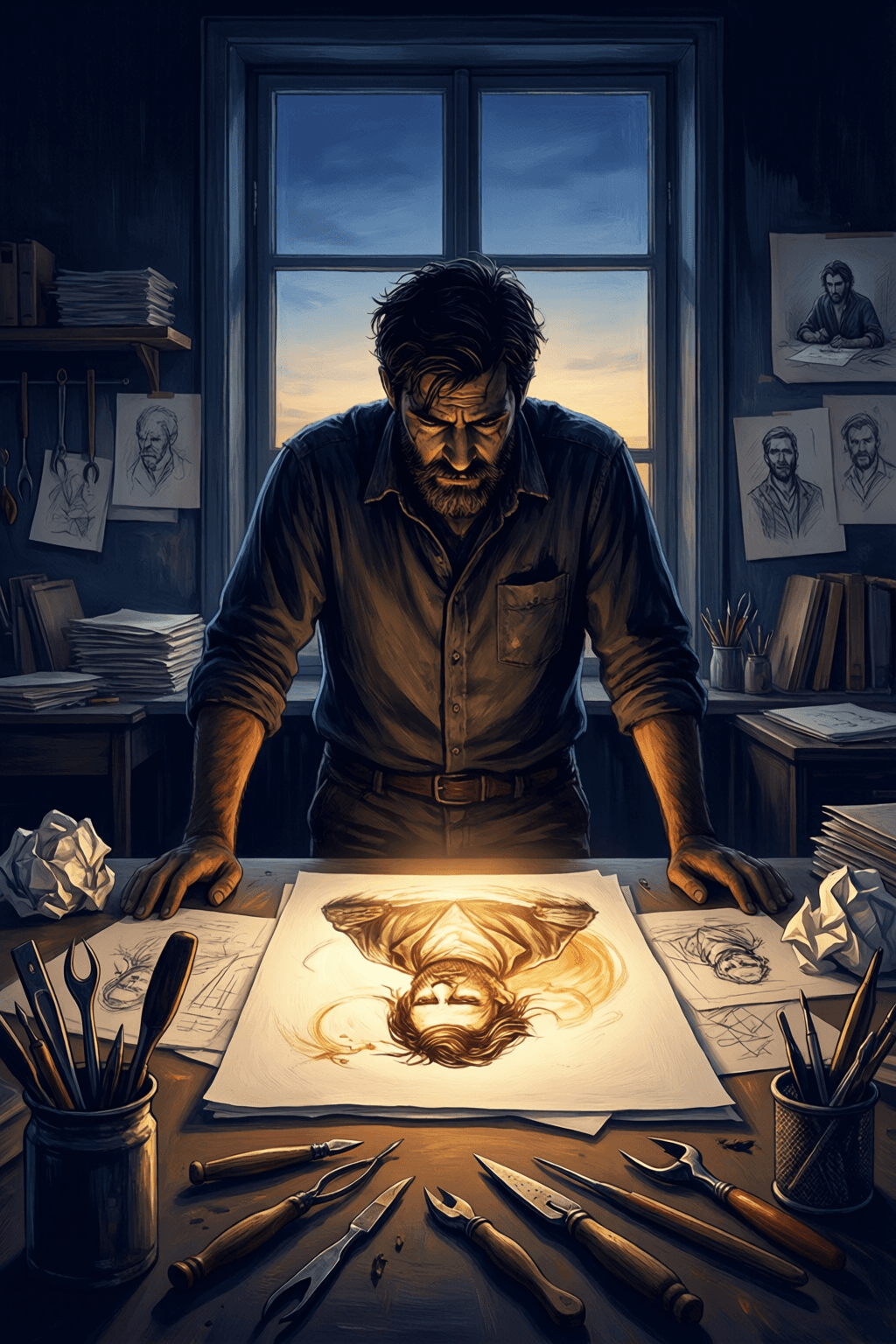
The creative process is a cocktail of exhaustion and revelation; do not mistake the fatigue for a sign to stop, but rather for the evidence that you are building something new. — Twyla Tharp
—What lingers after this line?
Exhaustion as Part of Making
At first glance, Twyla Tharp’s quote reframes a feeling many creators dread: exhaustion. Rather than treating fatigue as a warning that the work is failing, she presents it as a natural ingredient in invention itself. The metaphor of a “cocktail” is telling, because it suggests that creativity is rarely pure inspiration; instead, it is a mixed experience of strain, uncertainty, effort, and sudden clarity. In this way, the quote comforts artists, writers, dancers, and thinkers alike. It reminds us that tiredness often appears not because nothing is happening, but because something demanding is taking shape beneath the surface. What feels like depletion may actually be the cost of transforming vague ideas into something real.
Why Fatigue Can Signal Progress
Building on that idea, Tharp asks us to reinterpret fatigue as evidence of movement. New work requires the mind to stretch beyond habit, and that stretching is inherently taxing. Cognitive science often notes that problem-solving and original thinking consume significant mental energy; in other words, creative labor tires us precisely because it asks us to reorganize what we know into forms we have not yet mastered. Seen this way, exhaustion can be a marker of meaningful engagement. Thomas Edison’s famously relentless experimentation before developing a practical incandescent bulb, documented in late 19th-century lab records, illustrates the point: repeated effort drained him and his team, yet that weariness was inseparable from discovery. Fatigue, then, is not always an argument against continuing; sometimes it is proof that real work is underway.
The Tension Between Doubt and Revelation
From there, the quote moves into a deeper truth about the creative process: revelation rarely arrives in comfort. Moments of insight often emerge after long periods of frustration, when the creator has wrestled with false starts and partial solutions. This pattern appears across artistic history; Beethoven’s sketchbooks, especially those surrounding his middle-period works, show pages of revisions that suggest breakthroughs were earned through struggle rather than bestowed all at once. Consequently, Tharp’s statement resists the romantic myth of effortless genius. Revelation is real, but it usually comes entangled with difficulty. The fatigue is not separate from the breakthrough; rather, it is often the road that leads to it.
A Discipline Beyond Inspiration
Moreover, Tharp’s words carry a practical ethic: creators must learn not to flee the difficult middle. Inspiration may begin a project, but discipline sustains it when excitement fades and the body or mind grows tired. In her own book The Creative Habit (2003), Tharp emphasizes routine, repetition, and showing up consistently—principles that align perfectly with this quote’s refusal to interpret exhaustion as failure. That lesson matters because many abandoned works die at the exact point where novelty gives way to labor. The painter facing an unruly canvas, the novelist stalled in a messy draft, or the choreographer revising a sequence all encounter the same temptation to stop. Tharp suggests that endurance, not merely talent, is what allows the new thing to emerge.
Making Something New Changes the Maker
As the quote unfolds, it also hints that creation is transformative for the person doing it. To build something new is to be altered by the process—sometimes physically tired, sometimes emotionally frayed, but also expanded. Mary Shelley’s account of conceiving Frankenstein (1818) famously links imaginative intensity with sleeplessness and unease, showing how invention can unsettle the creator even as it produces lasting art. Therefore, the fatigue Tharp describes is not only about output; it is also about becoming. The strain testifies that one is crossing into unfamiliar territory, and unfamiliar territory is exactly where original work is born.
A More Generous Way to Read Weariness
Finally, Tharp offers a humane philosophy of perseverance. She does not glorify suffering for its own sake, but she does ask us to read weariness more generously. Instead of seeing tiredness as immediate proof that we are incapable or off course, we might ask whether it is the natural residue of attention, risk, and sustained effort. This perspective can steady anyone engaged in difficult work. The exhausted teacher designing a new curriculum, the entrepreneur refining a fragile idea, or the artist returning again to revision may all find in Tharp’s words a quiet reassurance: fatigue is sometimes the footprint of creation. If so, then the proper response is not blind self-punishment, but patient recognition that something new is being made.
One-minute reflection
Why might this line matter today, not tomorrow?
Related Quotes
6 selectedIt is through the process of creating that we discover who we are, not by waiting for a finished masterpiece to tell us. — Twyla Tharp
Twyla Tharp
Twyla Tharp’s insight begins with a reversal of a common assumption: we often imagine that identity arrives fully formed and then expresses itself through art, work, or achievement. Instead, she argues that we come to kn...
Read full interpretation →The creative process is not a straight line, but a labyrinth. To get lost in it is not a failure; it is the only way to find the hidden things worth saying. — M.C. Richards
M.C. Richards
At its core, M.C. Richards rejects the comforting myth that creative work unfolds through orderly steps.
Read full interpretation →If we are facing in the right direction, all we have to do is keep walking. — Thích Nhất Hạnh
Thich Nhat Hanh
Thích Nhất Hạnh’s words begin with a simple but profound premise: progress depends first on direction, not speed. If a person is turned toward compassion, clarity, healing, or truth, then each modest step becomes meaning...
Read full interpretation →Do the best one can. Do it over again. Then still improve, even if ever so slightly, those retouches. — Marguerite Yourcenar
Marguerite Yourcenar
Yourcenar’s words begin with a simple demand: do the best one can. Yet she immediately refuses to let effort become an excuse for stopping.
Read full interpretation →A good-enough novel violently written now is better than a perfect novel meticulously written never. — Elizabeth Gilbert
Elizabeth Gilbert
Elizabeth Gilbert’s line immediately shifts the argument from artistic purity to artistic existence. A “good-enough” novel, even one “violently written,” has entered the world and can move, provoke, or comfort someone; b...
Read full interpretation →There is no road too long to the man who advances deliberately and without undue haste; there are no honors too distant to the man who prepares himself for them with patience. — Jean de La Bruyère
Jean de La Bruyère
At its core, La Bruyère’s line praises steady movement over restless speed. A long road feels intimidating only when seen all at once; once it is broken into deliberate steps, distance loses much of its power.
Read full interpretation →More From Author
More from Twyla Tharp →When you are in the middle of a creative block, remember that the work is not the point; the point is the practice of showing up. — Twyla Tharp
Twyla Tharp’s quote shifts attention away from the finished product and toward the habit that makes creation possible in the first place. In the middle of a creative block, it is easy to believe that nothing matters unle...
Read full interpretation →It is through the process of creating that we discover who we are, not by waiting for a finished masterpiece to tell us. — Twyla Tharp
Twyla Tharp’s insight begins with a reversal of a common assumption: we often imagine that identity arrives fully formed and then expresses itself through art, work, or achievement. Instead, she argues that we come to kn...
Read full interpretation →Creativity is a habit, and the best creativity is the result of good work habits. — Twyla Tharp
At first glance, Twyla Tharp’s quote challenges the popular myth that creativity arrives as a sudden flash of genius. Instead, she reframes it as something built through repetition, structure, and deliberate effort.
Read full interpretation →The artist is a filter; they must be alone with themselves, not the algorithm, to hear what is actually worth saying. — Twyla Tharp
Twyla Tharp’s remark begins with a striking image: the artist as a filter rather than a loudspeaker. In that view, creative work does not emerge from sheer output but from a disciplined inward process that separates nois...
Read full interpretation →