
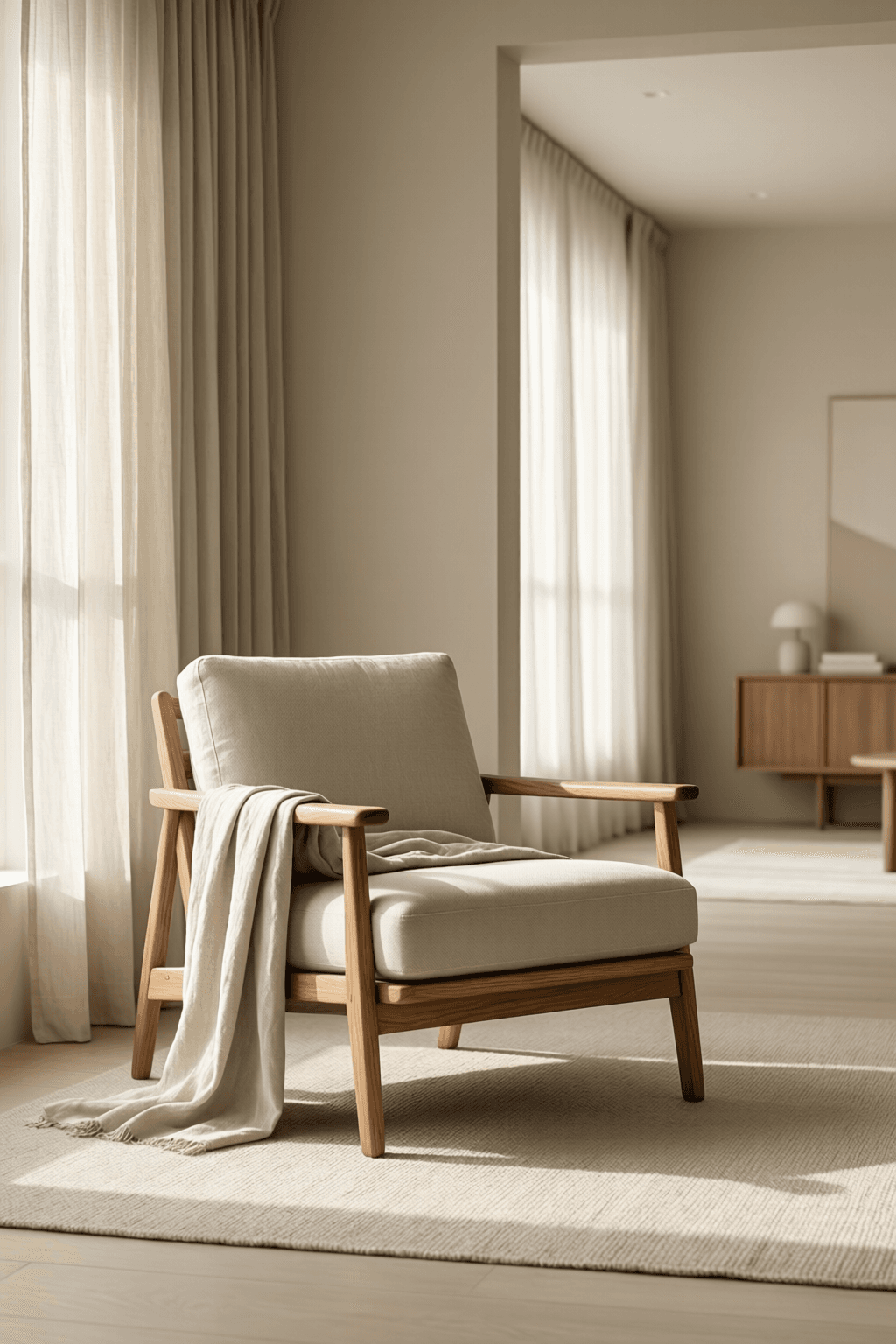
A home should be a place where the soul feels at ease, not a showroom for someone else's expectations. — Kelly Wearstler
—What lingers after this line?
Home as Emotional Refuge
Kelly Wearstler’s quote begins by shifting the meaning of home away from performance and toward feeling. A home, in this view, is not primarily a stage for impressing visitors but a sanctuary where the inner self can finally relax. The phrase “the soul feels at ease” suggests that good design is not only visual; it is emotional, almost spiritual, because it supports comfort, memory, and belonging. From this starting point, the quotation quietly challenges a modern habit of treating domestic space as public evidence of taste. Instead of asking whether a room looks worthy of admiration, Wearstler asks whether it allows its inhabitants to breathe more freely. That distinction turns decoration into something deeper: a way of caring for one’s daily life.
The Pressure to Perform Taste
Seen in that light, the second half of the quote introduces the real tension: “someone else’s expectations.” These expectations may come from family traditions, social media aesthetics, class assumptions, or the pressure to appear perpetually polished. Thorstein Veblen’s The Theory of the Leisure Class (1899) famously described how people use material display to signal status, and Wearstler’s words resist that old impulse in a domestic setting. Consequently, the showroom becomes a powerful metaphor. A showroom is arranged for spectators, not for lived intimacy; it is tidy, impressive, and often emotionally neutral. By contrasting home with showroom, Wearstler reminds us that spaces designed mainly for approval can become strangely inhospitable to the very people who live in them.
Authenticity in Design Choices
Once that pressure is recognized, the quote opens the door to authenticity. To make a home that soothes the soul is to choose objects, colors, textures, and layouts that reflect lived identity rather than borrowed ideals. This may mean keeping inherited furniture with sentimental weight, displaying imperfect handmade pieces, or favoring comfort over strict visual uniformity. In this sense, Wearstler’s idea aligns with Virginia Woolf’s emphasis on personal interior life in A Room of One’s Own (1929), where space becomes linked to selfhood and freedom. A home that reflects its occupants honestly does more than look distinctive; it affirms that the people inside it need not edit themselves for an audience.
Comfort as a Form of Wisdom
Moreover, the quote suggests that comfort is not laziness or aesthetic failure but a kind of wisdom. Many beautifully photographed interiors are difficult to inhabit: chairs too delicate to use, rooms too controlled for children, surfaces too precious for ordinary life. Wearstler pushes back against that logic by implying that a successful home supports ease before display. This perspective echoes design traditions that value harmony between human need and environment. William Morris, writing in the nineteenth century, argued that one should have nothing in a house that is neither useful nor beautiful. Wearstler adds an important refinement: beauty itself should help the spirit settle, rather than making residents anxious about maintaining an image.
Living Spaces and Inner Identity
As the quote unfolds, it also hints that our surroundings shape our inner life. Environmental psychology has long observed that clutter, lighting, color, and spatial arrangement influence mood and behavior; for example, Sally Augustin’s Place Advantage (2009) discusses how design affects well-being and mental clarity. If a home is organized around external judgment, its occupants may absorb that same tension. By contrast, when a space is arranged around ease, it reinforces permission to be fully oneself. The home then becomes not merely a container for life but a collaborator in it—encouraging rest, reflection, and emotional honesty. Wearstler’s statement therefore speaks as much about identity as about interiors.
A Gentler Standard for Beauty
Ultimately, Wearstler proposes a gentler and more human standard for beauty. Rather than equating success with flawless presentation, she values resonance: the quiet feeling that a room fits the person who inhabits it. This beauty may be layered, eccentric, unfinished, or deeply personal, yet it succeeds because it feels true. In the end, the quote invites a liberating question: does this home express care for the soul, or compliance with an imagined audience? Once that question is asked, design becomes less about proving worth and more about building peace. That is why Wearstler’s insight endures—it restores home to the people who actually live there.
Recommended Reading
As an Amazon Associate, we earn from qualifying purchases.
One-minute reflection
Why might this line matter today, not tomorrow?
Related Quotes
6 selectedQuietly persist. The world is loud, but your work only needs to be true. — Anne Lamott
Anne Lamott
Anne Lamott’s line begins with a simple imperative: “Quietly persist.” At once, it rejects the idea that meaningful work must announce itself to be real. Instead, she points toward a steadier form of effort, one rooted i...
Read full interpretation →The best way to turn a house into a home is to fill it with love and laughter. — William J. Bennett
William J. Bennett
At first glance, Bennett’s quote draws a clear line between a house and a home. A house is a physical structure, defined by rooms, doors, and possessions; a home, by contrast, is shaped by emotional life.
Read full interpretation →Fitting in is one of the greatest barriers to belonging. Belonging doesn't require us to change who we are; it requires us to be who we are. — Brené Brown
Brené Brown
At the heart of Brené Brown’s statement is a crucial distinction: fitting in is about adaptation, while belonging is about acceptance. When people try to fit in, they often study the room, edit themselves, and perform wh...
Read full interpretation →You don't need a formal invitation to be exactly who you are. — Brené Brown
Brené Brown
At its heart, Brené Brown’s statement rejects the quiet habit of waiting for approval before living honestly. It suggests that authenticity is not something granted by family, institutions, or social circles; rather, it...
Read full interpretation →Home is where laughter and gratitude grow. — Melody Beattie
Melody Beattie
At first glance, Melody Beattie’s line reframes home as something more living than a building. Instead of focusing on property, décor, or permanence, it suggests that home is recognized by what flourishes inside it: laug...
Read full interpretation →By choosing to be yourself, you have already won the most important battle. — Anne Lamott
Anne Lamott
At its core, Anne Lamott’s statement reframes victory in deeply personal terms. Rather than measuring success by status, approval, or comparison, she suggests that the most important win happens the moment a person stops...
Read full interpretation →More From Author
More from Kelly Wearstler →