
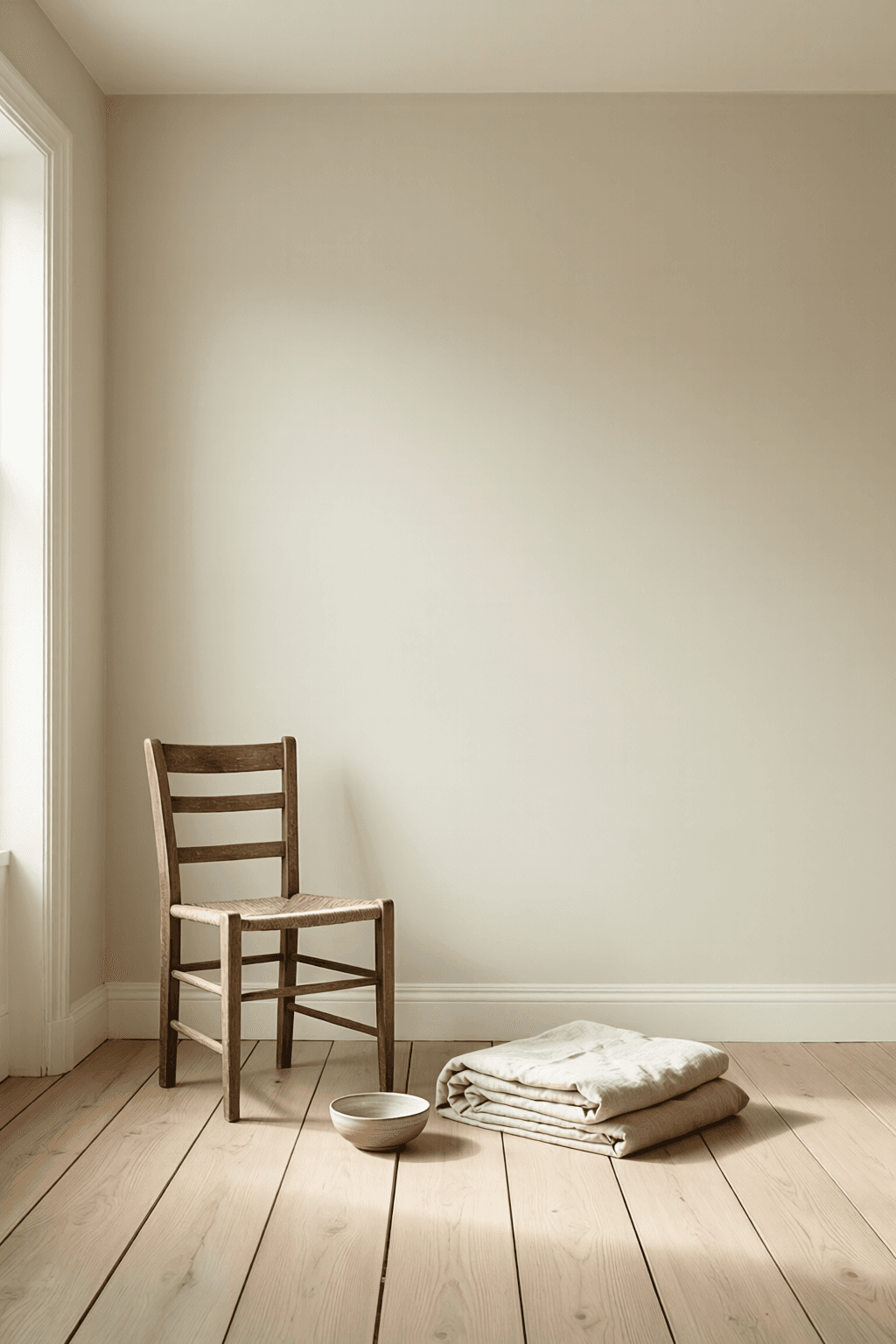
The things that really matter are the things that stay when the house is empty. — Anne Lamott
—What lingers after this line?
The Measure of What Matters
Anne Lamott’s line begins with a quiet test: imagine the house emptied of furniture, noise, possessions, and display. What remains, she suggests, is the truest measure of value. In that stripped-down space, status symbols lose their authority, and the essentials—love, memory, character, faith, grief, and presence—come into sharper focus. From the outset, the quote challenges a culture that often confuses accumulation with meaning. Lamott redirects attention away from what fills a home physically and toward what gives a life substance. The result is not a rejection of material comfort, but a deeper reminder that real importance is revealed precisely when visible supports are taken away.
An Empty House as a Spiritual Image
Seen another way, the empty house works as a spiritual metaphor. Once the distractions are removed, a person is left with the inner architecture of the self: convictions, habits of compassion, the capacity to endure loss, and the ability to love without adornment. In this sense, Lamott echoes a long tradition of reflective writing that treats emptiness not as mere absence but as revelation. For instance, the biblical Book of Ecclesiastes confronts the limits of worldly striving, while Thomas à Kempis’s The Imitation of Christ (c. 1418) urges readers to prize inward virtue over outward possession. Lamott’s phrasing feels modern and domestic, yet it carries that older insight forward: what lasts is often invisible, and what is invisible may be what most sustains us.
Memory, Relationship, and Presence
From there, the quote naturally turns toward relationships. When a house is empty, what still seems present are the voices once heard there, the people who shaped it, and the tenderness or pain they left behind. A home is not made meaningful by objects alone, but by lived experience—shared meals, reconciliations, laughter in hallways, and even the silence after someone beloved is gone. Writers from Marcel Proust in In Search of Lost Time (1913–1927) to Joan Didion in The Year of Magical Thinking (2005) show how memory can outlast physical surroundings. Lamott condenses that truth into one sentence: the deepest realities are portable, haunting, and enduring. They remain even after rooms are cleared, because they were never contained by walls in the first place.
A Critique of Possession and Clutter
At the same time, Lamott’s observation quietly critiques the modern tendency to equate fullness with success. An overflowing house can create the illusion of a full life, yet the quote asks whether abundance sometimes masks emptiness instead of curing it. If the valuable things are those that survive the clearing out, then much of what we chase may be secondary at best. This idea resonates with more recent cultural movements toward simplicity, such as Marie Kondo’s The Life-Changing Magic of Tidying Up (2011), though Lamott’s emphasis is more existential than organizational. She is not merely asking what to keep on a shelf; she is asking what remains worth keeping in the soul. In that shift, tidiness becomes a moral and emotional question rather than a decorative one.
Loss as a Clarifying Force
Because of that, the quote also speaks powerfully to grief and upheaval. People often discover what matters most only after illness, divorce, disaster, or death has emptied the familiar rooms of life. Loss removes the nonessential with brutal efficiency, and what survives that winnowing—love given, kindness received, faith held onto, dignity preserved—appears with painful clarity. Viktor Frankl’s Man’s Search for Meaning (1946) offers a profound parallel: even when nearly everything is taken, meaning can still endure. Lamott’s domestic image brings that severe truth into ordinary life. The empty house is not only a symbol of deprivation; it is also a site of discernment, where the heart learns what cannot be boxed up, sold, or carried away.
Living by What Lasts
Ultimately, Lamott’s quote is not just descriptive; it is instructive. If the things that really matter are the ones that stay when the house is empty, then a wise life is built around what endures: integrity, mercy, friendship, spiritual grounding, and the courage to be fully present. The sentence becomes a practical ethic, urging us to invest in what survives change rather than what merely decorates it. Consequently, the quote leaves readers with a gentle but demanding question: when the visible structure of life is stripped away, what will remain? By posing that question so simply, Lamott offers more than comfort. She offers a standard for living—one that measures wealth not by what fills our rooms, but by what cannot be removed from the heart.
One-minute reflection
What does this quote ask you to notice today?
Related Quotes
6 selectedIn the stillness of our home, we find the clarity that the world tries to steal from us. — Anne Lamott
Anne Lamott
Anne Lamott’s line begins with a simple but profound contrast: the home is imagined as a place of stillness, while the wider world is cast as noisy, demanding, and disruptive. In that quiet domestic space, clarity become...
Read full interpretation →Home is the place where one finally allows the armor to drop and the spirit to breathe. — Maya Angelou
Maya Angelou
At its core, Maya Angelou’s reflection defines home not merely as a structure but as a sanctuary of emotional safety. The image of letting “the armor drop” suggests that daily life often requires protection—composure, re...
Read full interpretation →A home should be an anchor, a port in a storm, a refuge, a happy place in which to dwell. — Marvin J. Ashton
Marvin J. Ashton
Marvin J. Ashton’s statement presents home not merely as a physical structure but as a place of emotional and spiritual grounding.
Read full interpretation →The best way to turn a house into a home is to fill it with love and laughter. — William J. Bennett
William J. Bennett
At first glance, Bennett’s quote draws a clear line between a house and a home. A house is a physical structure, defined by rooms, doors, and possessions; a home, by contrast, is shaped by emotional life.
Read full interpretation →Home is where laughter and gratitude grow. — Melody Beattie
Melody Beattie
At first glance, Melody Beattie’s line reframes home as something more living than a building. Instead of focusing on property, décor, or permanence, it suggests that home is recognized by what flourishes inside it: laug...
Read full interpretation →Home should be the treasure chest of living. — Le Corbusier
Le Corbusier
At first glance, Le Corbusier’s remark transforms the idea of home from a simple structure into something intimate and precious. A treasure chest does not merely contain objects; it safeguards what is valued most.
Read full interpretation →More From Author
More from Anne Lamott →Do not mistake your digital silence for peace. Real strength is found in the courage to speak the truth to the people who hold your heart. — Anne Lamott
At first glance, Anne Lamott’s quote challenges a familiar illusion: silence can resemble peace without actually creating it. Choosing not to speak may keep conflict out of sight, yet beneath that quiet surface, hurt, co...
Read full interpretation →Your worth is not a spreadsheet. You are not a project to be completed, but a life to be experienced. Stop measuring and start breathing. — Anne Lamott
Anne Lamott’s quote begins by confronting a habit many people barely notice: treating human value as if it could be tabulated. A spreadsheet symbolizes order, productivity, and comparison, yet it also reduces complexity...
Read full interpretation →The art of living is not about being a finished masterpiece; it is about being a work in progress that still knows how to laugh at its own paint spills. — Anne Lamott
At its heart, Anne Lamott’s remark reframes life from a quest for perfection into an ongoing act of creation. Instead of imagining ourselves as polished masterpieces, she invites us to see our days as brushstrokes still...
Read full interpretation →When you feel like you are drowning in life, don't blame the ocean. You have to learn how to swim. — Anne Lamott
Anne Lamott’s line begins with a blunt but compassionate shift in perspective: when life feels overwhelming, the first impulse is often to blame circumstances, other people, or fate itself. Yet the quote redirects attent...
Read full interpretation →