
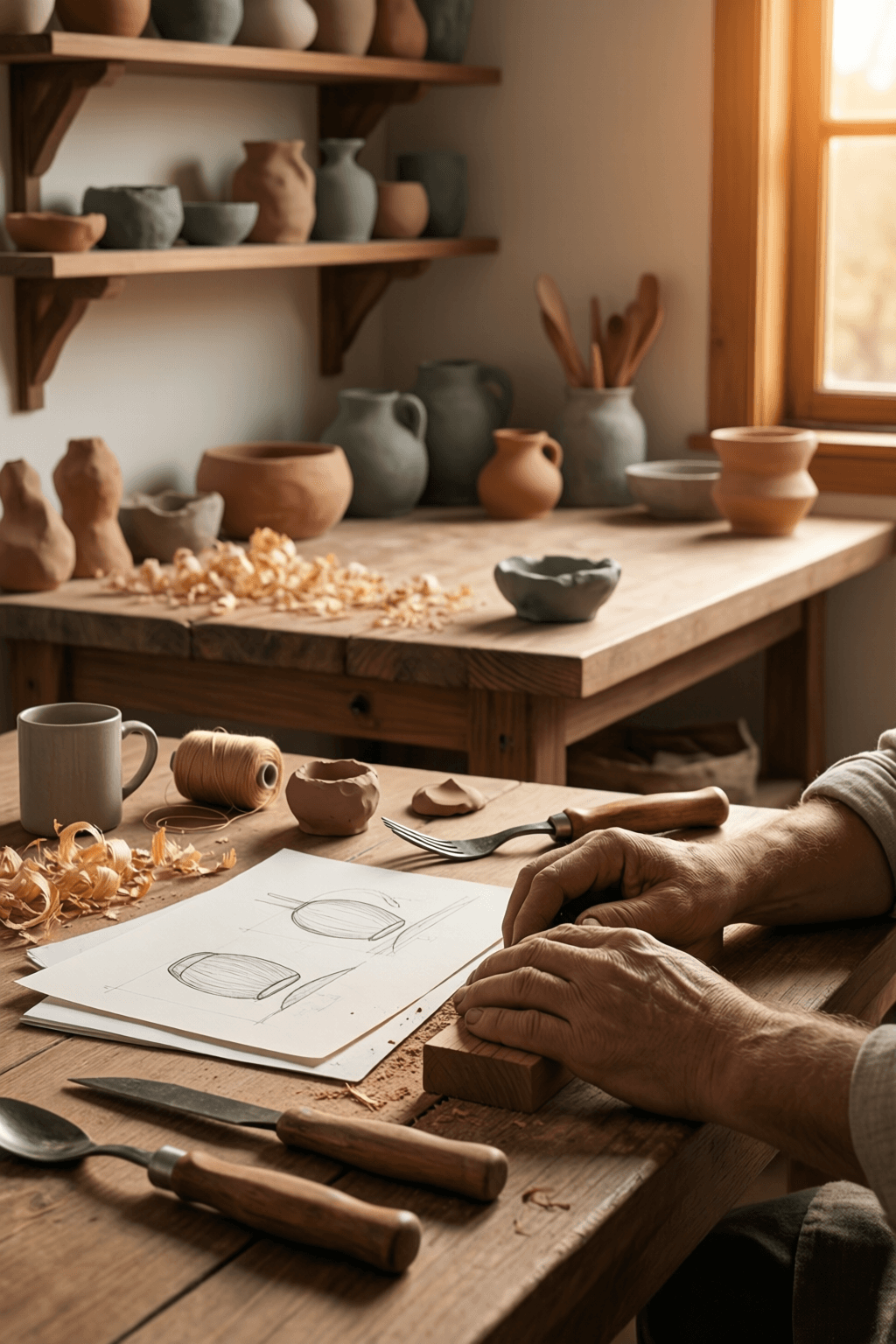
The digital age made us forget the value of slow accumulation. Of craftsmanship. Of skills that require years to refine. But that value has not disappeared. It is waiting for those willing to cultivate it. — Zat Rana
—What lingers after this line?
The Rush of the Digital Era
At first glance, Zat Rana’s observation captures a defining tension of modern life: digital culture rewards immediacy, visibility, and constant output. In a world of instant downloads, rapid feedback, and algorithmic trends, it becomes easy to overlook pursuits that mature slowly. As a result, patience can seem outdated, even though many of humanity’s most meaningful achievements have always depended on time. This shift is not merely technological but psychological. The habits encouraged by smartphones and social platforms train attention toward novelty rather than depth. Consequently, Rana’s quote serves as a reminder that speed may dominate the surface of contemporary life, yet it cannot replace the enduring worth of disciplined, gradual development.
Why Slow Accumulation Matters
From there, the phrase “slow accumulation” points to a deeper truth: excellence is usually built through layers of effort that seem almost invisible in the moment. Skills in writing, music, carpentry, science, or teaching rarely arrive in a flash; instead, they grow through repetition, correction, and long periods of quiet improvement. What appears effortless in public is often the result of years of private refinement. In this sense, Rana’s words echo Aristotle’s idea in the Nicomachean Ethics (4th century BC) that virtue and excellence are formed through habit. The value lies not only in the final product but also in the person shaped by the process. Slow accumulation creates competence, but just as importantly, it cultivates judgment, resilience, and care.
Craftsmanship as a Moral Practice
Moving naturally from accumulation to craftsmanship, the quote suggests that making something well is about more than technical ability. Craftsmanship involves respect for materials, attention to detail, and a willingness to submit to standards higher than convenience. Richard Sennett’s The Craftsman (2008) argues that craftsmanship reflects a basic human desire to do a job well for its own sake, a principle that resists the shallow metrics of speed and scale. Therefore, craftsmanship can be understood as a moral posture as much as a practical one. A cabinetmaker sanding wood, a programmer refining elegant code, or a chef perfecting a sauce all demonstrate the same ethic: care takes time. In a culture that often prizes fast results, such care becomes quietly radical.
Skills That Ripen Over Years
Furthermore, Rana’s emphasis on skills that require years to refine reminds us that some forms of mastery cannot be compressed. A violinist cannot shortcut touch and phrasing; a surgeon cannot rush judgment; a poet cannot manufacture a voice overnight. Even when digital tools accelerate learning, they do not eliminate the need for lived experience, failure, and repetition. History offers many examples. Japanese artisan traditions, such as swordsmithing and ceramics, often treat apprenticeship as a lifelong discipline rather than a temporary phase. Likewise, Renaissance workshops trained painters through years of imitation before originality emerged. These traditions show that time is not an obstacle to mastery but one of its essential ingredients.
What Has Been Forgotten, Not Lost
Yet the most hopeful part of the quote lies in its refusal to sound nostalgic. Rana does not say this value is dead; he says it has been forgotten. That distinction matters. Forgotten things can be remembered, and neglected disciplines can be restored by individuals who choose them deliberately. Beneath the noise of constant updates, the older rhythms of practice and apprenticeship still remain available. This idea recalls the Arts and Crafts movement led by William Morris in the late 19th century, which arose as a response to industrial standardization. Morris did not deny modernity; rather, he insisted that beauty, labor, and integrity could still be reclaimed. In the same way, Rana suggests that depth survives, waiting for attention.
The Invitation to Cultivate Patience
Finally, the quote ends not with criticism but with an invitation. The value of craft and slow growth is “waiting for those willing to cultivate it,” implying that the reward belongs to people who choose endurance over immediacy. Cultivation is an apt metaphor: like a garden, skill develops through regular tending, seasonal setbacks, and faith in results that are not instantly visible. For that reason, Rana’s message is ultimately empowering. It suggests that anyone can resist the pressures of acceleration by committing to sustained practice—reading deeply, making carefully, revising often, and learning humbly. In an age obsessed with speed, the patient pursuit of mastery becomes not only a path to excellence but also a way of recovering meaning.
Recommended Reading
As an Amazon Associate, we earn from qualifying purchases.
One-minute reflection
Where does this idea show up in your life right now?
Related Quotes
6 selectedThe beauty of craftsmanship is that it is a dialogue with time, a slow resistance against the rush of the world. — Richard Sennett
Richard Sennett
At its core, Richard Sennett’s line presents craftsmanship as more than skilled labor; it becomes a moral and temporal stance. To make something carefully is to refuse the culture of haste, where speed is often mistaken...
Read full interpretation →We don't value craftsmanship anymore! All we value is ruthless efficiency, and I say we deny our own humanity that way! — William Morris
William Morris
William Morris’s complaint opens as more than nostalgia for handmade beauty; rather, it is a moral protest against a society that measures worth only by speed, output, and utility. When he says that ruthless efficiency d...
Read full interpretation →Quality, manual labor, and a lot of time: that is the essence of craftsmanship. — Katarzyna Maniak
Katarzyna Maniak
At its core, Katarzyna Maniak’s statement reduces craftsmanship to three inseparable elements: quality, manual labor, and time. Rather than treating a finished object as merely a product, the quote frames it as the visib...
Read full interpretation →There is no road too long to the man who advances deliberately and without undue haste; there are no honors too distant to the man who prepares himself for them with patience. — Jean de La Bruyère
Jean de La Bruyère
At its core, La Bruyère’s line praises steady movement over restless speed. A long road feels intimidating only when seen all at once; once it is broken into deliberate steps, distance loses much of its power.
Read full interpretation →The ultimate mysteries are opened only to those who have immense patience. — Osho
Osho
Osho’s statement begins with a simple but demanding premise: the deepest truths do not yield to force. In this view, mystery is not a puzzle to be solved quickly but a reality that unfolds on its own terms.
Read full interpretation →Do you have the patience to wait until your mud settles and the water is clear? — Lao Tzu
Lao Tzu
Lao Tzu’s question frames patience not as passive delay but as an active kind of wisdom. The image of muddy water settling on its own suggests that confusion often clears not through force, but through restraint.
Read full interpretation →More From Author
More from Zat Rana →