
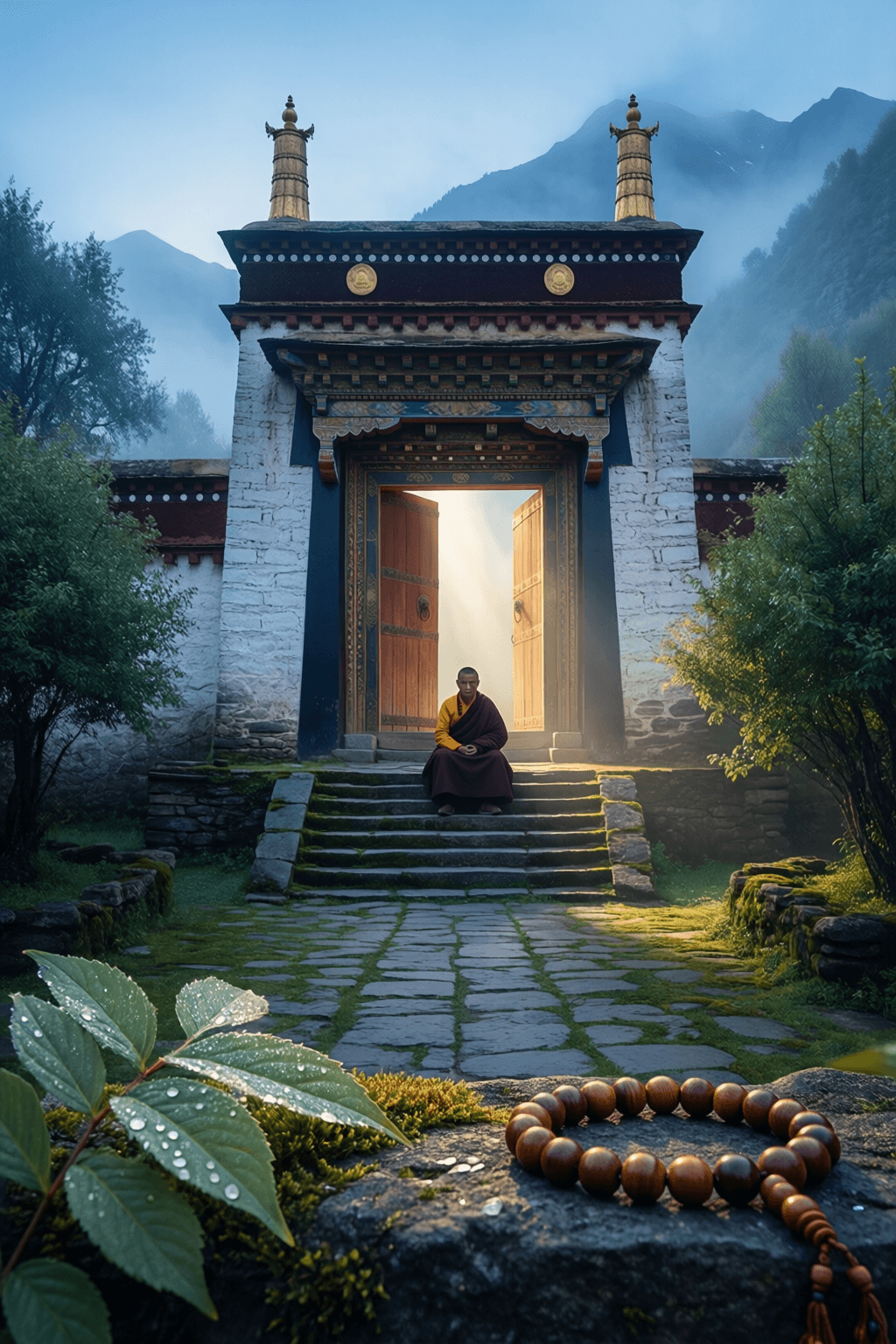
The ultimate mysteries are opened only to those who have immense patience. — Osho
—What lingers after this line?
Why Mystery Resists Hurry
Osho’s statement begins with a simple but demanding premise: the deepest truths do not yield to force. In this view, mystery is not a puzzle to be solved quickly but a reality that unfolds on its own terms. Consequently, impatience becomes more than a personal flaw; it becomes a barrier that keeps perception shallow and fragmented. From this starting point, the quote suggests that understanding requires a different rhythm from modern urgency. Rather than chasing instant answers, one must remain present long enough for hidden patterns to emerge. In that sense, patience is not passive waiting but a disciplined openness to what cannot be rushed.
Patience as Inner Readiness
Moving further, immense patience implies a transformation of the observer, not merely a delay in receiving answers. Osho often framed spiritual insight as something that appears when the mind grows quiet, and this echoes older traditions: the Tao Te Ching, traditionally linked to Laozi (c. 4th century BC), repeatedly values stillness over striving. What is revealed, then, depends partly on the condition of the one who is looking. As a result, patience becomes a kind of preparation. By enduring uncertainty without panic, a person develops the steadiness needed to recognize subtle truths. The mystery was perhaps always there, but only a patient mind becomes capable of meeting it.
Lessons from Nature’s Timing
This idea becomes clearer when viewed through nature. A seed does not become a tree because someone demands growth; it matures through seasons, setbacks, and invisible processes beneath the soil. Similarly, human insight often forms in ways that are hidden long before they are visible, which makes patience less a virtue of delay than a respect for organic timing. In this light, Osho’s claim sounds less mystical and more observational. Many realities—healing, wisdom, trust, love—cannot be manufactured instantly. They ripen. Therefore, those who insist on immediate clarity may uproot the very process that could have led them to deeper understanding.
Philosophical and Spiritual Echoes
Moreover, the quote belongs to a long lineage of thought linking patience with revelation. In Plato’s Allegory of the Cave in the Republic (c. 375 BC), truth is not grasped in a sudden, comfortable glance; it requires a painful adjustment of vision. Likewise, Zen practice emphasizes sitting with paradox rather than resolving it too quickly, trusting that insight arrives after prolonged attention. These parallels enrich Osho’s point. Across cultures, wisdom is portrayed not as a prize for cleverness alone but as a gift to sustained seekers. The ultimate mysteries, whether philosophical, spiritual, or personal, seem to ask for endurance before they grant disclosure.
A Challenge to Modern Restlessness
At the same time, Osho’s words quietly criticize a culture built on speed. In an age of instant searches, rapid opinions, and constant stimulation, patience can feel almost unnatural. Yet this very discomfort reveals the quote’s force: the more we expect immediacy, the less able we become to dwell with complexity, ambiguity, and silence. Seen this way, immense patience is a form of resistance. It refuses the illusion that everything meaningful can be consumed at once. Instead, it invites a slower intimacy with life, where understanding deepens not through accumulation alone but through sustained attention.
Living the Quote in Daily Life
Finally, the wisdom of the quote extends beyond spirituality into ordinary experience. A scientist may spend years testing one hypothesis, a musician may repeat scales for decades before achieving expressive freedom, and a grieving person may need long, uneven time before peace returns. In each case, what matters most cannot be extracted on command. Thus, Osho’s insight becomes practical as well as profound. To approach life’s ultimate mysteries—identity, love, death, meaning—one must learn to stay with the process without demanding premature closure. Patience, then, is not merely waiting for truth; it is the very way truth becomes visible.
Recommended Reading
As an Amazon Associate, we earn from qualifying purchases.
One-minute reflection
What feeling does this quote bring up for you?
Related Quotes
6 selectedThere is no road too long to the man who advances deliberately and without undue haste; there are no honors too distant to the man who prepares himself for them with patience. — Jean de La Bruyère
Jean de La Bruyère
At its core, La Bruyère’s line praises steady movement over restless speed. A long road feels intimidating only when seen all at once; once it is broken into deliberate steps, distance loses much of its power.
Read full interpretation →Do you have the patience to wait until your mud settles and the water is clear? — Lao Tzu
Lao Tzu
Lao Tzu’s question frames patience not as passive delay but as an active kind of wisdom. The image of muddy water settling on its own suggests that confusion often clears not through force, but through restraint.
Read full interpretation →The wise do things slowly, because they love it. — David Fell
David Fell
At first glance, David Fell’s line seems to praise caution, yet it reaches further than mere hesitation. To do something slowly, in this view, is not to be indecisive but to be fully present.
Read full interpretation →A farmer is helpless to grow grain; all he can do is provide the right conditions for the growing of grain. — Richard J. Foster
Richard J. Foster
At first glance, Foster’s farming metaphor shifts attention away from control and toward humility. A farmer cannot command a seed to sprout, just as a person cannot force true growth—whether spiritual, personal, or relat...
Read full interpretation →The two most powerful warriors are patience and time. — Leo Tolstoy
Leo Tolstoy
This quote underscores the importance of patience as a powerful tool. It suggests that being able to wait and endure challenges over time can lead to successful outcomes.
Read full interpretation →It is easy finding reasons why other folks should be patient. — George Eliot
George Eliot
George Eliot’s remark turns on a quiet but piercing irony: patience is a virtue we readily prescribe when someone else must practice it. In other words, distance makes endurance look simple.
Read full interpretation →More From Author
More from Osho →Sadness gives depth. Happiness gives height. Sadness gives roots. Happiness gives branches. Both are needed, and the higher a tree goes, the deeper it goes. — Osho
At the heart of Osho’s image is a simple but powerful metaphor: a person grows like a tree. Happiness lifts life upward, opening it into lightness, expansion, and possibility, while sadness pulls experience downward into...
Read full interpretation →To be creative means to be in love with life. You can be creative only if you love life enough that you want to enhance its beauty. — Osho
At its core, Osho’s statement proposes that creativity does not begin with technique, talent, or originality, but with affection for existence itself. In this view, a person creates because life feels precious enough to...
Read full interpretation →The essence of your being is determined by what you choose to become. — Osho
This quote emphasizes that individuals are not defined solely by their past or innate traits but by the conscious choices they make to grow and evolve into the person they wish to become.
Read full interpretation →Courage is a love affair with the unknown. — Osho
At its core, Osho’s statement redefines courage not as simple fearlessness, but as a positive, passionate engagement with uncertainty. Rather than merely overcoming fear, courage becomes the act of welcoming the unknown...
Read full interpretation →