
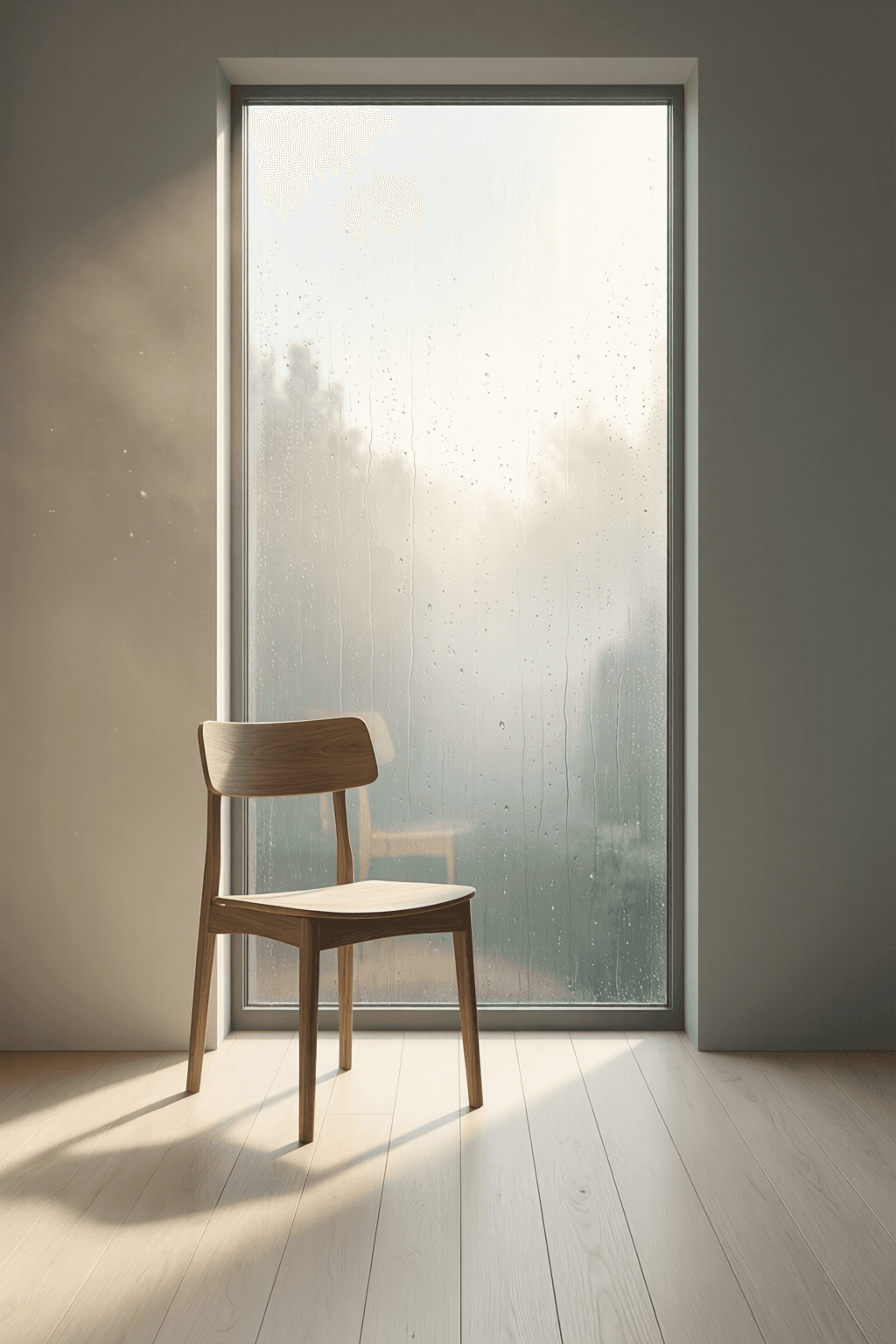
Solitude is the place of purification. — Martin Buber
—What lingers after this line?
The Meaning Behind Buber’s Claim
At first glance, Martin Buber’s statement presents solitude not as emptiness, but as a refining space. By calling it “the place of purification,” he suggests that stepping away from noise, social performance, and distraction allows a person to encounter the self more honestly. In that silence, motives become clearer, fears rise to the surface, and what is false or borrowed can begin to fall away. This idea fits Buber’s broader philosophy, especially in I and Thou (1923), where authentic relation depends on presence rather than habit. Before one can truly meet others, one must often first endure the inward clarifying work of being alone. Thus, solitude becomes less a retreat from life than a preparation for entering it more truthfully.
Solitude Versus Isolation
However, Buber’s remark gains depth when we distinguish solitude from isolation. Isolation is often marked by deprivation, disconnection, or abandonment, whereas solitude can be chosen as a meaningful pause. The difference matters: purification does not come merely from being cut off, but from inhabiting aloneness with awareness and intention. In this sense, solitude resembles a workshop of the spirit. Thomas Merton’s New Seeds of Contemplation (1961) similarly portrays silence and withdrawal as conditions in which the ego’s constant demands lose their grip. So while isolation may wound, solitude can heal, because it creates the inner room where reflection becomes possible.
How Silence Reveals the Self
From there, the process of purification becomes psychological as well as spiritual. In ordinary life, people can hide inside routines, ambitions, and conversations; yet in solitude, these coverings weaken. Without an audience, a person must confront impatience, vanity, unresolved grief, or restless desire. What emerges is not always comforting, but it is often true. For that reason, many traditions treat silence as revelatory. The Desert Fathers of early Christian monasticism, writing in the 4th century, withdrew into the wilderness not to escape reality but to face it more completely. Their sayings repeatedly show that in quiet, the mind first becomes noisy, and only later clear. Purification, then, begins with exposure before it leads to peace.
A Spiritual Discipline Across Traditions
Seen more broadly, Buber’s insight belongs to a long lineage of spiritual practice. Buddhist meditation, for example, trains attention through stillness so that craving and illusion can be observed rather than obeyed. Likewise, in the Hebrew Bible, Elijah encounters the divine not in wind or earthquake but in “a still small voice” (1 Kings 19:12), suggesting that truth often arrives when outer clamor subsides. Consequently, solitude is not merely personal preference; it becomes a disciplined way of clearing perception. Across traditions, the aim is similar: to strip away confusion and return to what is essential. Buber’s phrase captures that universal movement with striking economy.
Purification for the Sake of Relationship
Importantly, Buber does not invite people to remain sealed within themselves. Because his thought centers on genuine encounter, solitude serves relationship rather than replacing it. One withdraws in order to return less defensive, less performative, and more capable of meeting another person as a full presence rather than an object. This is where the quote becomes especially powerful. Purification is not self-improvement for vanity’s sake; it is the clearing away of whatever obstructs love, dialogue, and responsibility. In that light, solitude is ethical as much as inward: it prepares the heart to speak and listen more truthfully.
Its Relevance in a Distracted Age
Finally, Buber’s words feel especially urgent in a world saturated with notifications, commentary, and constant visibility. Modern life often leaves little room for the kind of aloneness in which motives can be tested and desires simplified. As a result, people may remain outwardly connected while inwardly unexamined. Against that condition, solitude offers a necessary corrective. Even brief practices—a walk without devices, a quiet hour of journaling, a retreat from public chatter—can recover the purifying function Buber names. His insight endures because it reminds us that clarity rarely comes from more noise; instead, it is often born in the quiet place where the self is gently stripped down to truth.
One-minute reflection
Why might this line matter today, not tomorrow?
Related Quotes
6 selectedIn order to be open to creativity, one must have the capacity for constructive use of solitude. One must overcome the fear of being alone. — Rollo May
Rollo May
Rollo May’s insight begins with a quiet but demanding premise: creativity requires the ability to stand apart from constant noise, approval, and distraction. To be open to new ideas, a person must first become comfortabl...
Read full interpretation →I care for myself. The more solitary, the more friendless, the more unsustained I am, the more I will respect myself. — Charlotte Brontë
Charlotte Brontë
Charlotte Brontë’s words begin as a quiet but forceful act of self-possession. Rather than treating loneliness as proof of failure, the speaker transforms it into evidence of resilience.
Read full interpretation →But many of us seek community solely to escape the fear of being alone. Knowing how to be solitary is central to the art of loving. — bell hooks
bell hooks
Bell hooks begins with a quiet but difficult observation: not every search for community is rooted in love. Sometimes, we reach for others because solitude feels threatening, as though being alone exposes a lack within u...
Read full interpretation →To have passed through life and never experienced solitude is to have never known oneself. — Joseph Krutch
Joseph Krutch
Joseph Krutch’s statement begins with a striking reversal: what many people avoid—solitude—he treats as essential to a meaningful life. In his view, simply moving through the world surrounded by noise, duties, and compan...
Read full interpretation →The mind needs solitude in the same way a forest needs quiet after a storm. It is not because nothing is happening; it is because that is when everything begins to grow. — Pico Iyer
Pico Iyer
Pico Iyer compares the mind to a forest recovering after a storm, and the image immediately shifts our understanding of solitude. Rather than treating aloneness as emptiness, he presents it as a necessary period of renew...
Read full interpretation →The real problem with being alone is that you're stuck with yourself all day. Make sure you're someone you actually like hanging out with. — Maya Angelou
Maya Angelou
Maya Angelou’s line begins with a sharp but compassionate truth: being alone is difficult not merely because others are absent, but because the self becomes unavoidable. In solitude, distraction fades, and our habits, th...
Read full interpretation →More From Author
More from Martin Buber →