
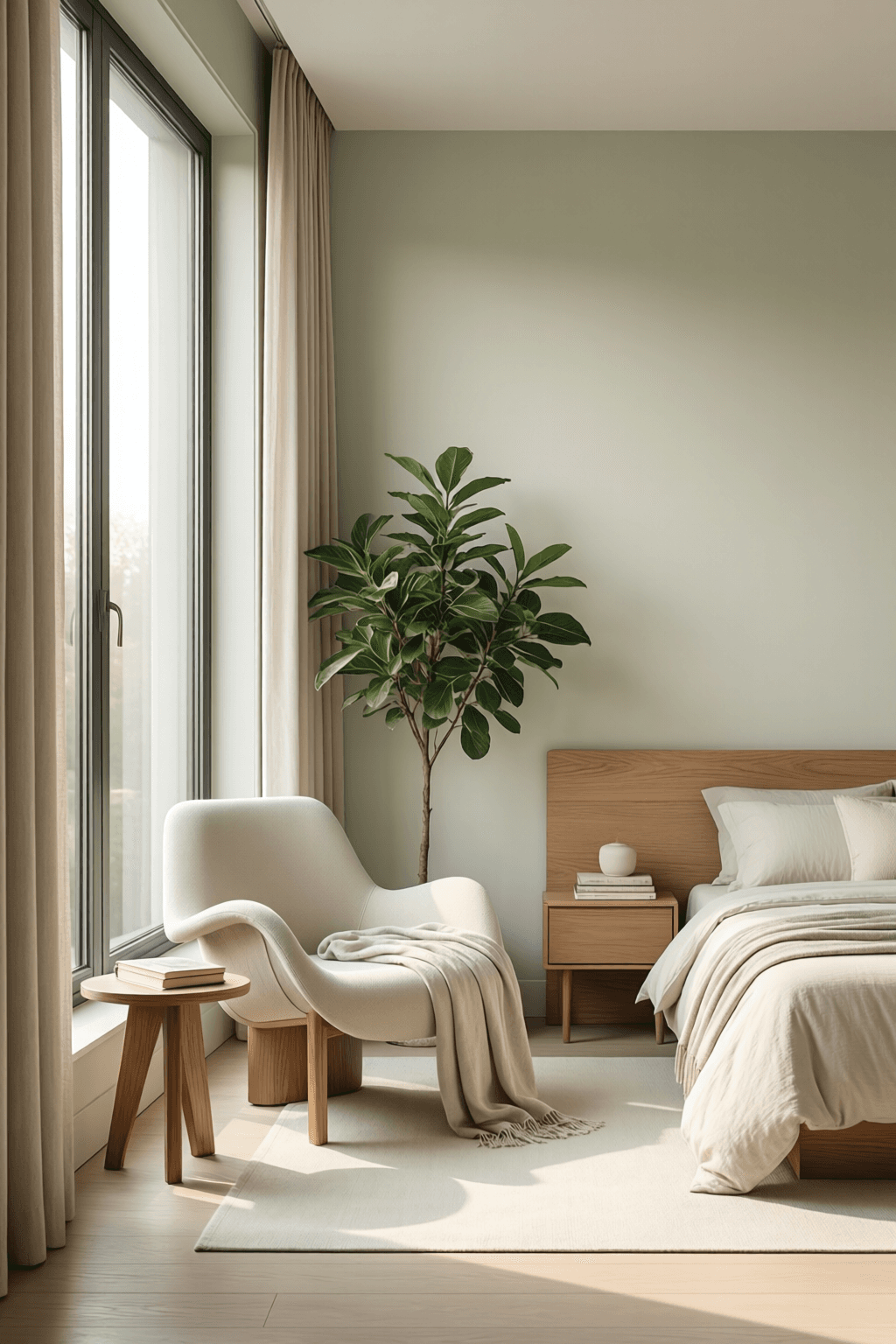
The art of living is a constant process of refining one's own sanctuary against the tide of external expectations. — bell hooks
—What lingers after this line?
Living as an Ongoing Practice
At its core, bell hooks presents living not as a finished achievement but as a continuous act of shaping and reshaping the self. The phrase “constant process” suggests that identity, peace, and integrity are never permanently secured; instead, they must be tended like a dwelling that needs regular care. In this way, the quote turns life into an art form grounded in attention, revision, and courage. From this starting point, hooks invites us to reject the fantasy of a fixed, perfected self. Much as her broader work in All About Love (2000) emphasizes conscious practice over passive feeling, this line implies that a meaningful life emerges through repeated choices about what to protect, what to release, and what to cultivate within.
The Meaning of an Inner Sanctuary
Just as important, the “sanctuary” in the quote is more than a private refuge; it represents an inner space of values, dignity, and emotional truth. A sanctuary is not built merely to hide from the world, but to preserve what is essential when the world grows loud or demanding. By using this image, hooks frames selfhood as something sacred enough to defend. This metaphor resonates with traditions of inward care, from Marcus Aurelius’ Meditations (c. 180 AD), which describes the mind’s inner retreat, to Black feminist thought, where self-preservation becomes a necessary act of resistance. Accordingly, sanctuary here is both personal and political: a place where one’s humanity can remain intact.
Pressure from External Expectations
Against that sanctuary, hooks places the “tide of external expectations,” a phrase that evokes force, repetition, and erosion. Expectations from family, institutions, gender roles, race, class, and culture often arrive not as single commands but as constant pressures shaping how a person should speak, work, desire, or succeed. The image of the tide makes clear that these demands can slowly wear down authenticity if left unexamined. In bell hooks’ Ain’t I a Woman? (1981), she explores how social structures impose identities upon people, especially Black women, in ways that distort selfhood. Therefore, this quote can be read as a warning: if we do not consciously guard our inner ground, borrowed scripts may begin to feel like our own voice.
Refinement Rather Than Escape
Importantly, hooks does not describe the task as building a fortress once and for all; she speaks of “refining” a sanctuary. That word changes the tone completely. Refinement suggests discernment, editing, and maturation rather than isolation. One does not simply flee the world, but learns to clarify boundaries, deepen self-knowledge, and create forms of life that better reflect one’s convictions. Seen this way, the art of living is not withdrawal from relationship or responsibility. Instead, it involves learning which expectations deserve response and which must be resisted. Like Virginia Woolf’s A Room of One’s Own (1929), the quote values protected space not for its own sake, but because such space allows a fuller, freer life to be made.
Self-Definition as Resistance
As the thought develops, the quote also carries a quiet radicalism: to refine one’s sanctuary is to claim the authority to define oneself. For hooks, whose writing consistently links personal life with systems of domination, this is never a trivial matter. Choosing one’s own measures of worth directly challenges a culture that often rewards conformity over wholeness. This idea echoes Audre Lorde’s statement in A Burst of Light (1988) that caring for oneself is “an act of political warfare.” In that spirit, hooks suggests that protecting inner life is not selfish retreat but disciplined resistance. The sanctuary becomes the ground from which a person can act, love, and speak without being fully colonized by others’ demands.
A More Humane Way to Live
Finally, the quote offers not only critique but guidance. If living well requires constant refinement, then the goal is not to satisfy every shifting expectation but to become a steadier steward of one’s interior life. Such stewardship may involve solitude, honest relationships, creative work, spiritual reflection, or simply the repeated practice of saying no where no is necessary. Thus, hooks leaves us with a humane vision of freedom: not freedom from all influence, which is impossible, but freedom to shape an inner home that can withstand pressure without hardening into bitterness. In the end, the art of living becomes the art of preserving truth within oneself while still moving through the world with openness and grace.
Recommended Reading
As an Amazon Associate, we earn from qualifying purchases.
One-minute reflection
Where does this idea show up in your life right now?
Related Quotes
6 selectedTo the horizontality of the internet, we should add the verticality of the inner sanctuary. — Julia Kristeva
Julia Kristeva
At first glance, Julia Kristeva’s remark sets two kinds of space against each other: the internet’s horizontality and the soul’s verticality. By horizontality, she evokes the web’s sprawling, leveling structure, where vo...
Read full interpretation →i am my own sanctuary. — Nayyirah Waheed
Nayyirah Waheed
Nayyirah Waheed’s line distills a radical kind of safety: the idea that refuge is not primarily a place, but a relationship with oneself. A sanctuary is where you can lower your guard, where your inner life is not judged...
Read full interpretation →Within you, there is a stillness and a sanctuary to which you can retreat at any time. — Hermann Hesse
Hermann Hesse
Hermann Hesse’s line begins with a quiet assurance: the sanctuary you seek is not something you must build, earn, or discover in distant places—it is already “within you.” By framing stillness as an inner location, he sh...
Read full interpretation →Within you, there is a stillness and a sanctuary to which you can retreat at any time. — Hermann Hesse
Hermann Hesse
Hermann Hesse suggests that peace is not primarily something to be found by rearranging external circumstances, but something already present—an interior “sanctuary” that can be entered at will. The phrase implies both i...
Read full interpretation →Within you, there is a stillness and a sanctuary to which you can retreat at any time. — Hermann Hesse
Hermann Hesse
Hermann Hesse’s line begins with a simple but radical claim: safety is not only something we seek in places or people, but something we can access within ourselves. By framing stillness as a “sanctuary,” he suggests an i...
Read full interpretation →Your attention is a sanctuary; do not let the noise enter without an invitation. — Unknown
Unknown
The quote frames attention not as a casual resource but as a sanctuary—an inner place where meaning, intention, and selfhood gather. A sanctuary implies safety and reverence, suggesting that what we allow into awareness...
Read full interpretation →More From Author
More from bell hooks →Quiet confidence is not about what you say, but about the space you hold for yourself when the world gets loud. — bell hooks
At first glance, bell hooks shifts confidence away from performance and toward presence. She suggests that real assurance is not measured by how forcefully someone speaks, but by how steadily they remain grounded when ex...
Read full interpretation →The artist is a witness to the present moment, not a slave to the machine that wants to replace it. — bell hooks
At its core, bell hooks’s statement insists that art begins with presence. To be a witness to the present moment is to attend closely to lived reality—its tensions, beauties, wounds, and contradictions—rather than merely...
Read full interpretation →Deep breathing is a form of resistance against a world that demands you stay perpetually frantic. — Bell hooks
At first glance, bell hooks’s line turns an ordinary bodily act into a moral and political gesture. Deep breathing is not presented as mere relaxation, but as resistance to a culture that rewards haste, anxiety, and cons...
Read full interpretation →To love is to recognize that we are part of something larger than our own individual anxieties, a quiet web of belonging that holds us all. — bell hooks
bell hooks presents love not as a private feeling alone, but as a widening awareness that loosens the grip of self-absorption. In this view, to love is to realize that our fears and anxieties, while real, do not define t...
Read full interpretation →