
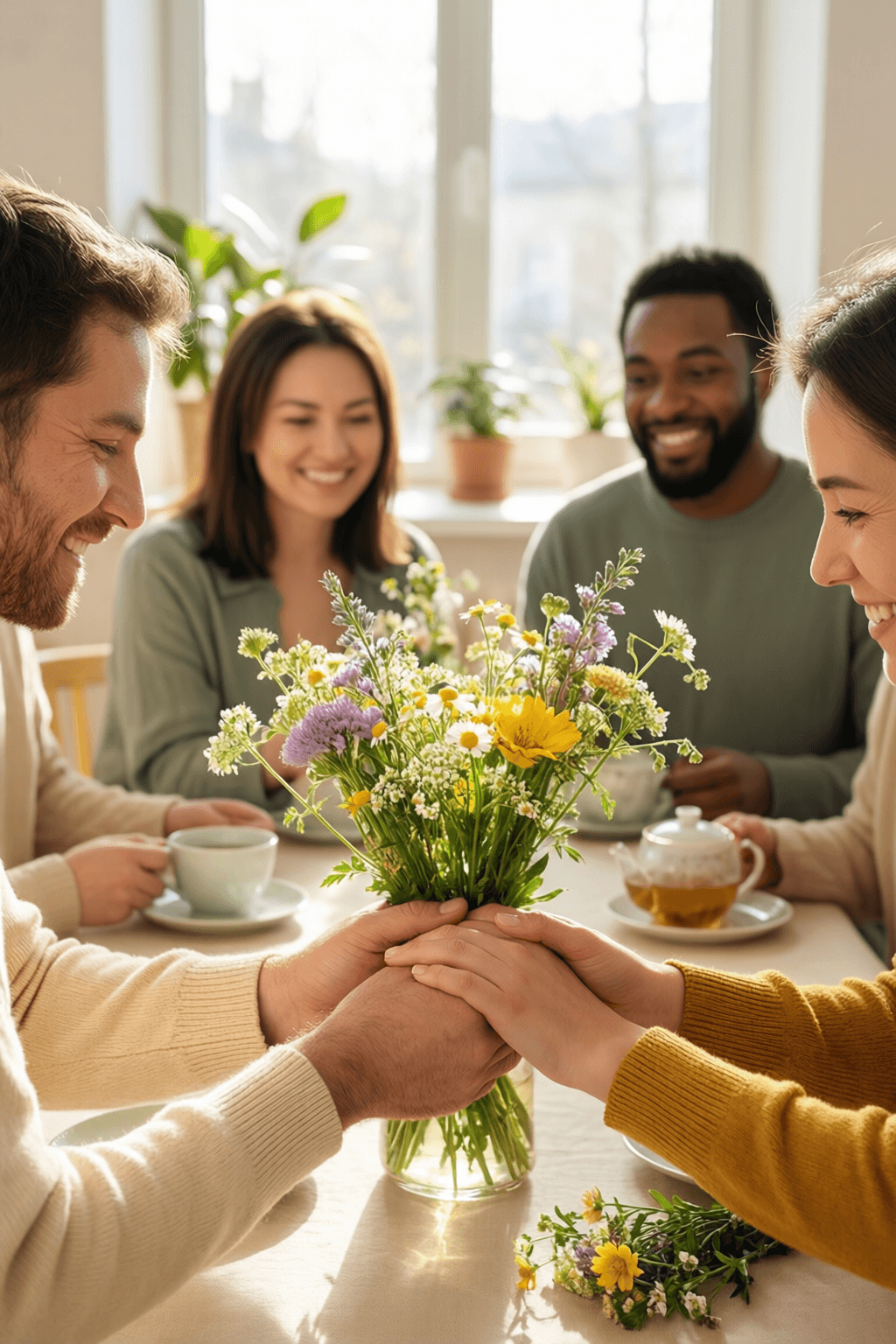
It's when we start working together that the real healing takes place. — Yoko Ono
—What lingers after this line?
A Collective View of Recovery
At its heart, Yoko Ono’s statement shifts healing away from the isolated individual and toward shared effort. The phrase “start working together” suggests that repair begins not merely with intention, but with cooperation—when people listen, respond, and build trust through action. In this sense, healing is less a private breakthrough than a social process. This idea feels especially powerful because pain often creates distance. However, Ono implies that recovery begins when that distance is crossed. Whether in families, communities, or divided societies, the first movement toward restoration is collaboration itself: the willingness to meet one another where hurt has previously kept people apart.
Why Connection Restores What Isolation Damages
From there, the quote points to a basic human truth: many wounds deepen in isolation, while many forms of healing require connection. Psychologists such as John Bowlby, in attachment theory (mid-20th century), argued that secure relationships help regulate fear and distress. In other words, people often heal more fully when they feel accompanied rather than abandoned. As a result, working together becomes more than practical teamwork; it becomes emotional repair. A friend who stays through grief, a group that rebuilds after crisis, or colleagues who address conflict honestly all demonstrate Ono’s insight. Shared effort reassures people that they do not have to carry pain alone.
Art, Activism, and Shared Responsibility
Seen in light of Yoko Ono’s life and work, the quotation also carries a public and artistic dimension. Ono’s participatory art and peace activism frequently invited audiences not just to observe but to join in. Projects such as “Wish Tree” ask individuals to contribute their hopes, turning private longing into a communal act. Consequently, healing appears not as a spectacle delivered by one figure, but as something created together. This perspective broadens the quote beyond personal comfort. It suggests that fractured communities, like fractured hearts, mend through participation. By asking others to engage, Ono frames healing as shared responsibility—something that emerges when people decide to become co-creators of peace.
The Courage to Collaborate After Hurt
Yet the quote does not romanticize togetherness; in fact, working with others after injury can be the hardest step of all. Betrayal, grief, or conflict often make cooperation feel risky. That is precisely why Ono’s wording matters: healing takes place when we start, not when everything is already resolved. The beginning may be awkward, fragile, and incomplete, but it opens the door. In this way, collaboration becomes an act of courage. Truth and Reconciliation efforts in post-apartheid South Africa, led in part by Desmond Tutu in the 1990s, showed that recovery often starts with imperfect, painful dialogue. Progress did not erase suffering overnight, yet mutual engagement made healing imaginable.
From Shared Work to Lasting Renewal
Finally, Ono’s message implies that healing is sustained through ongoing participation rather than a single moment of repair. To work together is a continuing practice of listening, adjusting, forgiving, and rebuilding. Real healing, then, is not simply the closing of a wound, but the creation of new patterns of relationship that make further harm less likely. This gives the quote its enduring relevance. In personal life, it encourages honest partnership; in workplaces, it points toward collaborative cultures; in society, it calls for solidarity over division. Ultimately, Ono reminds us that healing becomes real when it is enacted collectively—when people turn sympathy into shared work.
One-minute reflection
What does this quote ask you to notice today?
Related Quotes
6 selectedHealing yourself is connected with healing others. — Yoko Ono
Yoko Ono
Yoko Ono’s statement begins with a simple but far-reaching insight: healing is rarely a private event. When a person becomes more whole, less reactive, and more compassionate, that inner change naturally affects the peop...
Read full interpretation →It is when we start working together that the real healing takes place. — David Hume
David Hume
At its core, David Hume’s line suggests that healing is not merely a private act of endurance but a shared human process. The moment people begin working together, suffering is no longer carried in isolation; instead, it...
Read full interpretation →Healing isn't about erasing the past. It's about changing how the past lives within you so it no longer controls your present. — Cory Muscara
Cory Muscara
Cory Muscara’s quote begins with a gentle but important correction: healing does not require pretending that pain never happened. Instead, it asks us to transform our relationship with memory, so the past becomes part of...
Read full interpretation →Healing may not be so much about getting better, as about letting go of everything that isn't you. — Rachel Naomi Remen
Rachel Naomi Remen
Rachel Naomi Remen’s insight gently shifts healing away from the usual language of repair. Instead of imagining ourselves as broken machines that must be made efficient again, she suggests that healing may involve removi...
Read full interpretation →Healing is not the absence of pain—it's a steady return to wholeness despite it. — Mark Nepo
Mark Nepo
Mark Nepo’s reflection begins by challenging a common assumption: that healing means pain has disappeared. Instead, he suggests that pain may remain present while healing is still underway.
Read full interpretation →Healing is the return of the memory of wholeness. — Deepak Chopra
Deepak Chopra
At first glance, Deepak Chopra’s line reframes healing as something larger than the disappearance of pain or illness. To call healing “the return of the memory of wholeness” suggests that wellness is not newly manufactur...
Read full interpretation →More From Author
More from Yoko Ono →Healing yourself is connected with healing others. — Yoko Ono
Yoko Ono’s statement begins with a simple but far-reaching insight: healing is rarely a private event. When a person becomes more whole, less reactive, and more compassionate, that inner change naturally affects the peop...
Read full interpretation →You may think I'm small, but I have a universe inside my mind. — Yoko Ono
Yoko Ono’s line opens with a contrast that immediately reframes power: what appears “small” on the outside can contain something immeasurably large within. The sentence pushes back against the lazy equation of physical p...
Read full interpretation →Begin again with the same heart and a wiser hand. — Yoko Ono
Yoko Ono’s line is brief, but it opens a whole philosophy of renewal: you can restart without denying what came before. “Begin again” implies a conscious decision to step back into life—work, love, art, or healing—after...
Read full interpretation →Paint your days with fearless colors. — Yoko Ono
Yoko Ono’s line reads like a simple instruction, yet it carries an expansive challenge: treat your daily life as a canvas and yourself as the painter. Rather than waiting for rare, dramatic moments to feel alive, it asks...
Read full interpretation →