
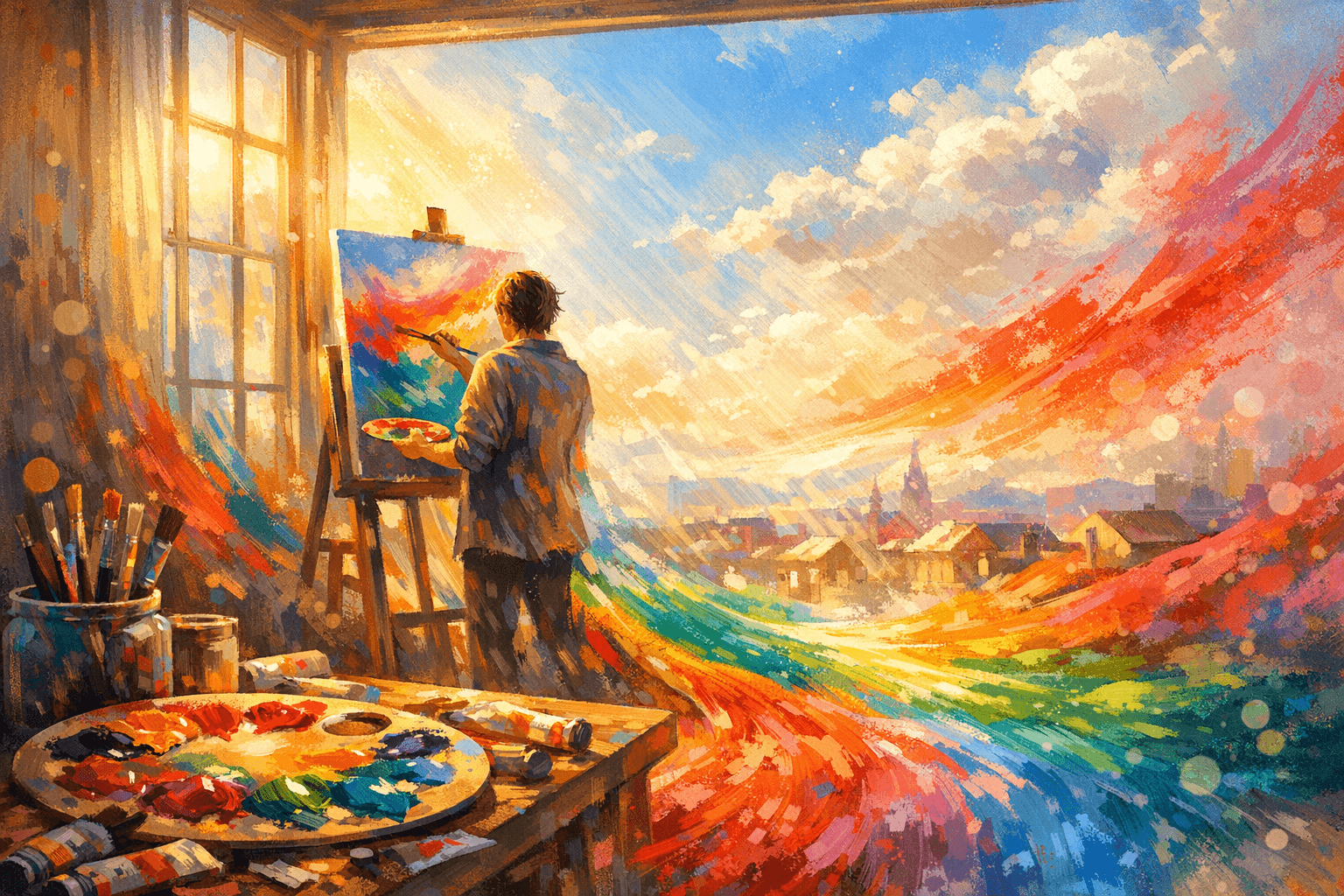
Paint your days with fearless colors. — Yoko Ono
—What lingers after this line?
A Call to Live Like an Artist
Yoko Ono’s line reads like a simple instruction, yet it carries an expansive challenge: treat your daily life as a canvas and yourself as the painter. Rather than waiting for rare, dramatic moments to feel alive, it asks you to make ordinary hours—commutes, conversations, chores—into deliberate strokes of meaning. From there, the word “paint” implies agency. A day is not merely something that happens to you; it’s something you can shape through choices, attention, and creative risk. In that sense, Ono reframes living as a practice, one where intention matters as much as circumstance.
What “Fearless” Really Demands
If painting is the method, “fearless” is the posture. Ono isn’t claiming fear disappears; instead, she suggests acting in spite of it, especially when self-doubt or social approval tries to shrink you into safer tones. Fearlessness here can mean speaking honestly, trying publicly, or changing direction without waiting for permission. This emphasis aligns with Ono’s broader artistic ethos, where the artwork often requires participation and vulnerability—seen in “Cut Piece” (first performed 1964), which confronted audiences with discomfort and responsibility. In that light, fearless color is less about bold aesthetics and more about bold presence.
Colors as Identity, Mood, and Meaning
Next, “colors” functions as a metaphor for the emotional and personal palette you allow yourself to use. Bright colors can suggest joy, play, and openness, while darker hues can represent grief, uncertainty, or seriousness—yet both are part of a complete painting. The quote doesn’t ask for constant cheerfulness; it asks for fullness. Importantly, fearless color can mean refusing to mute your identity—your tastes, accent, values, or ambitions—just to blend in. Like a painter who stops worrying about whether a hue is “too much,” you begin choosing what is true rather than what is merely acceptable.
Small Strokes, Not Just Grand Gestures
Then the focus shifts from dramatic reinvention to daily accumulation. Painting happens stroke by stroke, and Ono’s wording—“your days,” not “your life”—suggests that change is built in repeatable moments. A fearless color might be a morning routine that protects your mind, an honest apology, a new class taken imperfectly, or a boundary set without resentment. Consider a modest anecdote: someone who always wanted to sing joins a community choir, not to become a star, but to stop living in grayscale. The act may be small, yet it changes the day’s texture—and over time, the whole composition.
Resistance to a World That Prefers Neutral Tones
Moreover, the quote can be read as gentle defiance. Social systems often reward predictability: don’t ask for too much, don’t try too loudly, don’t stand out. Fearless colors push back against that pressure by making visibility a choice rather than an accident. This is where Ono’s background in conceptual art and activism quietly echoes: art can be an instruction for living, and living can be an artful refusal. To paint your days is to insist that your inner life deserves expression even when the external world invites you to self-edit.
Turning the Phrase Into a Daily Practice
Finally, the quote becomes most useful when translated into a habit: choose one “color” each day and apply it on purpose. That color might be curiosity (ask better questions), courage (submit the work), tenderness (repair a relationship), or experimentation (do it a new way). The point is not perfection but deliberate application. Over time, you end up with a life that looks lived-in rather than merely managed. By repeatedly choosing fearless strokes, you don’t just decorate your days—you author them, creating a personal palette that reflects who you are and who you’re becoming.
One-minute reflection
Why might this line matter today, not tomorrow?
Related Quotes
6 selectedTo be courageous is to act with the heart. — Molière
Molière
Molière’s line suggests that courage is not merely the absence of fear, but the decision to move despite it. By connecting courage with the heart, he frames bravery as an emotional and moral act rather than a simple disp...
Read full interpretation →The best people possess a feeling for beauty, the courage to take risks, the discipline to tell the truth, the capacity for sacrifice. — Ernest Hemingway
Ernest Hemingway
Hemingway’s line presents goodness not as politeness or success, but as a demanding inner code. The “best people” are those who combine sensitivity, bravery, honesty, and self-denial—qualities that do not always coexist...
Read full interpretation →If you are not willing to look stupid, nothing great is ever going to happen to you. — Julia Cameron
Julia Cameron
Julia Cameron’s remark begins with a hard truth: many people do not fail because they lack talent, but because they fear embarrassment. In that sense, ‘looking stupid’ becomes shorthand for being seen trying, stumbling,...
Read full interpretation →You don't have to bully yourself out of feeling fear. You just have to move while it's still there. — Annie Wright
Annie Wright
At its core, Annie Wright’s quote challenges the common belief that courage begins only after fear has disappeared. Instead, it reframes fear as something that can accompany action rather than prevent it.
Read full interpretation →For what matters in life is not whether we receive a round of applause; what matters is whether we have the courage to venture forth despite the uncertainty of acclaim. — Amor Towles
Amor Towles
At its core, Amor Towles shifts attention away from public approval and toward private resolve. The quote argues that a life’s value is not determined by applause—those visible signs of recognition—but by the willingness...
Read full interpretation →Confidence doesn't mean being fearless. It means creating, even when your hands shake. — Lisa Golightly
Lisa Golightly
At first glance, Lisa Golightly’s quote overturns a common myth: that confident people move through life without fear. Instead, she presents confidence as action taken in spite of fear, not in the absence of it.
Read full interpretation →More From Author
More from Yoko Ono →It's when we start working together that the real healing takes place. — Yoko Ono
At its heart, Yoko Ono’s statement shifts healing away from the isolated individual and toward shared effort. The phrase “start working together” suggests that repair begins not merely with intention, but with cooperatio...
Read full interpretation →Healing yourself is connected with healing others. — Yoko Ono
Yoko Ono’s statement begins with a simple but far-reaching insight: healing is rarely a private event. When a person becomes more whole, less reactive, and more compassionate, that inner change naturally affects the peop...
Read full interpretation →You may think I'm small, but I have a universe inside my mind. — Yoko Ono
Yoko Ono’s line opens with a contrast that immediately reframes power: what appears “small” on the outside can contain something immeasurably large within. The sentence pushes back against the lazy equation of physical p...
Read full interpretation →Begin again with the same heart and a wiser hand. — Yoko Ono
Yoko Ono’s line is brief, but it opens a whole philosophy of renewal: you can restart without denying what came before. “Begin again” implies a conscious decision to step back into life—work, love, art, or healing—after...
Read full interpretation →