
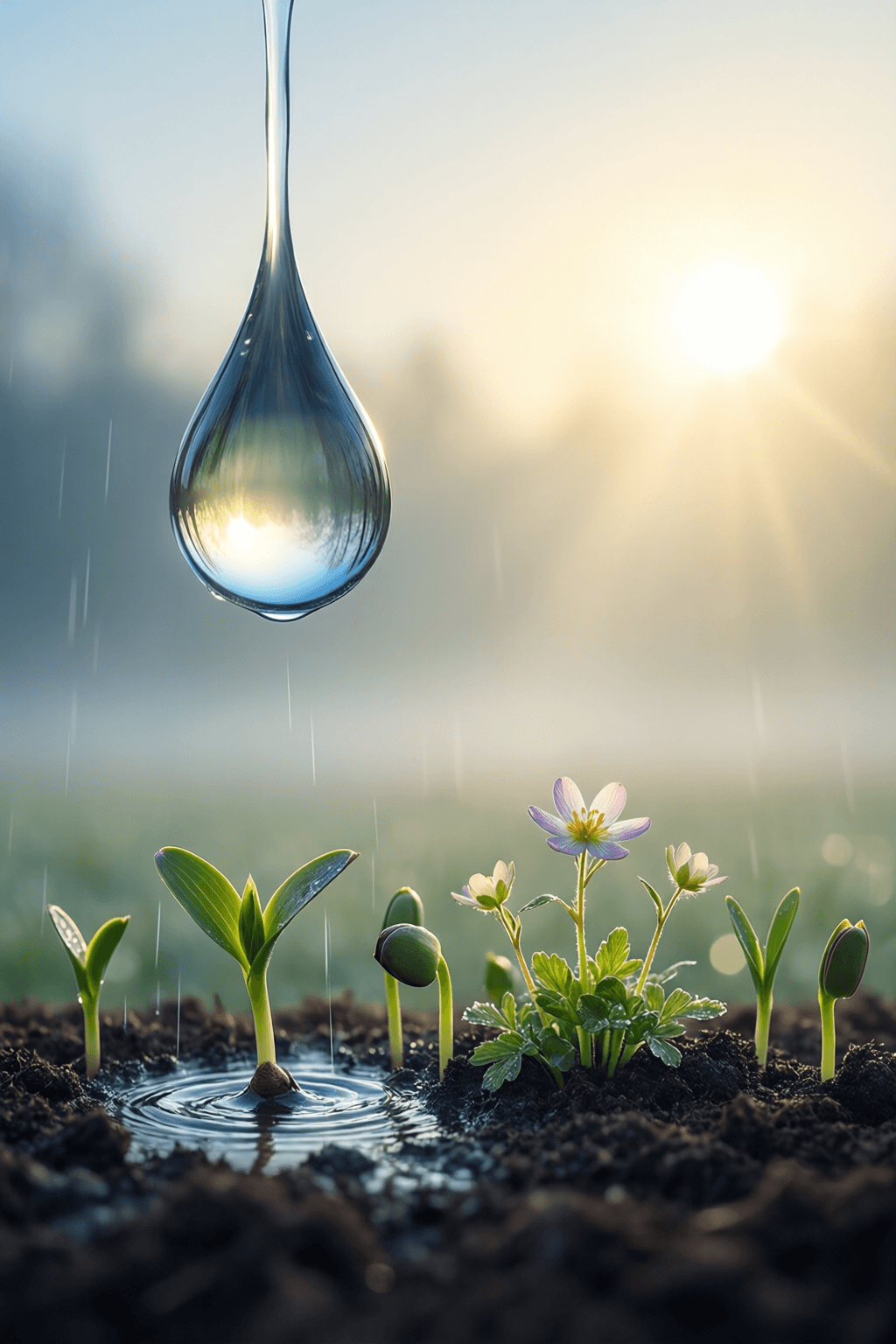
Today's tears water tomorrow's gardens. — Matshona Dhliwayo
—What lingers after this line?
Sorrow as a Seed of Renewal
At first glance, Matshona Dhliwayo’s line transforms grief into something unexpectedly fertile. Tears, usually seen as signs of pain or loss, become water for a future garden, suggesting that suffering is not merely endured but can quietly prepare the ground for renewal. In this image, emotional hardship is not denied; instead, it is given purpose. This metaphor matters because it shifts the meaning of pain from dead end to beginning. Just as a garden requires moisture before anything green can emerge, human growth often begins in seasons that feel bleak. Dhliwayo’s saying therefore invites patience, reminding us that what feels like breaking down today may also be the earliest stage of becoming stronger tomorrow.
The Hidden Work of Difficult Seasons
From that foundation, the quote also points to the invisible labor of healing. Gardens do not bloom the moment they are watered, and likewise emotional recovery rarely produces instant results. Much of the most important change happens underground, so to speak, where roots deepen long before flowers appear. This makes the saying especially powerful for anyone who feels their suffering has yielded nothing yet. In this way, Dhliwayo captures a truth echoed in many reflective traditions: transformation is often slow, quiet, and unseen. What appears to be stagnation may actually be preparation. The tears of today may be softening hardened places within us, making room for empathy, resilience, and a wider capacity to live meaningfully.
Nature’s Metaphor and Human Resilience
Moreover, the garden image connects personal pain to the larger rhythms of nature. In literature and philosophy, growth regularly follows decay, winter, or storm. Marcus Aurelius’ Meditations (2nd century AD) repeatedly returns to nature as a teacher, showing how change and difficulty belong to life’s order rather than standing outside it. Dhliwayo’s metaphor belongs to this same wisdom tradition, where hardship becomes part of the ecology of becoming. Seen this way, tears are not evidence of failure but of life responding honestly to pressure. Just as rain can look dreary while quietly feeding forests and fields, human sorrow can sustain future forms of strength. Resilience, then, is not the absence of pain but the ability of pain to be transformed into nourishment.
Emotional Pain Becoming Compassion
As the thought deepens, the quote also suggests that suffering can enlarge the heart. People who have known grief often become more attentive to the wounds of others, because pain teaches a language that comfort alone rarely can. Viktor Frankl’s Man’s Search for Meaning (1946) reflects on how suffering, though never desirable in itself, can be shaped into dignity, insight, and moral depth when a person finds meaning within it. Consequently, tomorrow’s garden may not only be personal success or inner peace; it may also be compassion. Tears can water kindness, patience, and understanding. The hurt one survives today may later become the very source of comfort one offers someone else, turning private sorrow into shared healing.
Hope Without Denying Grief
Finally, what makes Dhliwayo’s words enduring is their balance. The quote does not romanticize pain or pretend that tears are pleasant; rather, it holds sorrow and hope together in one image. That balance is crucial, because genuine encouragement does not erase grief but places it within a longer story. The future garden is meaningful precisely because the present rain is real. For that reason, the saying offers a mature form of hope. It tells us that we need not rush our sadness or justify it immediately. Instead, we can trust that even now, in ways we may not yet see, our tears are doing necessary work. In time, what was once only suffering may return to us as wisdom, beauty, and new life.
One-minute reflection
What feeling does this quote bring up for you?
Related Quotes
6 selectedTurning your back on the storm means turning your back on the rainbows that follow. — Matshona Dhliwayo
Matshona Dhliwayo
This quote emphasizes the importance of confronting challenges head-on. Avoiding or running away from difficulties may prevent one from experiencing the rewards and growth that come from overcoming them.
Read full interpretation →Over the years I've grown more comfortable with making people uncomfortable because that is when growth can happen. You need a little conflict. — Jamie Lee Curtis
Jamie Lee Curtis
Jamie Lee Curtis’s reflection begins with a hard-won realization: discomfort is not always a sign that something has gone wrong. Often, it signals that a person, group, or relationship has reached the edge of its familia...
Read full interpretation →Everything that is great in life is the product of slow growth; the newer, and greater, and higher, and nobler the work, the slower is its growth. — William George Jordan
William George Jordan
William George Jordan’s reflection begins with a quiet but demanding truth: the most meaningful achievements rarely arrive quickly. He suggests that greatness is not manufactured in sudden bursts but cultivated through t...
Read full interpretation →We are powerful because we have survived, and that is what it is all about—survival and growth. — Audre Lorde
Audre Lorde
At its core, Audre Lorde’s statement redefines power not as domination, status, or control, but as the hard-won strength that comes from continuing despite adversity. To survive is already to have resisted erasure, and L...
Read full interpretation →If you aren't in over your head, how do you know how tall you are? — T. S. Eliot
T. S. Eliot
At first glance, Eliot’s question turns self-knowledge into a matter of pressure rather than comfort. We do not truly learn our limits while standing safely on familiar ground; instead, we discover our height only when c...
Read full interpretation →Just because your light flickers does not mean it is about to go out. — Yohancé Salimu
Yohancé Salimu
At first glance, Yohancé Salimu’s line separates appearance from reality. A flicker suggests instability, fatigue, or interruption, yet it does not automatically signal extinction.
Read full interpretation →More From Author
More from Matshona Dhliwayo →The world accommodates you for fitting in, but only rewards you for standing out. — Matshona Dhliwayo
Matshona Dhliwayo’s quote begins with a social truth: the world often makes room for people who adapt to its expectations. Fitting in can bring acceptance, safety, and access, because groups tend to welcome those who und...
Read full interpretation →Roses do not bloom hurriedly; for beauty, like any masterpiece, takes time to blossom. — Matshona Dhliwayo
At its heart, Matshona Dhliwayo’s quote reminds us that true beauty cannot be forced. A rose does not rush toward bloom, nor does it apologize for the time required to unfold.
Read full interpretation →Turning your back on the storm means turning your back on the rainbows that follow. — Matshona Dhliwayo
This quote emphasizes the importance of confronting challenges head-on. Avoiding or running away from difficulties may prevent one from experiencing the rewards and growth that come from overcoming them.
Read full interpretation →The strongest trees are rooted in the hardest ground. — Matshona Dhliwayo
This quote suggests that challenges and hardships make individuals stronger. Just like trees that grow in tough soil develop deeper roots, people who face adversity build resilience.
Read full interpretation →