
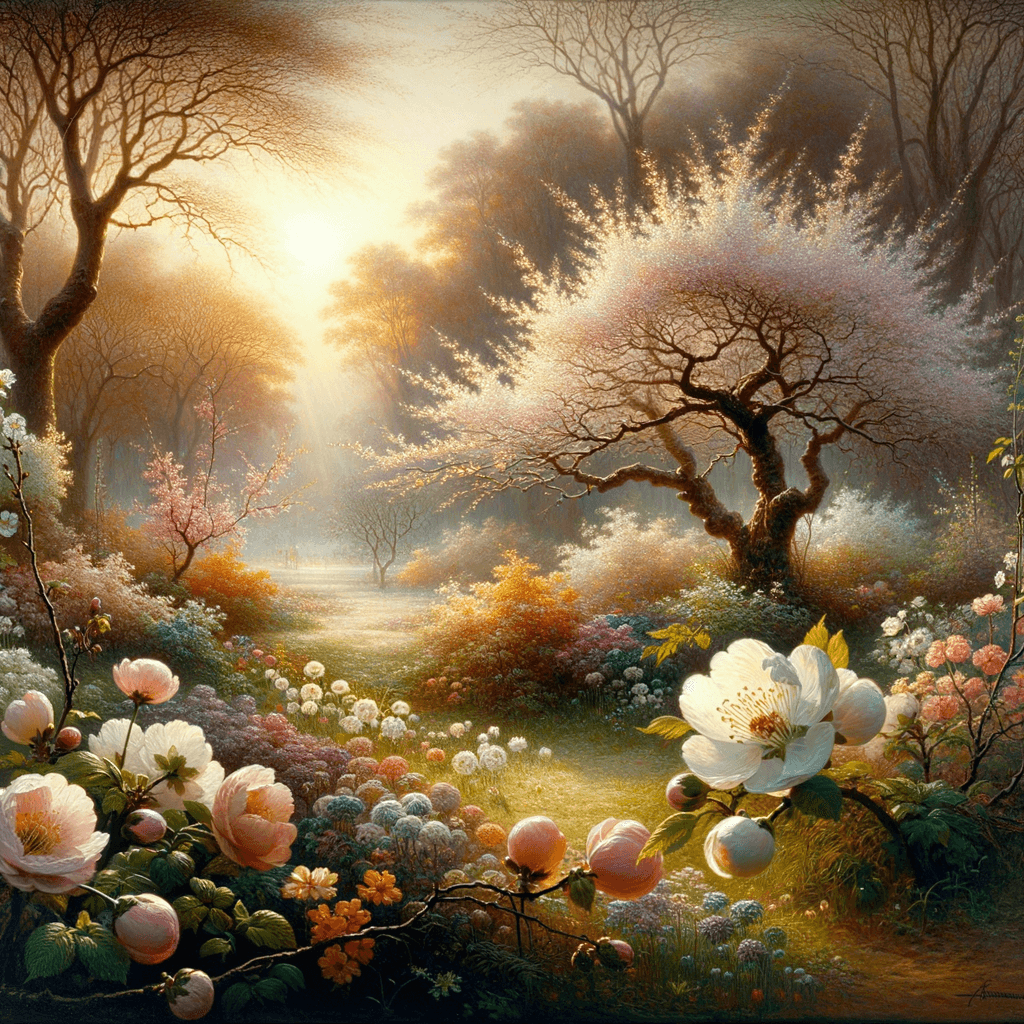
Blossom by blossom the spring begins. — Algernon Charles Swinburne
—What lingers after this line?
Gradual Change
This quote suggests that change and growth often happen incrementally. Just as spring starts with the blooming of the first flowers, significant transformations begin with small, deliberate steps.
Symbolism of Spring
Spring is commonly associated with renewal and new beginnings. Each blossom represents a step toward a broader rejuvenation, symbolizing hope and the promise of better times.
Patience and Progress
The quote underscores the importance of patience and observing gradual progress. It reminds us that remarkable transformations don't happen overnight but through a series of small, consistent actions.
Nature's Cycle
It highlights the cyclical nature of the seasons, emphasizing that just as flowers bloom in their time, everything in life has its season and moment of growth and fulfillment.
Poetic Imagery
Algernon Charles Swinburne was a Victorian poet known for his expressive use of imagery. This line reflects his ability to capture the delicate beauty and gradual unfolding of nature through his words.
One-minute reflection
What's one small action this suggests?
Related Quotes
6 selectedThe old skin has to be shed before the new one can come. — Joseph Campbell
Joseph Campbell
Joseph Campbell’s image of old skin being shed before new skin can appear turns personal growth into something vivid and bodily. At its core, the quote suggests that renewal is not simply about adding better habits or br...
Read full interpretation →Anything that is living must have a rest. If it does not rest, it will lose its strength. — Lao Tzu
Lao Tzu
Lao Tzu’s insight begins with a simple observation: all living things move in cycles, not in endless exertion. By saying that anything alive must rest, he frames rest not as laziness but as a biological and spiritual nec...
Read full interpretation →Rest is not a waste of time; it is the soil from which new life grows. — Thich Nhat Hanh
Thich Nhat Hanh
At first glance, Thich Nhat Hanh’s words challenge a deeply modern assumption that only visible productivity has value. By calling rest “the soil,” he shifts our attention from immediate output to the hidden conditions t...
Read full interpretation →Rest when you're weary. Refresh and renew yourself, your body, your mind, your spirit. Then get back to work. — Ralph Marston
Ralph Marston
Ralph Marston’s quote begins with a simple but often ignored truth: weariness is not a moral failure but a signal. When he says to rest when you’re weary, he reframes pause as part of effort rather than its opposite.
Read full interpretation →When you rest, you catch your breath and it holds you up, like water wings. — Anne Lamott
Anne Lamott
Anne Lamott transforms rest from a passive pause into an active form of care. In her image, catching your breath is not merely stopping; it is discovering that something small and ordinary can hold you up.
Read full interpretation →The trees don't get anxious about shedding their leaves; they trust that spring will return. — Haemin Sunim
Haemin Sunim
Haemin Sunim’s image of trees shedding their leaves offers a gentle lesson in surrender. Rather than resisting change, trees participate in it fully, releasing what they can no longer keep.
Read full interpretation →More From Author
More from Algernon Charles Swinburne →