
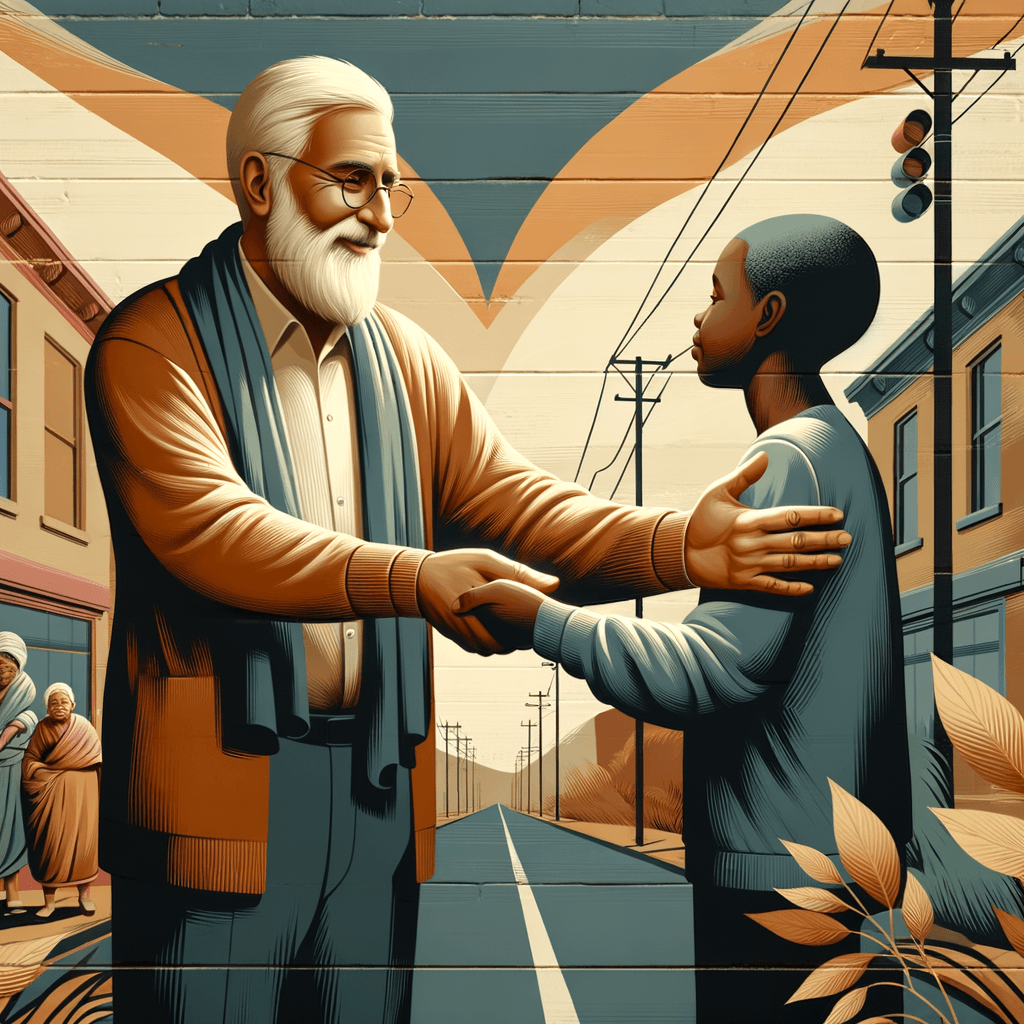
Your true character is most accurately measured by how you treat those who can do nothing for you. — Abigail Van Buren
—What lingers after this line?
Integrity and Morality
This quote highlights that a person’s true moral fiber is revealed when they treat others with respect and kindness, even when there is nothing to gain from those interactions. It underscores the value of acting out of genuine goodness rather than self-interest.
Selflessness in Relationships
It emphasizes the importance of selflessness in human interactions. Treating people well, despite their inability to repay or benefit you, shows authentic care and compassion.
Empathy and Humanity
This quote encourages empathy and reminds us that the hallmark of true character lies in how we treat the vulnerable, the powerless, or those who may not be able to offer us anything in return.
Significance of Altruism
The statement suggests that the true test of altruism is found in situations where no reward is expected. It prompts a reflection on whether we are motivated by kindness or by the potential for personal gain.
Moral Philosophy Perspective
From a philosophical standpoint, many great thinkers argue that ethical behavior is most virtuous when it is motivated by compassion rather than material incentives. This quote aligns with that perspective, challenging people to consider their intentions.
One-minute reflection
What feeling does this quote bring up for you?
Related Quotes
6 selectedSaying no is an act of integrity. It aligns what you do with what you believe. — Annie Wright
Annie Wright
Annie Wright’s statement reframes the word “no” not as rejection, but as moral clarity. At its core, saying no is a way of protecting the space between one’s values and one’s actions.
Read full interpretation →The best people possess a feeling for beauty, the courage to take risks, the discipline to tell the truth, the capacity for sacrifice. — Ernest Hemingway
Ernest Hemingway
Hemingway’s line presents goodness not as politeness or success, but as a demanding inner code. The “best people” are those who combine sensitivity, bravery, honesty, and self-denial—qualities that do not always coexist...
Read full interpretation →You must love in such a way that the person you love feels free. — Thich Nhat Hanh
Thich Nhat Hanh
At its core, Thich Nhat Hanh’s statement redefines love as an act of care that does not confine. To love someone so that they feel free means offering affection without turning it into control, guilt, or dependence.
Read full interpretation →How much time he gains who does not look to see what his neighbour says or does or thinks, but only at what he does himself, to make it just and holy. — Marcus Aurelius
Marcus Aurelius
Marcus Aurelius argues that a great deal of life is wasted in watching other people—what they say, what they do, and even what they might be thinking. Instead, he recommends a disciplined inward turn: focus on your own c...
Read full interpretation →The sort of fearless openness required to turn toward our suffering is only possible within the spacious receptivity of love. — Frank Ostaseski
Frank Ostaseski
Frank Ostaseski’s statement begins with a striking claim: real courage is not simply toughness or willpower. Instead, the bravery required to face suffering honestly arises from love’s presence.
Read full interpretation →Healing is an art. It takes time, it takes practice, it takes love. — Maza Dohta
Maza Dohta
Maza Dohta’s quote begins by reframing healing as an art rather than a mechanical repair. That distinction matters, because art is rarely instant: it involves sensitivity, patience, revision, and care.
Read full interpretation →More From Author
More from Abigail Van Buren →