
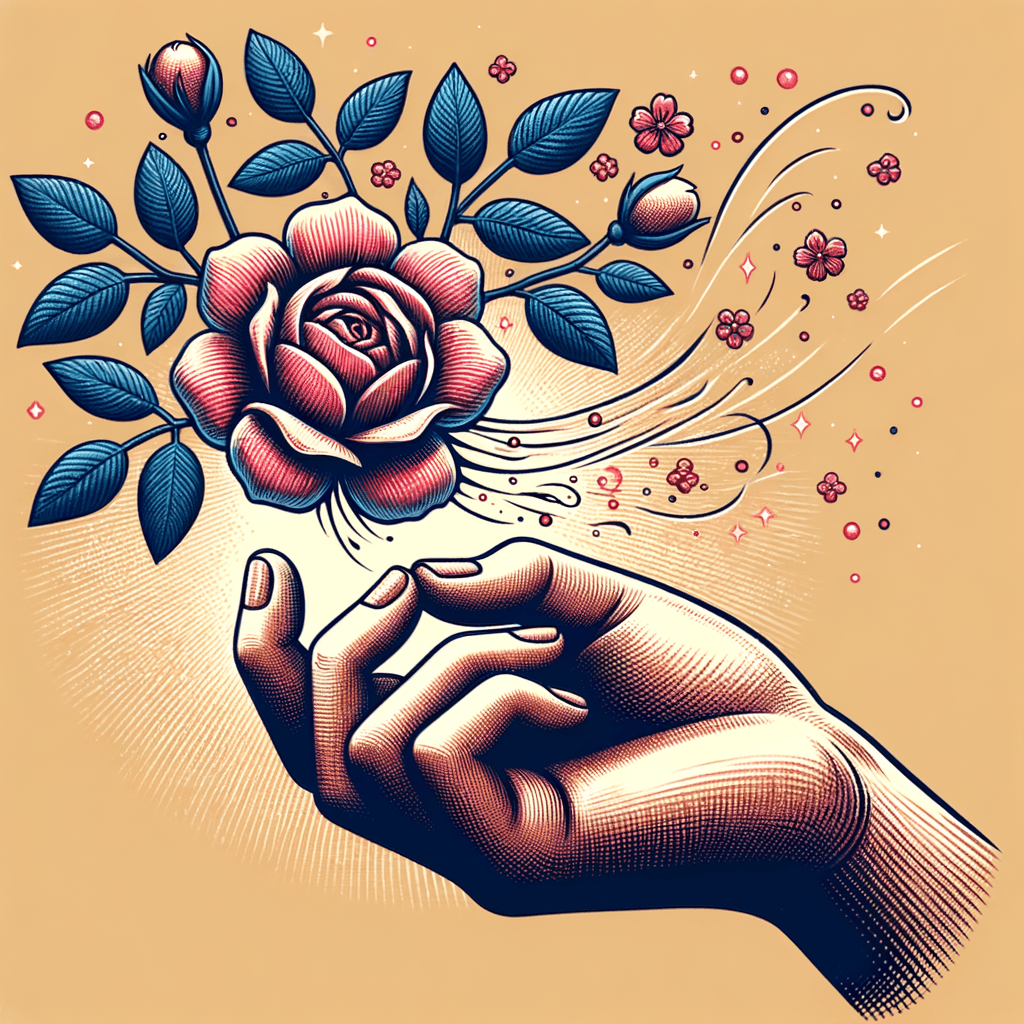
Be like the flower that gives its fragrance to even the hand that crushes it. - Ali Ibn Abi Talib
—What lingers after this line?
Forgiveness and Generosity
This quote encourages forgiveness and generosity, even towards those who harm you. It suggests that one should maintain their virtues and kindness regardless of how they are treated.
Maintaining Integrity
The flower's fragrance symbolizes one’s character and values. The quote implies that one should uphold their integrity and goodness in all circumstances, including when facing adversity or mistreatment.
Resilience in Adversity
It emphasizes resilience and strength of character. Just as a flower continues to emit its fragrance despite being crushed, a person should continue to express positive qualities despite facing challenges.
Compassion and Humility
The quote also highlights the importance of compassion and humility. It suggests showing kindness to all, including those who may not deserve it, reflecting a higher moral and ethical standard.
Philosophical and Spiritual Context
Ali Ibn Abi Talib, a cousin and son-in-law of the Prophet Muhammad, was known for his wisdom and teachings on ethics and spirituality. This quote is consistent with his philosophy of maintaining moral excellence and inner peace.
One-minute reflection
Where does this idea show up in your life right now?
Related Quotes
6 selectedYou must love in such a way that the person you love feels free. — Thich Nhat Hanh
Thich Nhat Hanh
At its core, Thich Nhat Hanh’s statement redefines love as an act of care that does not confine. To love someone so that they feel free means offering affection without turning it into control, guilt, or dependence.
Read full interpretation →The sort of fearless openness required to turn toward our suffering is only possible within the spacious receptivity of love. — Frank Ostaseski
Frank Ostaseski
Frank Ostaseski’s statement begins with a striking claim: real courage is not simply toughness or willpower. Instead, the bravery required to face suffering honestly arises from love’s presence.
Read full interpretation →The community of the saints is not an ideal community consisting of perfect people. No, it is a community which proves its worth by constantly and sincerely proclaiming forgiveness. — Dietrich Bonhoeffer
Dietrich Bonhoeffer
Bonhoeffer begins by dismantling a tempting illusion: the church, or “community of the saints,” is not a gathering of flawless people. Instead, he insists that any community built on the fantasy of moral purity will even...
Read full interpretation →Healing is an art. It takes time, it takes practice, it takes love. — Maza Dohta
Maza Dohta
Maza Dohta’s quote begins by reframing healing as an art rather than a mechanical repair. That distinction matters, because art is rarely instant: it involves sensitivity, patience, revision, and care.
Read full interpretation →The only way to exist in a world that feels increasingly cold is to be the warmth you wish to receive from others. — Maya Angelou
Maya Angelou
At its core, Maya Angelou’s line reframes loneliness as a call to action rather than a verdict on the world. If life feels impersonal, distant, or harsh, she suggests that waiting passively for kindness may only deepen t...
Read full interpretation →Reject your sense of injury and the injury itself disappears. — Marcus Aurelius
Marcus Aurelius
At first glance, Marcus Aurelius’s line seems severe, yet its central claim is distinctly Stoic: much of suffering arises not from the event itself but from our judgment about it. In his Meditations (c.
Read full interpretation →More From Author
More from Ali Ibn Abi Talib →