
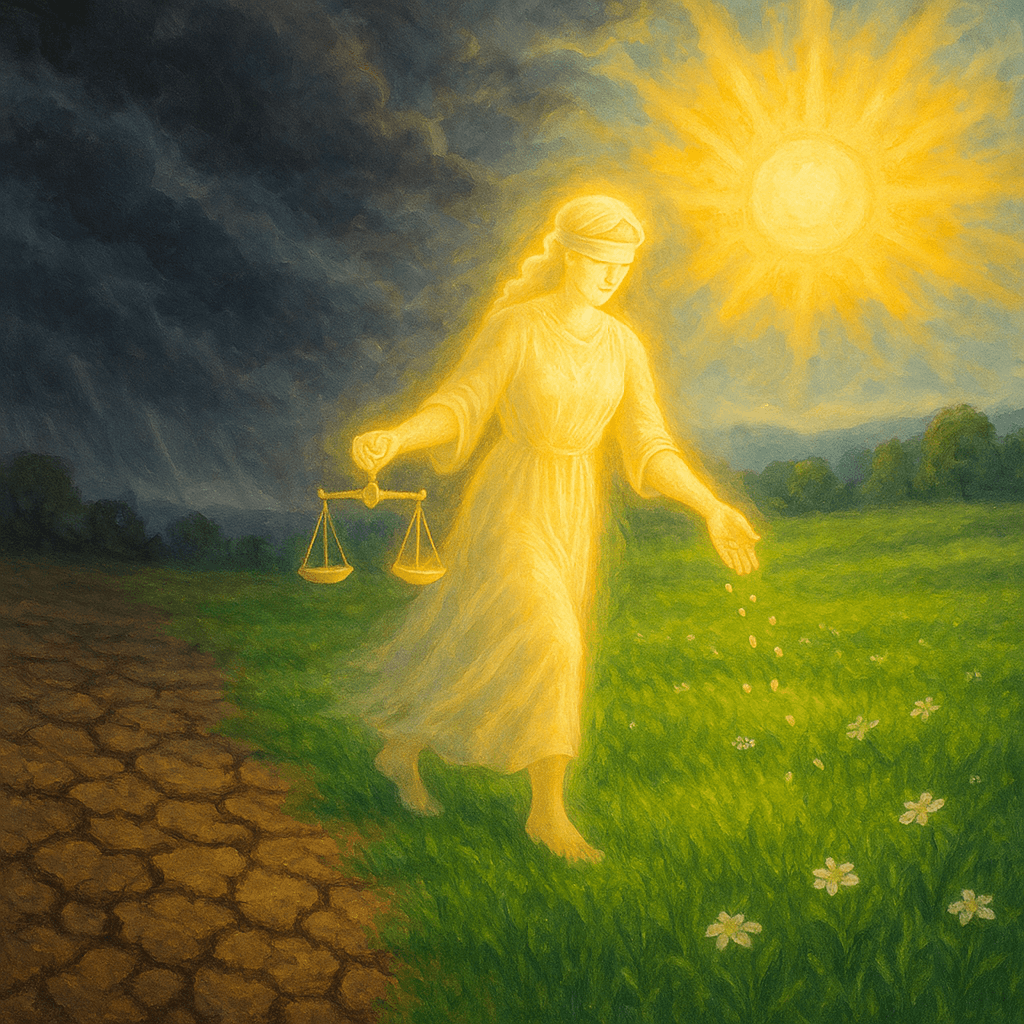
If you want peace, prepare for justice. — African Proverb
—What lingers after this line?
Understanding the Proverb’s Wisdom
The African proverb 'If you want peace, prepare for justice' encapsulates the idea that peace is inseparable from the existence of fairness and equity. Unlike the more commonly cited 'If you want peace, prepare for war' (Latin: 'Si vis pacem, para bellum'), this maxim shifts the focus toward the proactive cultivation of justice. The implication is clear: sustainable peace is not the result of coercion or suppression, but of addressing root injustices.
Justice as the Bedrock of Stability
Building upon this foundation, justice operates as the stabilizing force in societies, offering redress to those wronged and establishing impartial rules. History provides numerous examples where peace flourishes only where justice prevails. For instance, the post-apartheid Truth and Reconciliation Commission in South Africa prioritized justice and acknowledgment over retribution, thereby fostering societal healing and lasting calm.
The Dangers of Stability Without Justice
However, pursuing peace while neglecting justice often results in fragile stability. Whenever systemic injustices are left unaddressed, tensions simmer beneath a calm surface. The civil rights era in the United States, for example, exposed the limitations of mere order—civil peace existed, but without justice for marginalized communities, unrest was inevitable. Thus, any attempt at peacekeeping must be accompanied by active measures to redress wrongs.
From Retributive to Restorative Justice
This proverb also nudges societies toward restorative models of justice, emphasizing repair and reconciliation over strict punishment. Restorative justice practices, increasingly adopted in various communities worldwide, exemplify how healing and fairness can transform cycles of conflict into opportunities for genuine peace. Ultimately, peace born from restoration stands a better chance of enduring than peace imposed through force.
Justice and Peace in Global Development
Finally, international efforts—like the United Nations’ Sustainable Development Goal 16, which calls for ‘peace, justice, and strong institutions’—demonstrate the inseparability of these ideals on a global scale. Whether addressing local disputes or international crises, the pursuit of justice is essential not only for resolving grievances but for constructing a world where lasting peace is possible for all.
Recommended Reading
As an Amazon Associate, we earn from qualifying purchases.
One-minute reflection
What does this quote ask you to notice today?
Related Quotes
6 selectedThe work we do with our hands is the best way to keep our hearts from getting restless. — John Steinbeck
John Steinbeck
At its core, Steinbeck’s line proposes that physical work does more than produce useful things: it calms inner turbulence. By keeping the hands occupied, he suggests, the mind is less likely to drift into anxiety, idlene...
Read full interpretation →Stop seeking permission to prioritize your peace; your boundaries are the only line of defense you have. — Pema Chödrön
Pema Chödrön
Pema Chödrön’s statement begins with a striking reversal: instead of waiting for others to approve our need for rest, distance, or refusal, we are asked to grant that permission to ourselves. In this sense, peace is not...
Read full interpretation →The real flex is no longer looking busy. It is looking peaceful. — Erica Diamond
Erica Diamond
At first glance, Erica Diamond’s line overturns a familiar social script. For years, looking busy functioned as a badge of importance, suggesting demand, ambition, and relevance.
Read full interpretation →Everything we do is infused with the energy with which we do it. If we're frantic, life will be frantic. If we're peaceful, life will be peaceful. — Marianne Williamson
Marianne Williamson
Marianne Williamson’s quote begins with a simple but far-reaching claim: life often reflects the quality of the energy we carry into it. In other words, our actions are not neutral.
Read full interpretation →I think that people want peace so much that one of these days government had better get out of their way and let them have it. — Dwight D. Eisenhower
Dwight D. Eisenhower
Eisenhower’s remark turns a common political assumption upside down. Rather than suggesting that peace depends mainly on state power, he implies that ordinary people may already desire it more deeply than their leaders d...
Read full interpretation →I am at rest with you — I have come home. — Dorothy L. Sayers
Dorothy L. Sayers
At first glance, Dorothy L. Sayers’s line turns a simple feeling into a profound destination: to be ‘at rest’ with someone is not merely to relax, but to arrive.
Read full interpretation →More From Author
More from African Proverb →When the roots are deep, there is no reason to fear the wind. — African Proverb
The proverb frames life as weather and character as a tree: when roots run deep, wind becomes something to endure rather than something to dread. In that image, fear is not denied so much as put in its place—storms still...
Read full interpretation →The closer one comes to truth, the simpler everything becomes. — African Proverb
The proverb suggests that truth has a clarifying power: as you approach what is real, the extra clutter—misdirection, anxiety, and needless complication—falls away. In other words, complexity often signals that we are st...
Read full interpretation →The sun does not hurry to rise, yet it never misses its mark. — African Proverb
The proverb begins with an image so familiar it’s easy to overlook: sunrise. The sun appears without strain, without haste, and without visible anxiety about being “on time.” And yet, day after day, it arrives.
Read full interpretation →Do not look where you fell, but where you slipped. — African Proverb
The proverb urges a subtle but powerful change in attention: don’t fixate on the place where you landed in pain or embarrassment; instead, examine the moment your footing first failed. In other words, the visible setback...
Read full interpretation →