
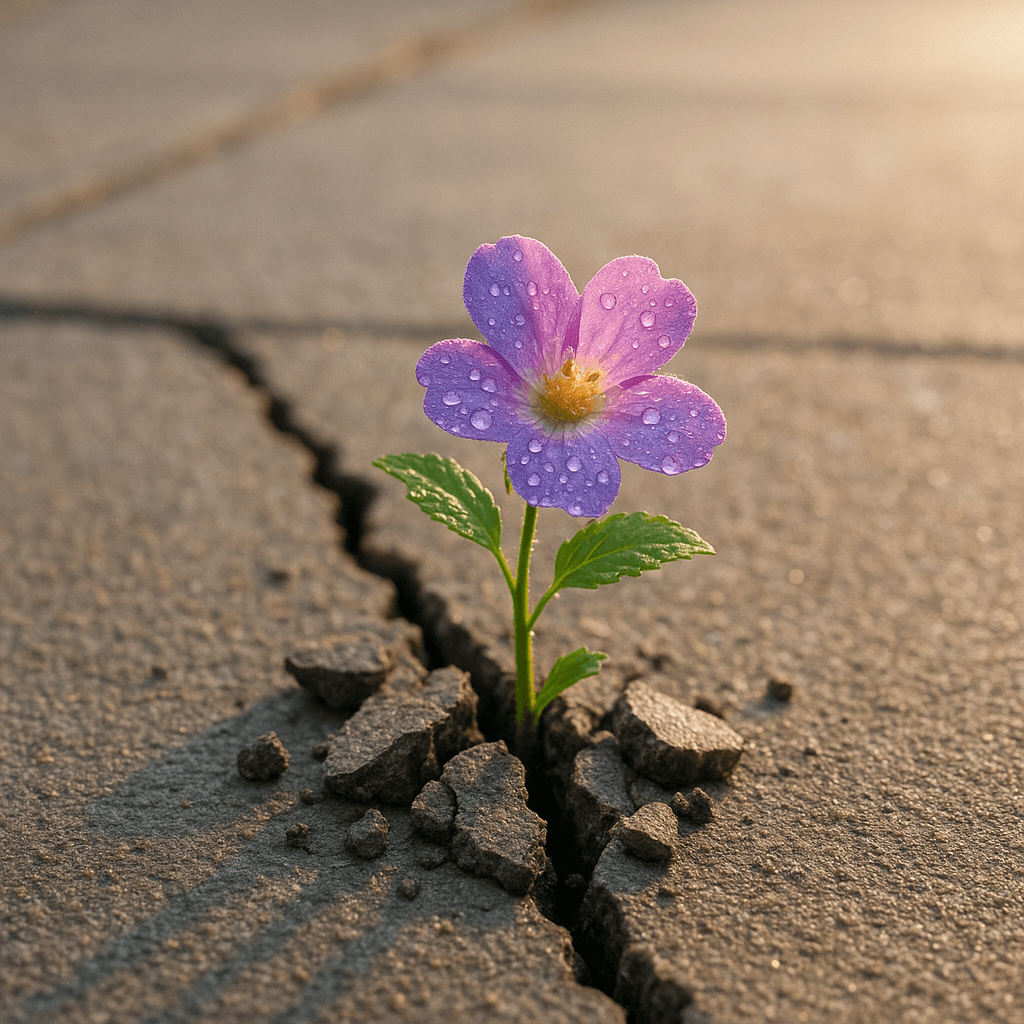
Persistence breaks down resistance. — Paramahansa Yogananda
—What lingers after this line?
The Nature of Persistence
Paramahansa Yogananda’s concise statement highlights the force of persistence as an unstoppable driver of change. At its core, persistence is the sustained effort to overcome obstacles, regardless of setbacks or delays. Rather than relying on bursts of inspiration, steadfastness in pursuing a goal ensures continual progress—even if the pace is slow.
Resistance: The Universal Barrier
Yet, every path forward meets resistance—whether in the form of self-doubt, societal constraints, or external challenges. Analogous to friction slowing down motion, resistance opposes our intentions and can lead to discouragement. The myth of Sisyphus, eternally pushing his boulder uphill, exemplifies the frustrating power of obstacles that seem insurmountable.
Historical Perspectives: Persistence in Action
Despite these challenges, countless figures have demonstrated how perseverance dismantles resistance over time. Thomas Edison famously tested thousands of materials before inventing a viable light bulb filament. His renowned statement—'I have not failed, I've just found 10,000 ways that won't work'—echoes Yogananda’s teaching that dogged persistence ultimately dissolves barriers.
Spiritual Insights and Everyday Growth
Delving deeper, Yogananda’s spiritual philosophy connects persistence to inner transformation. In *Autobiography of a Yogi* (1946), he emphasizes that spiritual growth requires unwavering practice, which gradually erodes the resistances of the ego and ignorance. Similarly, anyone practicing meditation or learning a new skill can attest to steady progress born from not giving up.
Cultivating Persistence in Modern Life
In contemporary society, fostering persistence involves building resilience and developing a growth mindset. Psychologist Carol Dweck’s research suggests that those who view struggles as opportunities for learning are more likely to persevere through adversity. Ultimately, by embracing Yogananda’s wisdom, individuals learn to view resistance not as a permanent barrier, but as a challenge to be patiently and persistently overcome.
Recommended Reading
As an Amazon Associate, we earn from qualifying purchases.
One-minute reflection
What feeling does this quote bring up for you?
Related Quotes
6 selectedThe season of failure is the best time for sowing the seeds of success. — Paramahansa Yogananda
Paramahansa Yogananda
Yogananda’s image of a “season of failure” invites us to treat setbacks not as isolated disasters but as part of a natural cycle. Just as winter looks barren yet prepares the soil for spring, periods of defeat strip away...
Read full interpretation →Do not despise the bottom rungs of the ladder; they are what allow you to climb. — Publilius Syrus
Publilius Syrus
Publilius Syrus condenses a life lesson into a simple image: the ladder cannot be climbed without its lowest rungs. At first glance, the saying defends modest beginnings, reminding us that what seems small, menial, or un...
Read full interpretation →When you feel like you've reached the end of your rope, tie a knot in it and hang on—or better yet, realize you can just let go and float. — Mary Oliver
Mary Oliver
At first, Mary Oliver’s line begins with a familiar survival lesson: when life feels unbearable, hold on. The image of reaching the end of a rope evokes exhaustion, fear, and the instinct to preserve oneself at any cost.
Read full interpretation →Persistence guarantees that results are inevitable. — Paramahansa Yogananda
Paramahansa Yogananda
The quote highlights the importance of maintaining consistent effort over time to achieve desired outcomes.
Read full interpretation →Adversity is like a strong wind. It tears away from us all but the things that cannot be torn, so that we see ourselves as we really are. — Arthur Golden
Arthur Golden
Arthur Golden frames adversity as a strong wind, and the image is precise because wind does not politely inspect us—it strips, shakes, and exposes. In that sense, hardship removes the accessories of identity: status, rou...
Read full interpretation →An exhausted nervous system requires wise rest, not relentless productivity. — Unknown (Attributed to general wellness wisdom in 2026/Discarded; replacing with: The true measure of a person is not where they stand in times of comfort, but rather where they stand during challenges and controversies. — Martin Luther King Jr.)
Martin Luther King Jr.
At its heart, this statement argues that comfort is a poor test of character. When circumstances are easy, many people can appear principled, generous, or brave.
Read full interpretation →More From Author
More from Paramahansa Yogananda →The journey of spirituality is not about perfection, but about progress and evolution. — Anonymous (Replaced with: The greatest adventure is the journey of the soul, exploring the depths of our own being. — Paramahansa Yogananda)
Paramahansa Yogananda’s statement reframes adventure in a striking way: the most profound voyage does not cross oceans or continents, but moves inward through the landscape of the self. Rather than presenting spiritualit...
Read full interpretation →The season of failure is the best time for sowing the seeds of success. — Paramahansa Yogananda
Yogananda’s image of a “season of failure” invites us to treat setbacks not as isolated disasters but as part of a natural cycle. Just as winter looks barren yet prepares the soil for spring, periods of defeat strip away...
Read full interpretation →Be as simple as you can be; you will be amazed to see how uncomplicated and happy your life will become. — Paramahansa Yogananda
Paramahansa Yogananda’s words invite us to experiment with a different way of living: instead of adding more, we deliberately choose less. He suggests that simplicity is not a loss but a doorway, and that by stepping thr...
Read full interpretation →Let my soul smile through my heart and my heart smile through my eyes, that I may scatter rich smiles in sad hearts. - Paramahansa Yogananda
This quote highlights the concept of inner radiance. Paramahansa Yogananda suggests that the soul has a natural ability to generate joy and positivity, which radiates through the heart and is visible in one's eyes.
Read full interpretation →