
Embracing Adversity as the Pathway to Growth
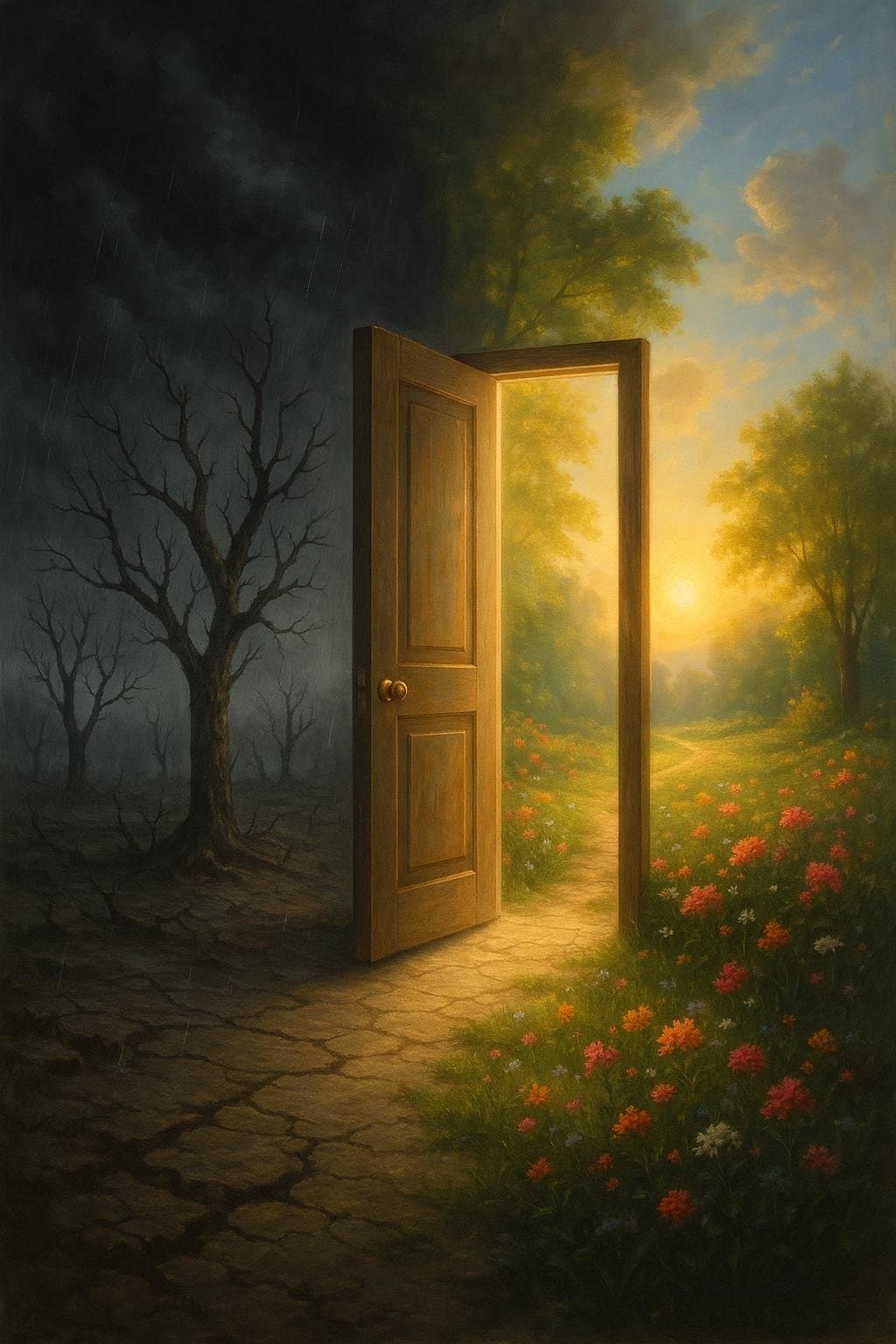
The moment you accept what troubles you've been given, the door will open. — Rumi
—What lingers after this line?
Rumi’s Wisdom on Acceptance
Rumi’s words encourage us to receive our hardships with openness rather than resistance. For the 13th-century Sufi poet, life’s trials are not simply obstacles but hidden opportunities for transformation. Rumi frequently returned to the theme of acceptance in his poetry, urging readers to see beyond their initial discomfort and to trust that hardships are a form of spiritual guidance.
The Psychological Power of Embracing Struggles
Building on Rumi’s insight, modern psychological studies affirm that acceptance promotes resilience. Psychologist Tara Brach, for example, describes ‘radical acceptance’ as the practice of acknowledging reality as it is, which enables healing. When individuals stop avoiding pain and instead allow themselves to feel and process it, they often discover unexpected strength, mirroring Rumi’s metaphorical open door.
Historical Illustrations of Transformation
Throughout history, many influential figures have found enlightenment in adversity. Viktor Frankl’s seminal 'Man’s Search for Meaning' (1946) details how embracing suffering during his time in concentration camps led to profound inner liberation. In this way, hardship can be seen as a catalyst that compels us to new levels of understanding—a motif that echoes Rumi’s teaching.
The Role of Surrender in Spiritual Traditions
Surrendering to one’s circumstances is a recurring idea in various spiritual traditions. In Buddhism, for example, the first Noble Truth teaches acceptance of suffering as inherent to life. This philosophy, much like Rumi’s, posits that by acknowledging pain without denial, one opens the possibility of genuine freedom and serenity.
Turning Acceptance Into Action
Ultimately, accepting what troubles we’ve been given is not passive resignation but an invitation to purposeful action. The ‘open door’ Rumi describes symbolizes new perspectives and choices that only become visible once we stop fighting reality. By moving forward with acceptance, individuals often discover avenues for growth—transforming trials into stepping stones on the journey to self-discovery.
Recommended Reading
One-minute reflection
What's one small action this suggests?
Related Quotes
6 selectedThe quickest way to change your attitude toward pain is to accept that pain is part of life. — Harold S. Kushner
Harold S. Kushner
This quote emphasizes the importance of accepting pain as a natural and unavoidable part of life. By coming to terms with this reality, one can shift their perspective on how to handle and cope with pain.
Read full interpretation →The moon stays bright when it doesn’t avoid the night. — Rumi
Rumi
Rumi’s evocative phrase, 'The moon stays bright when it doesn’t avoid the night,' introduces us to a profound metaphor. Here, the moon symbolizes endurance and inner luminosity, while the night represents life’s inevitab...
Read full interpretation →You have to accept whatever comes and the only important thing is that you meet it with the best you have to give. — Eleanor Roosevelt
Eleanor Roosevelt
Eleanor Roosevelt emphasizes the importance of accepting life as it comes. We cannot control everything that happens, but we can choose how we respond to it.
Read full interpretation →You don't make mistakes, just happy little accidents. — Bob Ross
Bob Ross
Bob Ross’s line hinges on a gentle linguistic swap: “mistakes” become “happy little accidents.” Rather than denying that something went wrong, he changes what the wrongness means. In that reframing, an error stops being...
Read full interpretation →No amount of guilt can change the past, and no amount of worrying can change the future. — Umar ibn al-Khattab
Khattab
Umar ibn al-Khattab draws a bright line between two common mental burdens: guilt about what has already happened and worry about what might happen. His point is not that the past and future are unimportant, but that our...
Read full interpretation →A person who is growing will never be able to fit back into their old life. — Yung Pueblo
Yung Pueblo
Yung Pueblo’s line frames personal development as a physical transformation: when you grow, you take up more inner space, and the old container can’t hold you. This isn’t arrogance or rejection for its own sake; it’s sim...
Read full interpretation →More From Author
More from Rumi →Why do you stay in prison when the door is so wide open? — Rumi
Rumi’s line, “Why do you stay in prison when the door is so wide open?” confronts the listener with an unsettling possibility: that confinement is not always imposed from outside. Instead of offering comfort, he offers a...
Read full interpretation →The quieter you become, the more you are able to hear. — Rumi
Rumi’s line suggests that hearing is not only a physical act but also a quality of attention. When we “become quieter,” we reduce the noise of reactive thoughts, self-commentary, and the urge to respond immediately.
Read full interpretation →The wound is the place where the Light enters you. — Rumi
Rumi’s line turns suffering into architecture: a “wound” becomes an opening rather than merely damage, and “Light” becomes something that can enter and transform. Instead of treating pain as evidence of failure, he frame...
Read full interpretation →The quieter you become, the more you are able to hear. — Rumi
Rumi’s line suggests that hearing is not only a function of the ears but also of attention. When inner noise—plans, judgments, rehearsed replies—fills the mind, it competes with what the world is actually offering in the...
Read full interpretation →