
From Darkness to Renewal: Rumi’s Wisdom on Resilience
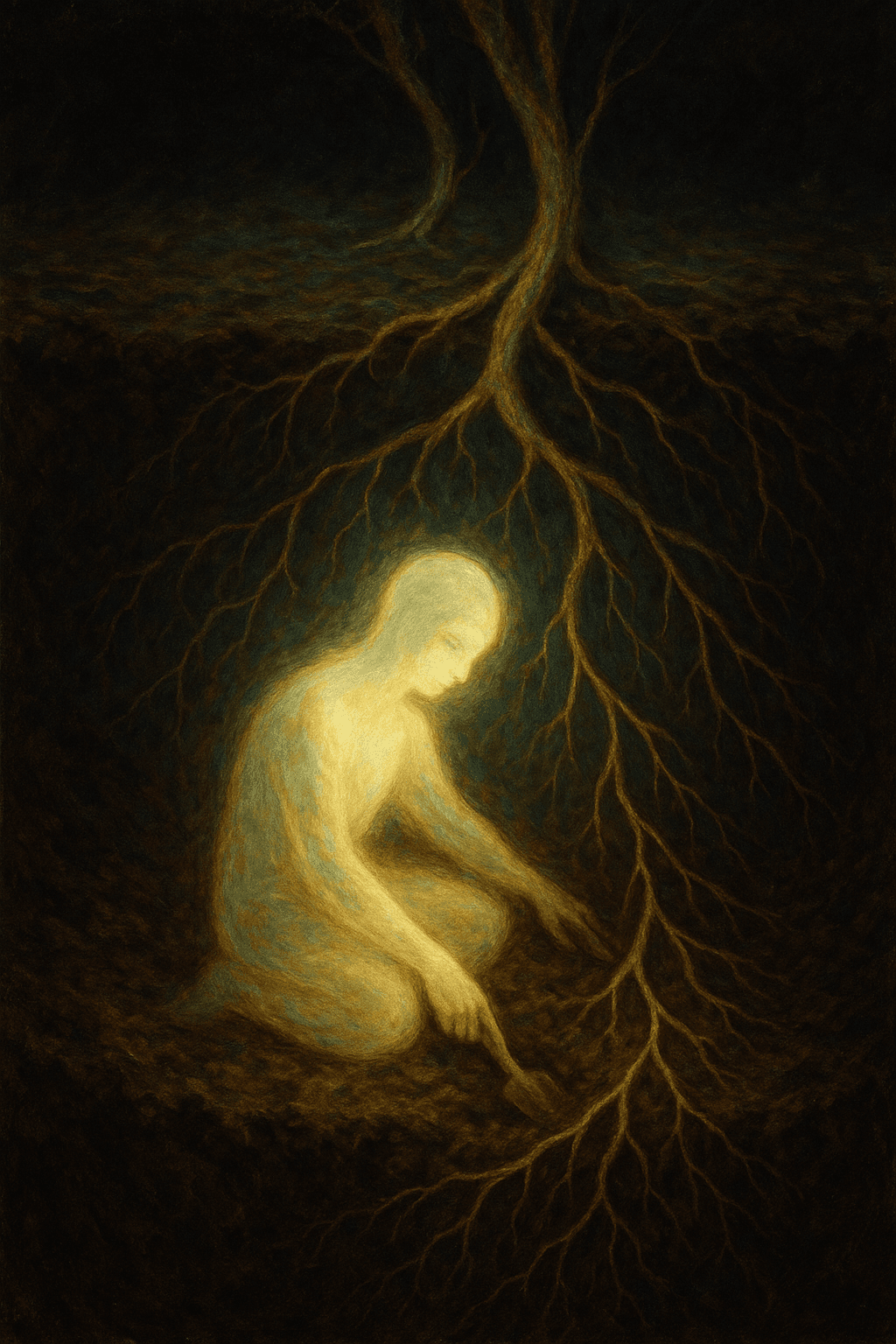
When the soul is deep in the dirt, it is digging for roots to rise again. — Rumi
—What lingers after this line?
The Image of the Soul in the Dirt
Rumi’s evocative metaphor of the soul being ‘deep in the dirt’ immediately conjures images of struggle and despair. Rather than viewing hardship as a mere setback, this phrase reframes difficulty as an essential part of the human experience. Just as a seed must be buried before it can sprout, Rumi suggests that our lowest moments possess transformative potential hidden beneath the surface.
Digging for Roots: Rediscovering Strength
Transitioning from darkness, Rumi introduces the idea of ‘digging for roots’—a process emblematic of seeking inner strength and connection. Roots symbolize foundational values, sources of nourishment, and anchors against adversity. This perspective echoes psychological theories of resilience, where individuals in crisis often return to core beliefs and relationships to rebuild. Viktor Frankl’s experiences in *Man’s Search for Meaning* (1946) similarly affirm that the search for meaning can begin in life’s lowest pits.
Rising Again: The Cycle of Renewal
After digging deep, the soul’s purpose is clear: to rise again. Rumi’s wisdom reinforces the cyclical nature of growth, wherein descent precedes ascent. Nature itself mirrors this truth—from trees that weather winter to bloom in spring, to butterflies emerging from the darkness of a chrysalis. This motif is found in countless traditions; for instance, the Christian concept of resurrection exemplifies how renewal is born from loss.
Transforming Suffering into Growth
Furthermore, Rumi encourages us to reimagine suffering not as pointless agony, but as a catalyst for evolution. Like compost enriching the earth, hardships can fertilize our growth if we accept them as part of an unfolding journey. Modern research into post-traumatic growth demonstrates that individuals often emerge from adversity with increased wisdom, empathy, and courage, echoing the spirit of Rumi’s words.
Cultivating Hope Amidst Hardship
Ultimately, Rumi’s message is one of hope. By recognizing that our darkest times serve a purpose—helping us ‘dig for roots’—we cultivate the patience and resolve to endure. In the context of spiritual traditions and everyday challenges alike, this outlook invites us to trust in the hidden possibilities within our struggles, confident that, as Rumi assures, the soul can always rise again.
Recommended Reading
As an Amazon Associate, we earn from qualifying purchases.
One-minute reflection
Where does this idea show up in your life right now?
Related Quotes
6 selectedBe like a tree and let the dead leaves drop. - Rumi
Rumi
This quote suggests the importance of letting go of past hurts and emotional baggage. Just as trees shed dead leaves, individuals should release negative emotions and experiences to promote personal growth and healing.
Read full interpretation →Instead of trying to return to how things were, build a flexible structure that can handle constant change. — Favor Mental Health
Favor Mental Health
The quote begins by challenging a common instinct: when life is disrupted, we often try to restore an earlier version of stability. Yet “how things were” is usually a moving target, shaped by circumstances that may not r...
Read full interpretation →Quietly cracking does not have to be your permanent state. — Dr. Sarah McQuaid
Dr. Sarah McQuaid
Dr. Sarah McQuaid’s line begins by giving language to a common but often invisible experience: feeling like you’re “quietly cracking.” It suggests a slow, internal strain—functioning on the outside while something splint...
Read full interpretation →You are not a machine designed to be productive 24/7. Even the most fertile land must lie fallow to produce a harvest again. — Wendell Berry
Wendell Berry
Wendell Berry’s line begins by challenging a modern assumption: that our worth is measured by constant productivity. By stating plainly that you are “not a machine,” he re-centers the conversation on human limits—physica...
Read full interpretation →The oak fought the wind and was broken, the willow bent when it must and survived. — Robert Jordan
Robert Jordan
At its heart, Robert Jordan’s line sets up a vivid contrast between two kinds of strength. The oak appears powerful because it resists, standing firm against the wind, yet that very stubbornness becomes its weakness.
Read full interpretation →Some years ask you to survive before they ask you to dream. — Maggie Smith
Maggie Smith.
At its core, Maggie Smith’s line recognizes a painful truth: not every season of life is built for possibility. Some years demand endurance first, asking us to pay attention to basic emotional, financial, or physical sur...
Read full interpretation →More From Author
More from Rumi →Why do you stay in prison when the door is so wide open? — Rumi
Rumi’s line, “Why do you stay in prison when the door is so wide open?” confronts the listener with an unsettling possibility: that confinement is not always imposed from outside. Instead of offering comfort, he offers a...
Read full interpretation →The quieter you become, the more you are able to hear. — Rumi
Rumi’s line suggests that hearing is not only a physical act but also a quality of attention. When we “become quieter,” we reduce the noise of reactive thoughts, self-commentary, and the urge to respond immediately.
Read full interpretation →The wound is the place where the Light enters you. — Rumi
Rumi’s line turns suffering into architecture: a “wound” becomes an opening rather than merely damage, and “Light” becomes something that can enter and transform. Instead of treating pain as evidence of failure, he frame...
Read full interpretation →The quieter you become, the more you are able to hear. — Rumi
Rumi’s line suggests that hearing is not only a function of the ears but also of attention. When inner noise—plans, judgments, rehearsed replies—fills the mind, it competes with what the world is actually offering in the...
Read full interpretation →