
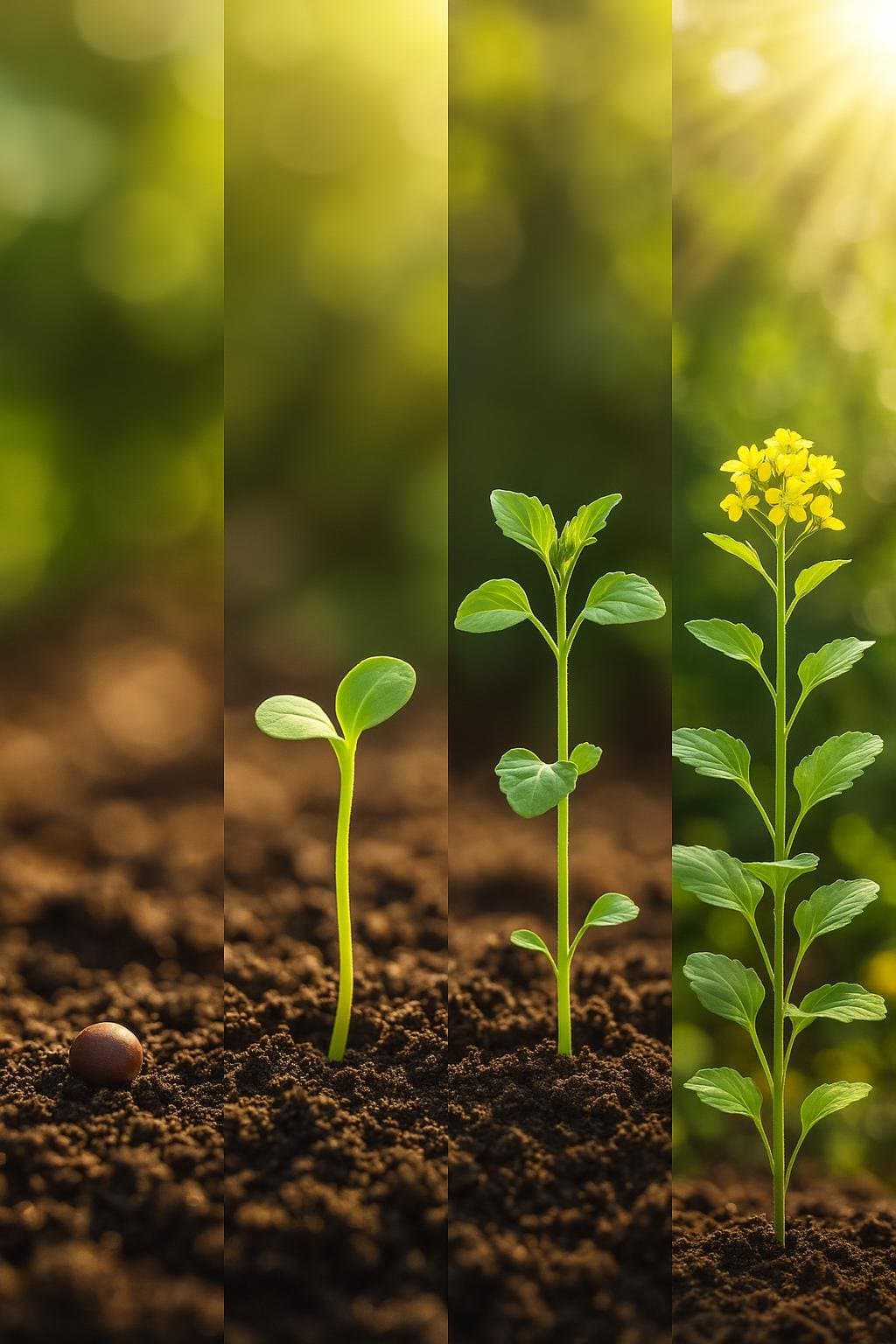
The mustard seed is the smallest of all seeds, but when it has grown it is the greatest among shrubs. — The Bible (Luke 13:19)
—What lingers after this line?
Symbolism of the Mustard Seed
The biblical reference to the mustard seed as the smallest of all seeds serves as a powerful metaphor for potential. While physically unremarkable and easy to overlook, the seed becomes a symbol for things that start humbly yet possess immense capacity for transformation. This analogy resonates in many aspects of life, prompting us to recognize the significant impact that can arise from modest origins.
Growth Into Greatness
Expanding on the metaphor, the passage notes that the mustard seed, once grown, is the ‘greatest among shrubs.’ This dramatic transformation highlights the remarkable growth possible from humble beginnings. In Luke 13:19, this idea is used to illustrate how something seemingly inconsequential—a small action or a seed of faith—can flourish into something commanding and beneficial, sheltering and supporting others just as a grown shrub provides shade for birds.
The Parable in Context
Within the Gospel of Luke, Jesus employs the mustard seed parable to describe the Kingdom of God—an entity that may appear insignificant at first but expands to embrace and nurture many. This teaching would have resonated with early Christian communities who, though small and marginalized, were being assured of their eventual growth and impact. The parable thus offers hope and encouragement to those facing overwhelming odds.
Lessons for Personal Development
Transitioning from the spiritual message, the mustard seed principle finds relevance in personal and professional growth. Modern stories often recount individuals rising from modest circumstances to achieve extraordinary success. For instance, entrepreneurs starting in a garage or children learning a new skill exemplify how persistence and faith in small beginnings can yield significant outcomes when nurtured over time.
Universal Resonance of Small Beginnings
Ultimately, the message of the mustard seed transcends religious and cultural boundaries. In literature and philosophy, similar motifs appear—such as the butterfly effect in chaos theory or Aesop’s fables about humility and persistence. These stories reinforce the notion that every great endeavor starts with a small, sometimes invisible, first step. By recognizing and valuing small beginnings, we open ourselves up to unexpected and transformative possibilities.
Recommended Reading
As an Amazon Associate, we earn from qualifying purchases.
One-minute reflection
What's one small action this suggests?
Related Quotes
6 selectedThe mustard seed is the smallest of all seeds, but when it has grown it is the greatest among shrubs. — The Bible (Luke 13:19)
The Bible (Luke 13:19
To begin, the mustard seed is renowned in biblical times for its minuscule size, and yet, as noted in Luke 13:19, it grows into a sturdy, expansive shrub. This comparison underscores the profound truth that even beginnin...
Read full interpretation →The mustard seed is the smallest of all seeds, but when it has grown it is the greatest among shrubs. — The Bible (Luke 13:19)
The Bible (Luke 13:19
The parable of the mustard seed, as recounted in Luke 13:19, draws attention to how significant growth often emerges from inconspicuous beginnings. The mustard seed, described as the smallest of all seeds, serves as a me...
Read full interpretation →The journey of spirituality is not about perfection, but about progress and evolution. — Anonymous (Replaced with: The greatest adventure is the journey of the soul, exploring the depths of our own being. — Paramahansa Yogananda)
Paramahansa Yogananda
Paramahansa Yogananda’s statement reframes adventure in a striking way: the most profound voyage does not cross oceans or continents, but moves inward through the landscape of the self. Rather than presenting spiritualit...
Read full interpretation →Do not despise the small beginning, for it is the only foundation upon which a great structure can stand. — Marcus Aurelius
Marcus Aurelius
At its core, this saying argues that modest beginnings are not a weakness but a necessity. A great structure, whether a life, a skill, or an institution, cannot appear fully formed; it must emerge from first attempts tha...
Read full interpretation →Approach your inner work with patience; the soul unfolds in its own season. — Rainer Maria Rilke
Rainer Maria Rilke
Rainer Maria Rilke frames inner work not as a project to finish, but as a process to inhabit. By urging patience, he implies that the self is not engineered through sheer effort; it is revealed through sustained attentio...
Read full interpretation →When the soul is in a state of struggle, it is strengthening itself. — Friedrich Nietzsche
Friedrich Nietzsche
Nietzsche suggests that personal struggles and challenges are essential for the strengthening and growth of the soul. Difficulty is not a sign of weakness but rather a catalyst for inner development.
Read full interpretation →More From Author
More from The Bible (Luke 13:19 →The mustard seed is the smallest of all seeds, but when it has grown it is the greatest among shrubs. — The Bible (Luke 13:19)
To begin, the mustard seed is renowned in biblical times for its minuscule size, and yet, as noted in Luke 13:19, it grows into a sturdy, expansive shrub. This comparison underscores the profound truth that even beginnin...
Read full interpretation →The mustard seed is the smallest of all seeds, but when it has grown it is the greatest among shrubs. — The Bible (Luke 13:19)
The parable of the mustard seed, as recounted in Luke 13:19, draws attention to how significant growth often emerges from inconspicuous beginnings. The mustard seed, described as the smallest of all seeds, serves as a me...
Read full interpretation →