
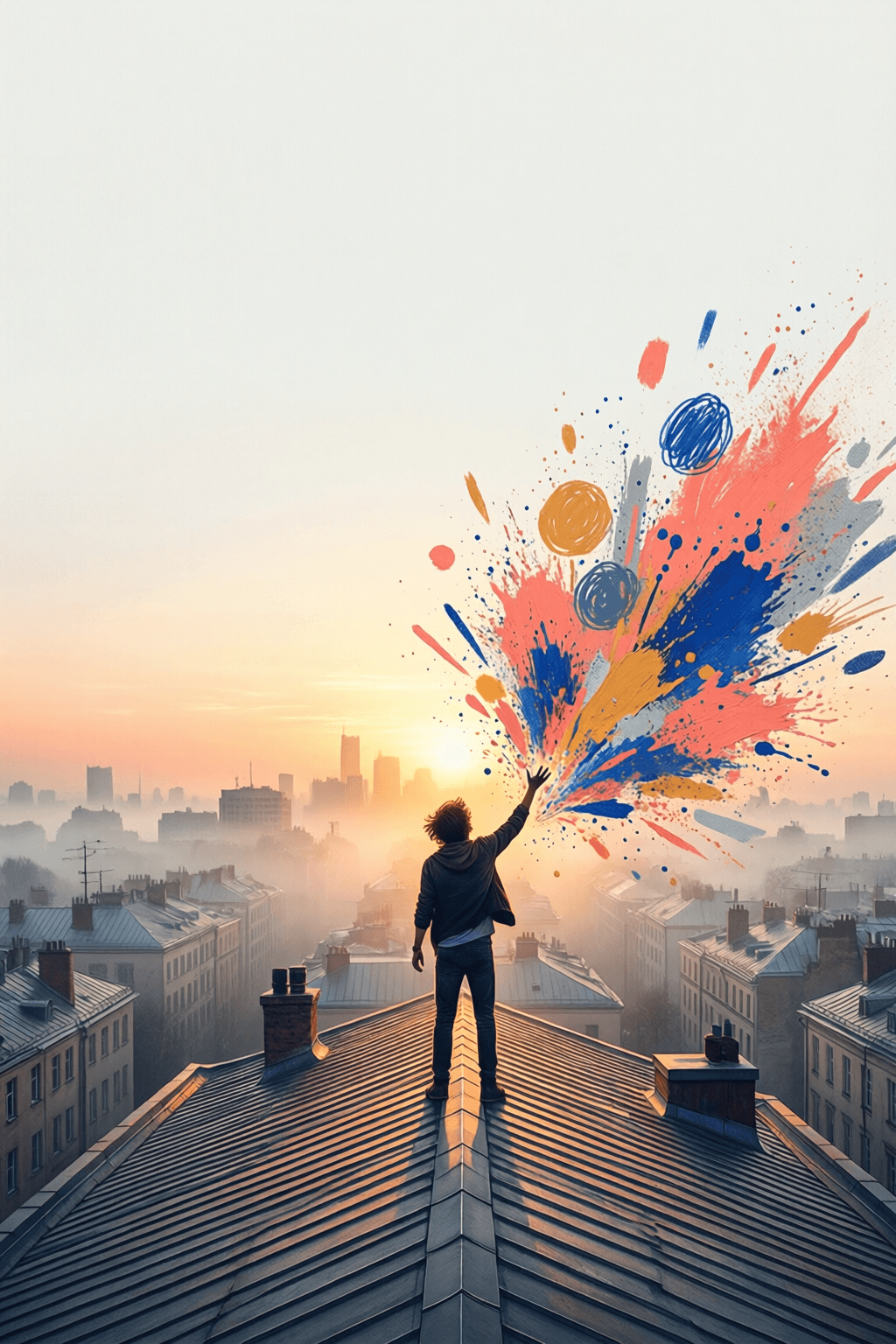
Originality is the best form of rebellion. — Mike Sasso
—What lingers after this line?
A Quiet Defiance
Mike Sasso’s line reframes rebellion in a striking way: instead of imagining protest only as noise, confrontation, or spectacle, it presents originality as a subtler but often more enduring act of defiance. To create something genuinely one’s own is to resist imitation, social pressure, and the comfort of established patterns. In that sense, originality becomes rebellion not through destruction, but through invention. This idea matters because conformity is often rewarded with safety and approval. Yet precisely for that reason, the original thinker unsettles expectations simply by refusing to repeat what is already familiar. What looks like creativity on the surface, then, is also a declaration of independence underneath.
Why Sameness Feels Safer
To understand the force of the quote, it helps to see what originality pushes against. Institutions, markets, and even friendships often encourage predictability because it is easier to manage. As a result, people learn to borrow accepted styles, opinions, and ambitions rather than risk standing apart. Originality challenges that quiet system by exposing how much of ordinary life depends on repetition. In this light, rebellion is not always a dramatic break with authority; sometimes it is the refusal to become a copy. Ralph Waldo Emerson’s essay “Self-Reliance” (1841) similarly praises the courage to trust one’s own mind over public approval, suggesting that nonconformity can be a moral as well as artistic act.
Creativity as Cultural Resistance
From there, the quote expands beyond personal identity into culture itself. Many groundbreaking works were rebellious precisely because they introduced forms the world did not yet know how to classify. When Igor Stravinsky’s The Rite of Spring premiered in 1913, its radical music and choreography reportedly provoked outrage in Paris; what seemed chaotic at first later became canonical. The original work disturbed the audience because it refused inherited rules. Similarly, artistic movements from modernism to hip-hop grew powerful by sounding unlike what came before. Their rebellion was not only in their messages, but in their forms. In other words, originality changes culture because it first dares to be illegible to convention.
The Personal Risk of Being New
However, the quote is not merely celebratory; it also implies cost. To be original is to risk misunderstanding, ridicule, or isolation, since people often judge the unfamiliar more harshly than the derivative. Vincent van Gogh, largely unrecognized during his lifetime, has become a familiar example of how originality may be resisted before it is admired. The rebel creator often lives without immediate validation. For that reason, originality demands more than talent; it requires endurance. One must tolerate the loneliness of not yet being understood. Thus rebellion here is not only a public stance against convention, but also a private discipline of remaining faithful to one’s vision.
Beyond Art and Into Daily Life
Importantly, Sasso’s insight applies not just to artists, but to ordinary decisions. A person who chooses an unconventional career, rejects inherited prejudices, or builds a life according to deeply examined values practices this form of rebellion in everyday terms. The originality may not appear spectacular, yet it can profoundly resist the scripts society offers. Seen this way, rebellion becomes less about opposition for its own sake and more about authentic authorship. Even small acts—speaking honestly in a conformist setting, dressing without allegiance to trend, or solving a problem in an unexpected way—carry the spirit of the quote. They show that originality is a lived ethic, not merely an aesthetic trait.
Rebellion That Creates Instead of Destroys
Ultimately, the power of the quotation lies in its positive vision of dissent. Some rebellions merely negate what exists, but originality offers an alternative rather than a void. It does not simply reject the old; it makes room for something new, and that creative dimension gives it lasting force. Pablo Picasso’s oft-cited remark, “Every act of creation is first an act of destruction,” captures a related truth: innovation breaks forms in order to reimagine them. Therefore, Sasso’s statement suggests that the most meaningful rebellion may be generative rather than hostile. By bringing forth a distinct voice, idea, or way of living, the individual does more than resist conformity—they enlarge the world.
One-minute reflection
What's one small action this suggests?
Related Quotes
6 selectedThe world accommodates you for fitting in, but only rewards you for standing out. — Matshona Dhliwayo
Matshona Dhliwayo
Matshona Dhliwayo’s quote begins with a social truth: the world often makes room for people who adapt to its expectations. Fitting in can bring acceptance, safety, and access, because groups tend to welcome those who und...
Read full interpretation →Every great and original writer, in proportion as he is great and original, must himself create the taste by which he is to be relished. — William Wordsworth
William Wordsworth
Wordsworth’s claim begins with a bold premise: truly original writers cannot be fully judged by old measures because their work changes the very standards of appreciation. In other words, greatness is not simply a matter...
Read full interpretation →The most original writers borrowed one from another. — Voltaire
Voltaire
At first glance, Voltaire’s remark seems to undermine originality by tying it to borrowing. Yet that tension is precisely his point: great writing rarely appears from a vacuum.
Read full interpretation →The merit of originality is not novelty; it is sincerity. — Thomas Carlyle
Thomas Carlyle
At first glance, Carlyle overturns a common assumption: that originality means producing something no one has ever seen before. Instead, he argues that the true value of original work lies in sincerity—the honest express...
Read full interpretation →It is necessary to any originality to have the courage to be an amateur. — Wallace Stegner
Wallace Stegner
Wallace Stegner’s remark suggests that originality does not emerge from perfect polish at the beginning, but from a willingness to enter unfamiliar territory without guarantees. To be an amateur, in this sense, is not me...
Read full interpretation →Originality — A target best hit when not aimed at. — Charles Searle
Charles Searle
At first glance, Charles Searle’s remark seems contradictory: how can originality be achieved by not trying to achieve it? Yet that is precisely his point.
Read full interpretation →More From Author
More from Mike Sasso →