
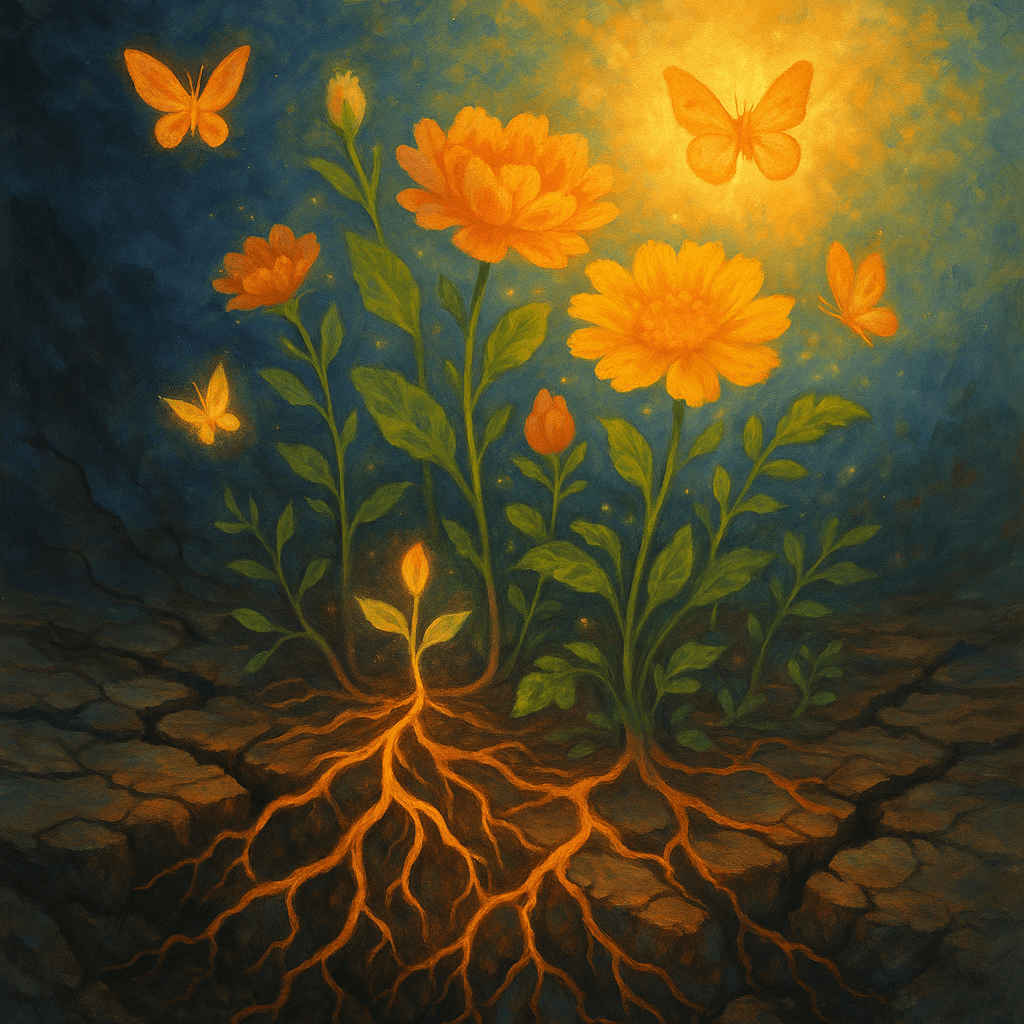
Transformation ripens in the soil of discomfort. — bell hooks
—What lingers after this line?
The Role of Discomfort in Personal Change
bell hooks’ insight draws our attention to a universal truth: authentic transformation rarely emerges from comfort. Much like seeds require the pressure and disruption of soil to germinate, individuals often experience profound growth during periods of unease. Discomfort, hooks suggests, isn't an obstacle but rather fertile ground where new identities and perspectives can form.
Historical Examples of Transformation
Throughout history, times of hardship have consistently served as catalysts for social progress and individual evolution. Consider the American Civil Rights Movement: countless activists, including hooks herself, endured discomfort on the front lines to nurture societal transformation. Their willingness to embrace discomfort opened pathways toward justice and equality—demonstrating how adversity and growth intertwine.
Learning and Growth in Educational Theory
Building on this, educational theorists like Paulo Freire argue that meaningful learning is inherently unsettling. In his seminal work, *Pedagogy of the Oppressed* (1970), Freire maintains that critical consciousness arises when learners are challenged to question deeply held beliefs. This intellectual discomfort prompts transformative reflection, pushing individuals to transcend old limitations.
Psychological Perspectives on Discomfort
From a psychological standpoint, discomfort signals areas ripe for personal development. Therapists often encourage clients to confront painful emotions or memories, recognizing that breakthroughs occur by working through unease. This process mirrors hooks' metaphor: discomfort paves the way for insights, fostering resilience and self-awareness as new ‘growth’ emerges.
Embracing Discomfort to Foster Resilience
Ultimately, hooks’ statement invites us to rethink our relationship with discomfort. Instead of resisting difficult experiences, we can approach them as opportunities for transformation. Whether navigating societal upheaval or personal setbacks, choosing to dwell in the ‘soil’ of discomfort enables us to ripen—to evolve—with wisdom and purpose. In this way, transformation and discomfort become intertwined pathways to a fuller, more authentic self.
One-minute reflection
Why might this line matter today, not tomorrow?
Related Quotes
6 selectedTransformation whispers in the language of persistence. — Bell Hooks
bell hooks
Bell Hooks’ reflection emphasizes that true transformation rarely arrives in grand pronouncements. Rather, it develops quietly, evolving through steady, persistent efforts.
Read full interpretation →The seeds of change are sown in discomfort. — Nawal El Saadawi
Nawal El Saadawi
Nawal El Saadawi’s observation highlights discomfort not as a paralyzing force, but as the essential catalyst that propels individuals and societies toward transformation. Just as seeds must first break through their she...
Read full interpretation →Over the years I've grown more comfortable with making people uncomfortable because that is when growth can happen. You need a little conflict. — Jamie Lee Curtis
Jamie Lee Curtis
Jamie Lee Curtis’s reflection begins with a hard-won realization: discomfort is not always a sign that something has gone wrong. Often, it signals that a person, group, or relationship has reached the edge of its familia...
Read full interpretation →The old skin has to be shed before the new one can come. — Joseph Campbell
Joseph Campbell
Joseph Campbell’s image of old skin being shed before new skin can appear turns personal growth into something vivid and bodily. At its core, the quote suggests that renewal is not simply about adding better habits or br...
Read full interpretation →If seeds in the black earth can turn into such beautiful roses, what might not the heart of man become in its long journey toward the stars? — G.K. Chesterton
G. K. Chesterton
Chesterton begins with a striking contrast: black earth, dark and ordinary, somehow gives rise to roses of astonishing beauty. From that image, he invites us to see human nature in the same light.
Read full interpretation →The real fault line in our lives is not between those who are awake and those who are asleep, but between those who can stay present with discomfort and those who must immediately explain it away. — Tara Brach
Tara Brach
Tara Brach shifts attention away from the familiar contrast between the ‘aware’ and the ‘unaware’ and toward something more intimate: how we respond when life becomes uncomfortable. In this view, the deepest dividing lin...
Read full interpretation →More From Author
More from bell hooks →But many of us seek community solely to escape the fear of being alone. Knowing how to be solitary is central to the art of loving. — bell hooks
Bell hooks begins with a quiet but difficult observation: not every search for community is rooted in love. Sometimes, we reach for others because solitude feels threatening, as though being alone exposes a lack within u...
Read full interpretation →Your presence is a form of resistance against a culture that profits from your isolation. Show up for those you love, even when it is inconvenient. — bell hooks
At first glance, bell hooks reframes something ordinary—being present for others—as a political and moral act. Her words suggest that care is not merely private sentiment; rather, it pushes back against a social order th...
Read full interpretation →If you don't build your own sanctuary, you will spend your life living in the wreckage of someone else's expectations. — Bell Hooks
Bell hooks frames sanctuary as more than a physical refuge; it is an inner and outer space where a person can live by values they have consciously chosen. At first glance, the quote sounds like a warning about independen...
Read full interpretation →The art of living is a constant process of refining one's own sanctuary against the tide of external expectations. — bell hooks
At its core, bell hooks presents living not as a finished achievement but as a continuous act of shaping and reshaping the self. The phrase “constant process” suggests that identity, peace, and integrity are never perman...
Read full interpretation →