
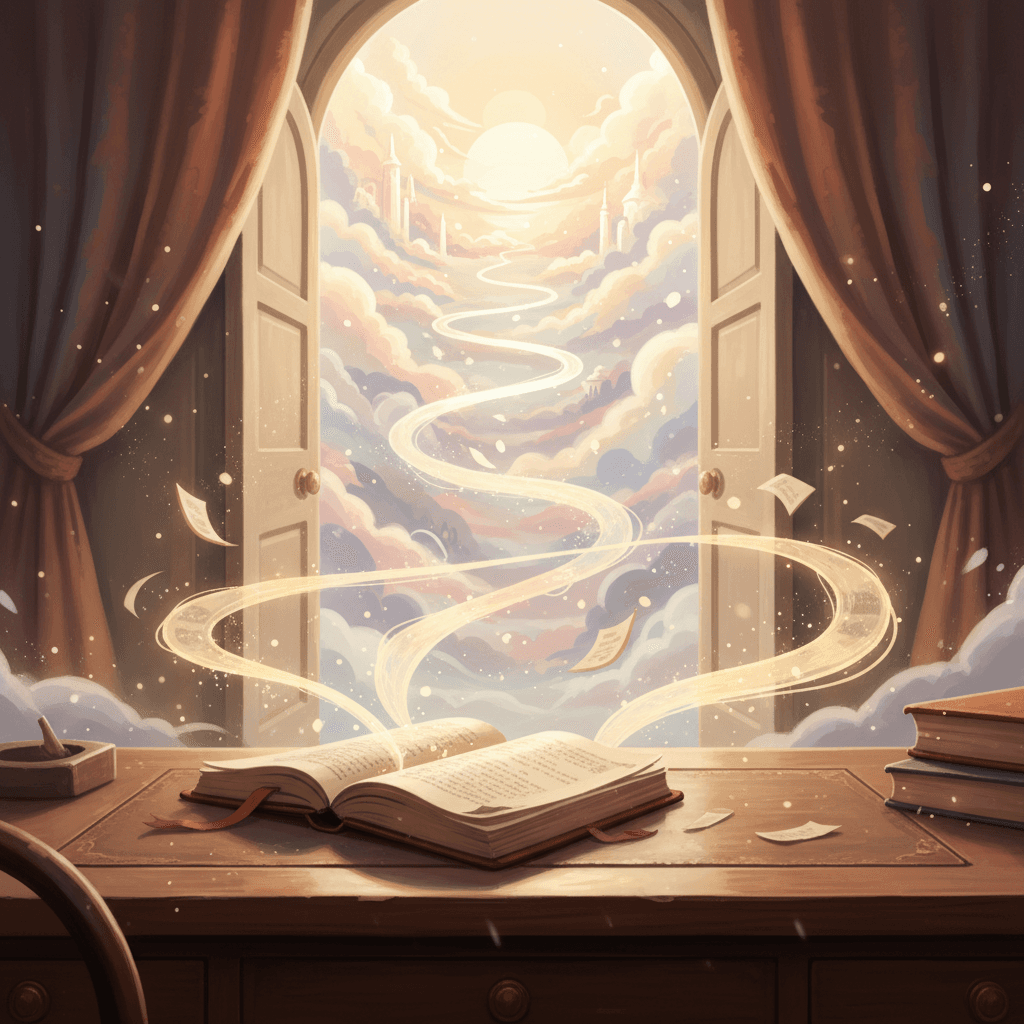
Turn thought into practice; let your pages become pathways — Virginia Woolf
—What lingers after this line?
Thought as the Seed of Practice
Virginia Woolf’s line, “Turn thought into practice; let your pages become pathways,” urges us to treat ideas not as fragile abstractions but as beginnings of action. Thought, in this view, is a seed that withers if it remains purely internal. When Woolf calls for turning thought into practice, she is echoing a long literary tradition in which reflection is valuable only when it reshapes how we live, work, and relate to others. Thus, the mind’s quiet murmurs are invited to step into the noisy world of doing.
Pages as Living Pathways
From this starting point, Woolf’s metaphor of pages as pathways suggests that writing is more than a record; it is a route others can walk. A blank page becomes a kind of landscape, and each sentence lays down a stone in a path that guides readers through new terrain. In novels like *Mrs Dalloway* (1925), Woolf’s experimental prose does exactly this, leading readers along the winding tracks of consciousness and city streets alike. Consequently, the “page” is transformed from static object into a dynamic passageway between inner and outer worlds.
The Bridge Between Inner Life and Outer World
Moving from metaphor to implication, the quote highlights writing as a bridge between solitary thought and shared experience. Woolf, particularly in *A Room of One’s Own* (1929), argued that women’s ideas needed both space and form to cross into public life. When pages become pathways, they carry private reflections into social reality, influencing conversations, policies, and everyday choices. In this sense, the act of writing is not merely expressive; it is infrastructural, building conduits through which ideas travel and take effect.
Crafting Practice Through the Act of Writing
Extending this bridge further, the process of drafting, revising, and refining text becomes a rehearsal for action. Journals, essays, and letters function as workshops where we test our beliefs before they crystallize into decisions. Woolf’s own diaries, published posthumously, reveal how she used the page to experiment with perspectives and artistic strategies that later appeared in her fiction. By working ideas out in ink, we begin to choreograph practices we might later enact—how we speak up, organize our days, or challenge inherited norms.
Responsibility and Care in Path-Making
Yet if pages are pathways for others, Woolf’s image also implies responsibility. Pathways can invite, mislead, or exclude, depending on how they are laid. Texts like Woolf’s *Three Guineas* (1938) show her awareness that writing shapes political and ethical possibilities, not just aesthetic ones. Therefore, turning thought into practice involves attentive care: clarifying ideas, acknowledging limits, and considering who can walk the paths our words create. Each page, then, is both an opportunity and an obligation to build routes that are honest, inclusive, and intellectually walkable.
Walking the Paths We Ourselves Create
Finally, Woolf’s exhortation circles back to the writer as reader of their own pathways. To let pages become pathways is also to commit to walking them ourselves—to act in ways consistent with what we have articulated. This reciprocal motion, from thought to page and from page back into life, closes the loop between reflection and practice. In doing so, it exemplifies Woolf’s broader modernist project: to show that literature is not a separate realm, but a lived corridor through which both writers and readers move, change, and find new directions.
One-minute reflection
What feeling does this quote bring up for you?
Related Quotes
6 selectedWhen you are in the middle of a creative block, remember that the work is not the point; the point is the practice of showing up. — Twyla Tharp
Twyla Tharp
Twyla Tharp’s quote shifts attention away from the finished product and toward the habit that makes creation possible in the first place. In the middle of a creative block, it is easy to believe that nothing matters unle...
Read full interpretation →Make your hands busy with making—words, gardens, music—and life answers back. — Pablo Neruda
Pablo Neruda
Neruda’s line frames creativity less as self-expression and more as initiation: when you keep your hands busy making, you open a channel through which the world can respond. The emphasis on “hands” matters, because it gr...
Read full interpretation →Let imagination pull the ropes of practice — Paulo Coelho
Paulo Coelho
Paulo Coelho’s image of imagination pulling the ropes of practice suggests that what we repeatedly do is quietly choreographed by what we dare to envision. Instead of treating imagination as a childish escape, he casts i...
Read full interpretation →Keep your hands busy with creation, and fear will learn to sit quietly — Langston Hughes
Langston Hughes
Langston Hughes suggests that what we do with our hands can transform what happens in our minds. By urging us to "keep your hands busy with creation," he reframes courage not as a feeling we must wait for, but as a pract...
Read full interpretation →Find one bright thing to create each day; it trains the soul to notice light. — Helen Keller
Helen Keller
Helen Keller’s line proposes a practice: create one bright thing each day so the soul learns to see light. This is less about mood than muscle—an intentional repetition that reshapes perception.
Read full interpretation →Creating is about living life with a sense of wonder and setting the tone for your story. — Mae Jemison
Mae Jemison
Mae Jemison emphasizes that creativity is fueled by a sense of wonder. Approaching life with curiosity allows individuals to discover new ideas and perspectives, which are essential for artistic and innovative expression...
Read full interpretation →More From Author
More from Virginia Woolf →We are not here to fit into a mold, but to break the ones that keep our most honest work hidden. — Virginia Woolf
At its core, Virginia Woolf’s statement rejects the quiet pressure to adapt ourselves to preexisting expectations. To “fit into a mold” suggests becoming legible, acceptable, and predictable at the cost of what is most i...
Read full interpretation →There is a kind of victory in good sense about not wanting to be everything at once. — Virginia Woolf
Virginia Woolf’s line turns an apparent restraint into a form of triumph. Rather than treating ambition without boundaries as admirable, she suggests that good sense lies in refusing the exhausting wish to be everything...
Read full interpretation →The artist is a sort of emotional archivist, recording the truth of a moment before it slips away into the digital noise. — Virginia Woolf
At its core, the quote imagines the artist as someone who rescues experience from disappearance. A feeling, a gesture, or a passing atmosphere can fade almost as soon as it arrives; therefore, the artist’s work becomes a...
Read full interpretation →Clarity is the counterbalance of complexity. - Virginia Woolf
Virginia Woolf’s remark frames thought and expression as a delicate balance rather than a simple choice. Complexity is often unavoidable because reality is layered, contradictory, and difficult to reduce; yet without cla...
Read full interpretation →