
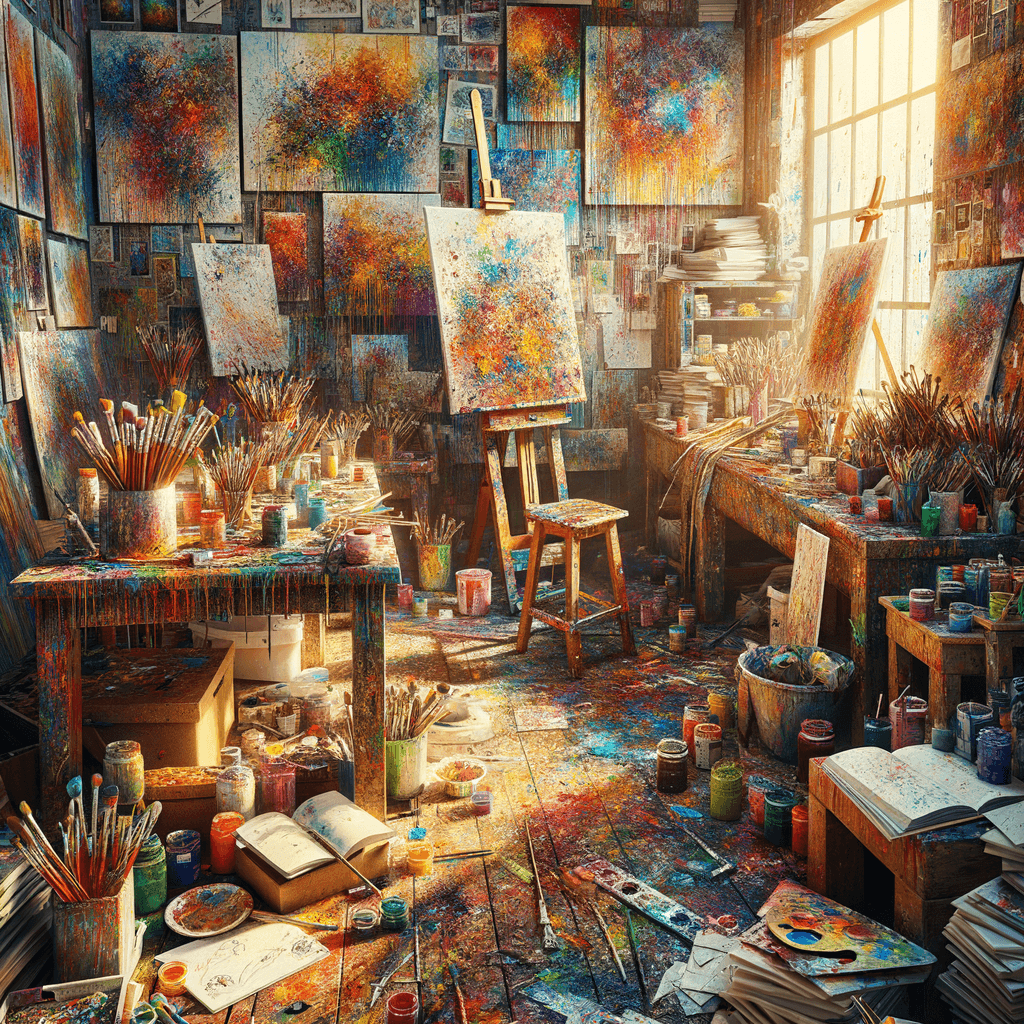
Creative minds are seldom tidy. — A. S. Byatt
—What lingers after this line?
Nature of Creativity
This quote emphasizes that creativity often involves chaos and disorder. The creative process rarely follows a neat or linear path but instead thrives in environments where spontaneity and experimentation are encouraged.
Messiness as a Sign of Productivity
It suggests that a disorganized space or mind is not a negative trait but rather an indication of a person deeply immersed in generating ideas and new possibilities.
Balancing Structure and Imagination
The quote highlights how creative thinkers may prioritize imaginative exploration over maintaining order, focusing their energy on innovation rather than routine tasks.
Acceptance of Disorder in the Creative Process
It challenges societal norms of tidiness, encouraging people to accept that creativity often flourishes in less structured and more dynamic environments.
A. S. Byatt’s Perspective
A. S. Byatt, a renowned British author, likely drew this insight from her own experience as a writer and observer of artistic lives, valuing the unique paths of creative individuals.
Recommended Reading
As an Amazon Associate, we earn from qualifying purchases.
One-minute reflection
What does this quote ask you to notice today?
Related Quotes
6 selectedCreativity is a wild mind with a disciplined eye. — Jon Acuff
Jon Acuff
Jon Acuff’s remark presents creativity as a union of opposites: the mind must be free enough to wander, yet the eye must remain trained enough to judge what is worth keeping. In that sense, invention does not arise from...
Read full interpretation →Creative minds are rarely tidy. — John Cleese
John Cleese
This quote suggests that creativity often thrives in an environment of chaos and disorder. A tidy or overly structured space may stifle the flow of innovative ideas.
Read full interpretation →To be creative is to participate in the great process of creation — and participating in creativity is participating in life. — Rajneesh
Rajneesh
Rajneesh frames creativity not as a rare talent but as an act of joining something larger than oneself. At once, the quote shifts attention away from finished masterpieces and toward participation in an ongoing process o...
Read full interpretation →Art is not a thing; it is a way. — Elbert Hubbard
Elbert Hubbard
Elbert Hubbard’s line immediately shifts attention away from paintings, sculptures, or books as isolated products. Instead, he suggests that art lives in the manner of seeing, choosing, and shaping experience.
Read full interpretation →When the spirit does not work with the hand, there is no art. — Leonardo da Vinci
Leonardo da Vinci
Leonardo da Vinci’s statement begins with a simple but profound claim: art is never merely the product of manual skill. The hand may shape stone, guide a brush, or draft a line, yet without the animating force of spirit—...
Read full interpretation →Creativity is a habit, and the best creativity is the result of good work habits. — Twyla Tharp
Twyla Tharp
At first glance, Twyla Tharp’s quote challenges the popular myth that creativity arrives as a sudden flash of genius. Instead, she reframes it as something built through repetition, structure, and deliberate effort.
Read full interpretation →More From Author
More from A. S. Byatt →