
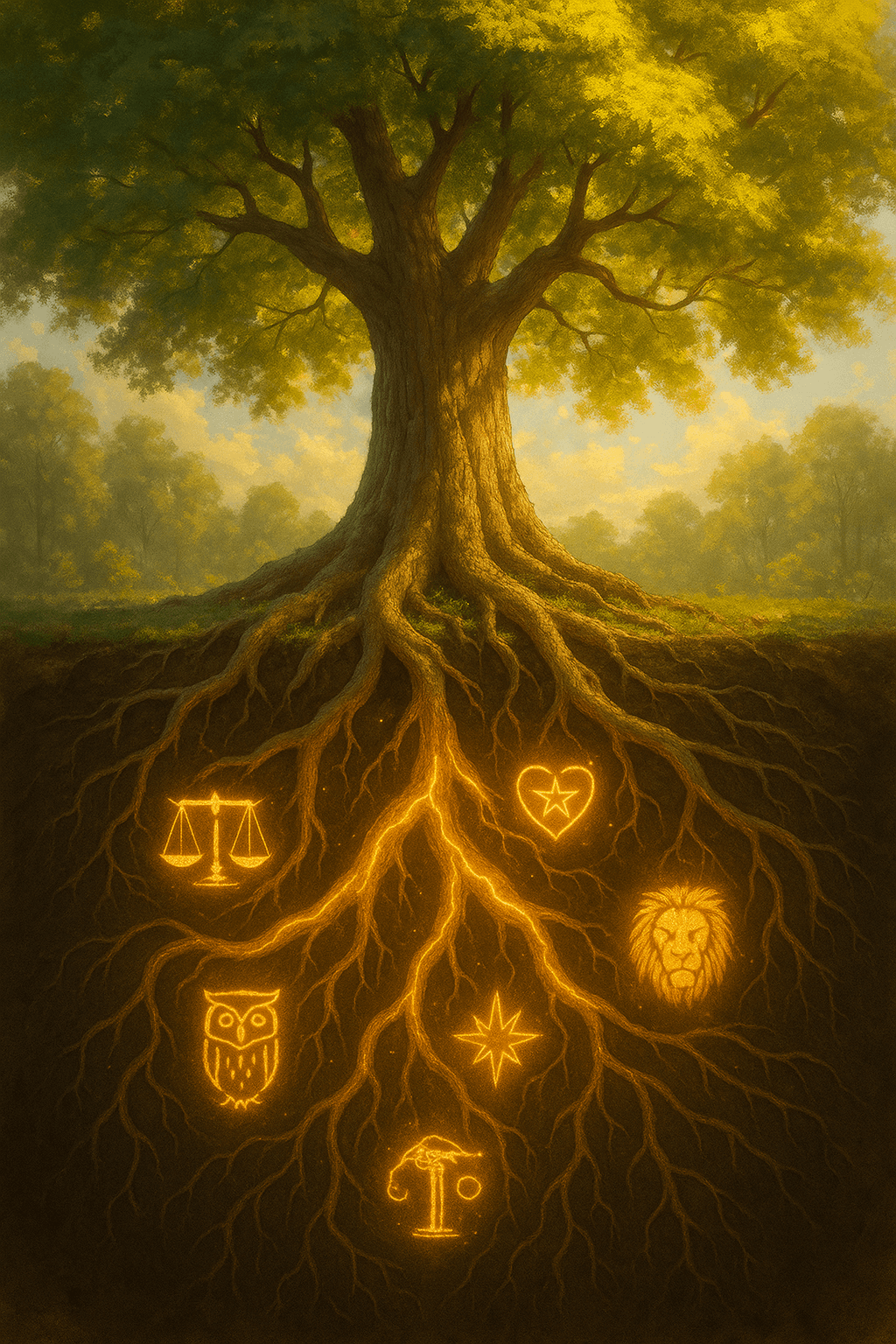
The strength of a tree lies in its roots; so too our courage in our values. — Chinua Achebe
—What lingers after this line?
Foundations of Personal Integrity
Achebe draws an analogy between the roots of a tree and the core values that ground a person. Just as a tree’s stability depends on its unseen roots, the strength to act courageously often emerges from deep-seated beliefs. In *Things Fall Apart* (1958), protagonist Okonkwo’s actions—both noble and tragic—stem from his adherence to the values of his Igbo culture.
Moral Resilience in Difficult Times
The metaphor underscores how values provide fortitude amid adversity. When colonial pressures threaten traditional ways in Achebe’s novels, characters who stay true to their cultural roots display remarkable courage. For example, despite immense pressure, Obierika in *Things Fall Apart* reflects on changes thoughtfully, avoiding rash action but maintaining integrity.
Cultural Identity and Community
Roots also symbolize communal identity. Achebe’s works often explore the peril of losing connection to cultural values, as represented by the disruption of Igbo traditions by colonialism. In *No Longer at Ease* (1960), Obi Okonkwo's struggles highlight the consequences of being uprooted from one's heritage.
Anecdotal Illustration
The tale of Sundiata Keita, the legendary founder of the Mali Empire (as recounted in the *Epic of Sundiata*, 13th century), echoes Achebe's message. Sundiata’s enduring strength derived from the wisdom and values instilled by his mother, allowing him to reclaim his kingdom.
Universal Application
While Achebe writes with an African sensibility, the proverb’s power transcends context. Across cultures, whether in Viktor Frankl’s *Man’s Search for Meaning* (1946), where personal values help survivors endure trauma, or in modern movements for justice, courage is rooted in commitment to core beliefs.
One-minute reflection
What's one small action this suggests?
Related Quotes
6 selectedThe strength of a tree lies in its roots; so too our courage in our values. — Chinua Achebe
Chinua Achebe
Achebe’s analogy highlights that just as a tree's roots anchor it during storms, a person’s deeply held values provide internal support during life’s trials. In his novel *Things Fall Apart* (1958), Okonkwo’s adherence t...
Read full interpretation →When the whole world is silent, even one voice becomes powerful. — Chinua Achebe
Chinua Achebe
Achebe’s words begin by treating silence not as absence, but as a troubling presence. When “the whole world is silent,” he suggests that inaction and avoidance become their own kind of endorsement.
Read full interpretation →Unfortunately, we've rewarded a sort of cowardice by calling it 'kindness', and this has made us utterly spineless when truth finally hits. — Criss Jami
Criss Jami
At its core, Criss Jami’s statement argues that not every gentle gesture is morally brave. Sometimes what society praises as kindness is really avoidance: a refusal to speak hard truths, set boundaries, or confront harmf...
Read full interpretation →It is a rare and ethical thing to be a person who is willing to be changed. — Ocean Vuong
Ocean Vuong
Ocean Vuong frames openness to transformation as both uncommon and ethically charged, suggesting that character is not merely what we defend but what we are willing to revise. In this view, the “rare” person is not the o...
Read full interpretation →Integrity is choosing courage over comfort; choosing what is right over what is fun. — Brené Brown
Brené Brown
Brené Brown frames integrity not as a fixed trait but as a sequence of decisions made in real time. Rather than asking whether someone “has” integrity, her line invites a more practical question: what do you choose when...
Read full interpretation →Keep a quiet hope alive and let it guide the brave choices you make. — Anne Frank
Anne Frank
Anne Frank’s line begins with a surprising premise: hope can be quiet. Instead of the loud optimism that denies fear or hardship, she points to a steadier inner posture—something you keep alive privately, even when circu...
Read full interpretation →More From Author
More from Chinua Achebe →It is a common mistake to think that art is a luxury. It is a necessity of the human spirit. — Chinua Achebe
At first glance, Achebe challenges a deeply rooted modern assumption: that art belongs to the realm of extras, something pleasant but dispensable. By calling this belief a “common mistake,” he suggests that reducing art...
Read full interpretation →The sun does not forget a village just because it is small. — Chinua Achebe
Achebe’s line begins with a quietly radical premise: importance is not measured by scale. By imagining the sun as impartial, he suggests that attention, care, and recognition are not rewards reserved for the powerful; th...
Read full interpretation →Rise with the sun of your intentions and work until the horizon answers — Chinua Achebe
Achebe’s line opens with a vivid image: rising “with the sun of your intentions.” Intention here isn’t a vague wish—it’s something bright, scheduled, and unavoidable, like sunrise itself. By pairing waking with purpose,...
Read full interpretation →An army of sheep led by a lion can defeat an army of lions led by a sheep. — Chinua Achebe
Achebe’s line hinges on a startling reversal: the weaker group can prevail if guided by a forceful, capable leader, while the stronger group can squander its natural advantages under timid direction. By contrasting sheep...
Read full interpretation →